X-87 - DOS 256 bytes
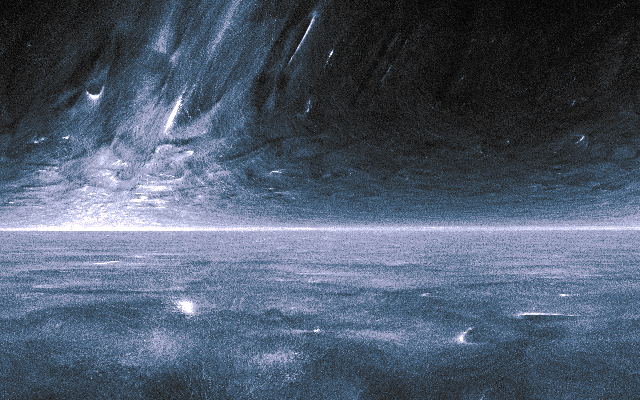
256 bytes x86 + x87 (386+) / DOS real mode
procedural graphics for Outline 2026, VESA
2 (1994) 640x400 32 bpp showing a stylized landscape drawn
with oscillators. No escape support.
This started in early 2024 from p5js sketches
i initially made in mid 2021, first sketch was a
different idea showing some flow like patterns that i directed
towards a ground / sky division later on, i kind of stopped
tinkering with it for a year but took it back in early 2025 and
directed it into this barren landscape which was mostly found
by accident through iterative tweaking of oscillator parameters +
transforms. (particularly scale) I liked the moody feel and
the accidental “moon”.
One year later i decided to try to fit this into
256 bytes, the code was pretty small but i was unsure about some
parts (32 bpp, colors) especially after a semi
failed x87 learning experiment. (was still successful as
i learned bits of x87 but also a lot of things about high colors /
high resolution DOS graphics, all documented here)
Took ~13 minutes (!) to render with
default (3000; 286
era) DOSBox cycles. ~2m30 at 20000 cycles (late 486 era) and 2m10 at max
cycles. (running on a i7 7700 CPU)
The 256 bytes effort in two weeks
First step was porting the p5.js code to something akin to x87 (stack
based) and as i fiddled with Forth...
it felt like the perfect opportunity to tinker a bit more
with Gforth, resulting code
was pretty small which further convinced me that shrinking it down
to 256 bytes was possible.
Second step was a crude (greyscale) DOS port
(~320 bytes), learned a bit of x87 in the process, it was kinda fun
to see how Forth map so well to x87 but also how it differ on some
stuff (x87 is way more flexible sometimes), Forth made the x87 port
straightforward and fun.
Third step was an
early optimization phase (FPU code, constants) to free
rooms for the colors, the landscape was kind of dull at that
moment.
Final step was to integrate the dither like
colorization (colors increment depends on averaged pixels
brightness) then try to make it less dull by tweaking constants,
this last part added some more weight which required further
optimizations : overlapped / truncated floating points (got the
idea from balrog), packed
colors increments, less FPU instructions etc.
The last bytes + compat
Program was considered finished at this point but
there was many compat issues left (no fninit, uninitialized
mem etc.) and tiny black squares artifacts (almost imperceptible on
DOSBox but very large on Bochs !) which was related to the
tricky segment initialization and VESA paging / banking,
last goal was to fix them.
It was rather simple to get few bytes to fix the
artifacts by reusing palette data for a float constant
(overlapping) and further optimizing the init code and
px_sat loop code by reusing bx state for the
loop.
Making a compatible version (one that run on
Bochs + Freedos at least, didn't test on real HW) at 256 bytes was
slightly harder and took me a few days, biggest win was to pack the
two main loops into a single one and using the upper / lower half
of ECX as a frame counter / osc. index, FPU code was again
optimized. (trying hard to avoid fcomi
instruction to stay at 386 era)
Conclusion
Satisfied of the final result overall as it is
quite close to the prototype, not entirely convinced that 32
bpp is justified... could perhaps be done in 256 colors. (in a
smaller way ?)
The image can be scaled to any resolutions
(require a constant + bank check constant change) but
convergence happen faster at moderate resolution +
artifacts are less visible. (see below; has artifacts
when vertical axis is extended)
Resolution also affect brightness / density
although this can be fixed with colors increment / oscillators
adjustments.
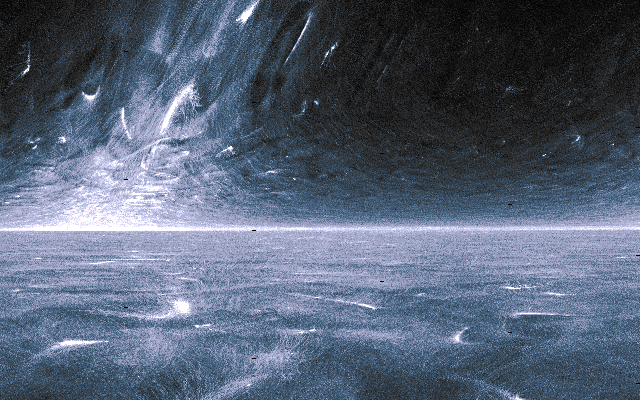
with more time (note : earlier artifacts
version !)
p5js implementation
let x = []

let y = []

let n = 256


let pal = [

  [3, 3, 3], [1, 2, 3], [3, 2, 2], [1, 1, 1]

]


function setup() {

  createCanvas(800, 480)

  background(0)

  for (let i = 0; i < 256; i += 1) {

    x[i] = i

    y[i] = 0

  }

}


function draw() {

  loadPixels()

  for (let k = 0; k < n * 256; k += 1) {

    let ki = k & 255

    let fr = frameCount

    let sx = x[ki] + 1

    let t0 = x[ki]

    let t1 = y[ki]


    x[ki] = t1 * -0.99609375 + (0.009277344 / cos(t0 -
cos(fr / 128 + t1 / (1 + t0 / 32))) - 5.141592653)

    y[ki] = t0 + 1 + tan(x[ki] * t1 * 32) / fr


    sx = (x[ki] + 14) / 32

    let sy = 0.36 + 0.85546875 / (y[ki] + 3)


    if (sy > 0.36) {

      sx *= 4

      sy *= 0.981592

    } else {

      sx -= sy / 2

    }


    let px = floor(sx * width)

    let py = floor(sy * width)

    let index = (px + py * width) * 4


    let p = (79 + pixels[index + 0] + pixels[index + 1] +
pixels[index + 2]) / 192

    let c = pal[p & 3]


    if (index >= 0 && index < width * height *
4) {

      pixels[index + 0] += c[0]

      pixels[index + 1] += c[1]

      pixels[index + 2] += c[2]

    }

  }

  updatePixels()

}
Gforth implementation (write to a file; 7s render)
640 constant width

400 constant height

  3 constant bpp


create x 256 floats allot

create y 256 floats allot

create b width height * bpp * allot

create pal 3 c, 3 c, 3 c,

           3 c, 1 c, 2 c,

           2 c, 3 c, 2 c,

           1 c, 1 c, 1 c,


: setup

    255 0 do

        i s>f i floats x + f!

        0e i floats y + f!

    loop ;


: draw

    366 1 do \ frames

        65535 0 do \ iterations

            i 255 and { ib }


            ib floats x + f@

            j s>f

            ib floats y + f@ fdup

            -0.995683e f*
0.009429633e 4 fpick 4 fpick 128e f/ 4 fpick 2 fpick 32e f/ 1e f+
f/ f+ fcos f- fcos f/ 5.1594524e f- f+ fdup ib floats x + f!

            32e f* f* ftan fswap f/
1e f+ fswap f+ fdup ib floats y + f!


            ib floats x + f@ 14.0e f+
32e f/ \ sx

            fswap 3.141592653e f+
0.8561283e fswap f/ 0.36063576e f+ fdup \ sy

            0.36063576e f> if

                0.98328006e
f* \ sy

                fswap 4e f*
\ sx

            else

                fswap fover
2e f/ f- \ sx

            then


            width s>f f* f>s \
px

            width s>f f* f>s \
py

            width * swap + bpp * {
index }


            index 0 width height *
bpp * within if

                index b +
c@ index 1 + b + c@ index 2 + b + c@ + + 79 + 192 / 3 and \ p

                3 * pal +
dup dup \ c

                1 + c@
index b + c@ + 255 min index b + c!

                2 + c@
index 1 + b + c@ + 255 min index 1 + b + c!

                c@ index 2
+ b + c@ + 255 min index 2 + b + c!

            then

        loop

    loop ;


: write \ write 640x400 RGB8 buffer (raw) to a file

    s" landscape.data" w/o create-file throw >r

    b width height * bpp * r@ write-file throw

    r> close-file throw ;


setup draw write

bye
Iterations
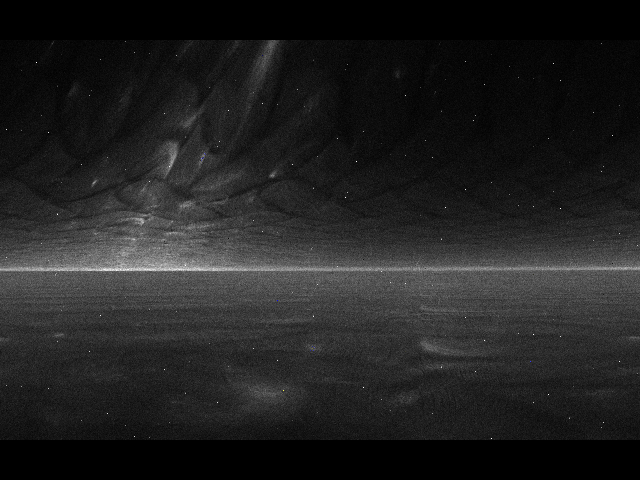
first result of the port without bounds
checking (speckles) nor saturation
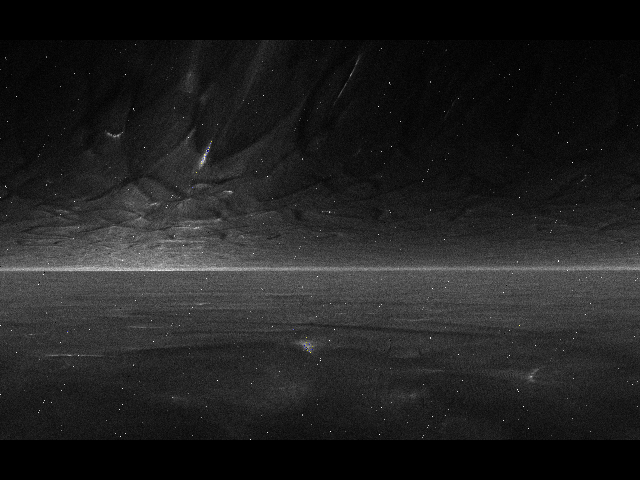
less dull sky
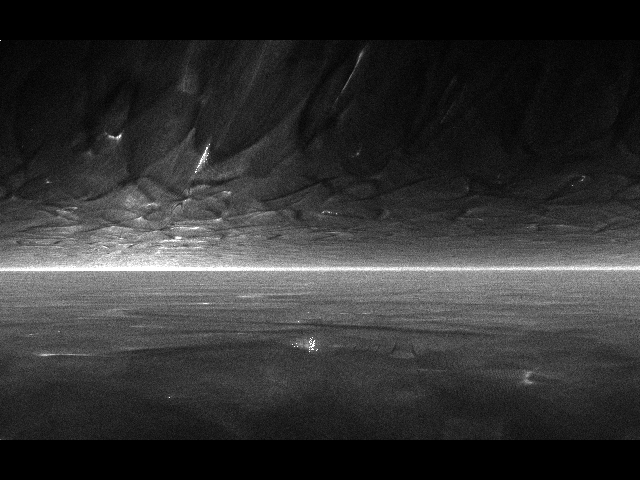
bounds check
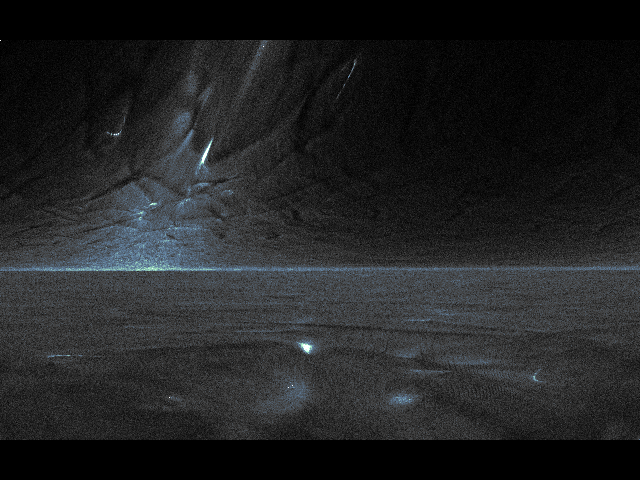
first colors
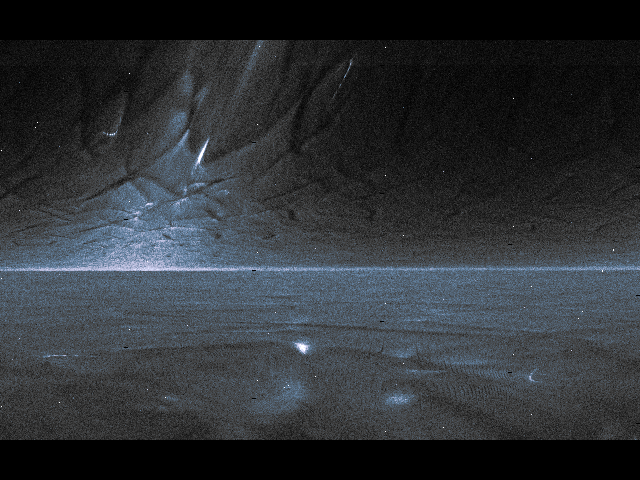
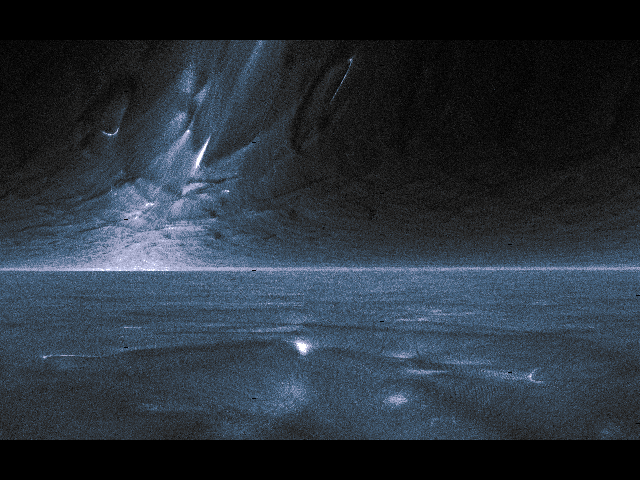
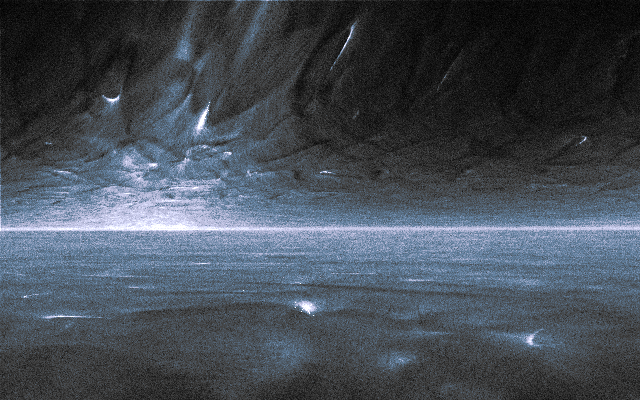
kind of dull "final" result
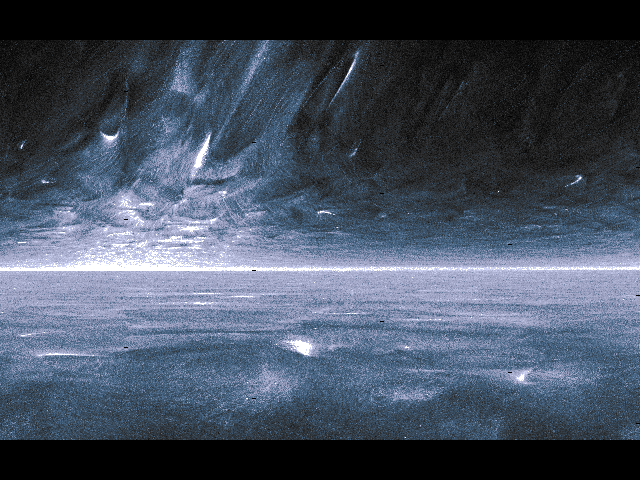
toward final result, this was slightly
stretched horizontally later due to constants optimization
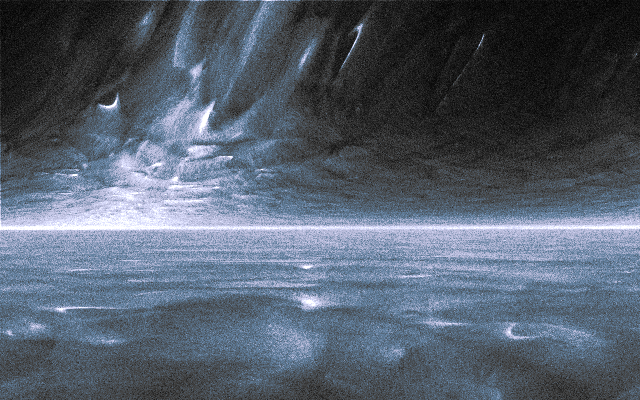
early 2025 p5js sketch (with
optimizations)
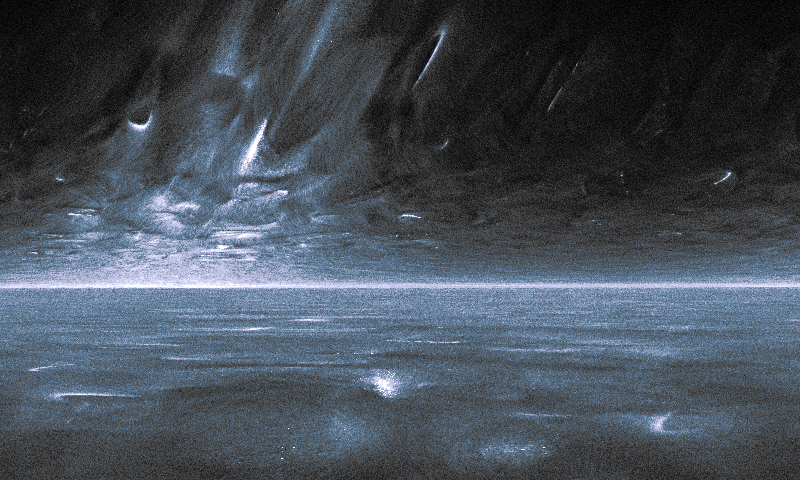
p5js initial sketch (800x480)
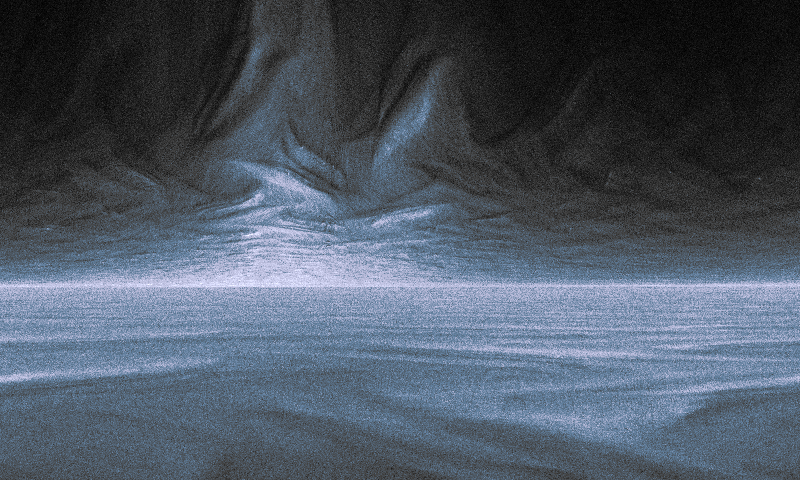
early p5js sketch
back to top


