Contents
Bazar page. Some "rants" about badly designed products etc.
stuff that could fit into a blog article but not really linked to
programming. May put some wild thoughts in there and
reviews.
Headphones
Headphones i tried over the years, started to use them in mid
2010s, before that i was using M-Audio AV40 speakers and before
that cheap speakers that come with PCs. Mostly seek flat frequency
response (neutral / clean sound), durability and comfort, low to
mid price level.
Superlux HD662F
My first headset was a carefully selected (price / quality)
closed back Superlux
HD662F, i was quite satisfied for some times from this cheap
buy in term of quality and durability, my main wish was a 'studio'
quality / monitoring headset so i mostly wanted a neutral frequency
response and good comfort, this kind of headset can go crazy in
term of price but the HD662F delivered all of this for me, it
seemed to have good frequency response curve from tests i saw on
boards.
Sadly the HD662F wasn't perfect, mine had cables fraying issue
after 7 years of usage which was a minor issue since it worked but
it sadly started to have cable connection issues as well so i
decided to buy another one since they were pretty cheap.
The second HD662F had connection issue after 2 years of usage
which was quite frustrating as the first one lasted much longer, i
don't know if it is build related (bad luck) or perhaps aggravated
by my setup since i had a different desk / chair between both and
the long cable was often stuck below my chair wheels.
There was perhaps quick fixes to solve the issue but i thought
it was a design issue anyway, an easily replaceable cable entirely
solve this case (with a minor bump in price) thus i started to look
for a headset with a replaceable cable.
Ear pads durability was good although they are quite low in
term of comfort, i changed them only once for the 7 years
case.
All in all this cheap headset would have been the most durable
if the cable was entirely replaceable !
Rode NTH-100M
I chose this headphone due to 3 factors :
- replaceable cable due to my experience with the Superlux
HD662F
- has support for the NTH-Mic condenser microphone which was
attractive as i could use it in audio conference instead of my
phone, seemed good quality as well so i could perhaps use it for
other stuff
- brand / price (way more comfortable cushion, build quality due to better materials / experience etc.)
It was much pricier (8x more, ~240€ with accessories) than the
Superlux although still quite attractive for all it does compared
to other products on the market,
sound quality seems quite good.
I also needed to buy the VXLR mini-jack 3.5mm to XLR adapter
also sold by Rode (didn't plan for this though !) and use the
splitter cable to have both mic / audio on my ONYX Producer 2-2
audio interface. (don't forget to switch +48V button to have
correct audio level for the mic)
First feels were awesome, i thought it was of much higher
level than the Superlux in term of comfort or even overall quality
and features. It also had adjustable headband compared to the
Superlux.
Then issues appeared, there was cracks on the plastic part
that hold both earcup after less than 2 month and it eventually
broke completely, this really frustrated me due to the price and
since i thought Rode was a quality brand and would design durable
products with all the experience they got...

this eventually broke completely
It seems it is either bad luck product with production issue
or a design issue again with too little product testing, my feels
goes to the second case as i feel the parts that hold the earcup is
quite thin for all the pressure it may experience, this is also a
global issue, many peoples reported such thing with this product
and Rode was forced to apply lifetime warranty on the product...
which looks like they are quite aware of this.
There is a cheaper solution than going for a replacement
fortunately : the almighty duct tape !
So i Just duct taped this part with several layers, the fix is
great and hold the part without issues, it remains flexible so
there is no disadvantage except aesthetics.

my fix, 100% working and durable, back to
usable product again
Another design issue is that my hair sometimes get stuck into
some movable plastic part.
Even for all the features the Rode has i still think the
HD662F managed to be way more reliable than the Rode although not
easily repairable.
The durability issue is quite a big mistake all in all, it
cancel out the usefulness of the headset modular
design...
Early 2024 update : Now have wiring issue as well sometimes
(sound in only one ear)... what a shitty product ! RIP 23 / 09 / 24
: lasted a bit more than a year with the fix... may have lasted
longer with more fixes (there is 3D printed replacement brackets
available) or applying the not so advantageous lifetime warranty
but i didn't care.
There is workarounds to make a fresh one reliable but it is
still a very fragile headset (and has dependence), it doesn't have
internal replacement parts so i don't recommend it, a pity because
it felt really great with useful features.
It looks like Rode redesigned the brackets as of 2024 but
didn't test.
Dependence on two accessories (~70€) for the mic. made me
realize that relying on the headset alone is a smarter choice. It
offers more flexibility and there is no useless proprietary stuff
around if the headset breaks. Counterargument is that having a
replaceable built-in quality mic. is still quite
convenient.
beyerdynamic DT 770 PRO 80
Ohm
Next headset i bought after the NTH-100 disaster, much cheaper
since i didn't go for a built-in microphone, i was looking for
sturdiness first and independent availability of most parts.
I did consider a Sennheiser HD-25 as an alternative, it is
well-known and also cheaper / repairable / modular (+ portable) but
it didn't look as comfortable so feared it was a major
setback.
The DT 770 feels great, it sounds cleaner and perhaps more
neutral than the Rode, the build is way sturdier (plastic & metal)
and repairable although a bit less modular (no detachable cable)
but independent parts are available so i thought it was okay.
Comfort is good, feels a bit harder than the Rode so a slight
early impression of a setback (rigid) but still close and it does
not hurt with long hairs. Potential issue is heat as mine has
fabric ear pads so it feels a bit warm, they can be swapped for
different pads though.
Isolation seems great, slightly better than the Rode
perhaps.
JBL Quantum 100
Cheap buy to replace the NTH-100M for audio conference /
gaming, should perhaps have gone for a Superlux but wanted to try
other manufacturers and didn't put much thoughts on this anyway,
early feels are okay.
Sound quality is okay for the price, a bit muddy perhaps but
just as i'd expect from cheap stuff, has a mute toggle button (not
gonna use it) and audio level change gear.
The build is cheap of course with plastic parts all over and
bare minimum comfort but the pads and sturdiness seems good
anyway.
The overall build is pretty much the same as the JBL Tune
750BTNC to reduce production cost perhaps, the later just have more
control buttons and minor differences in details, i don't know if
it share similar internal components though.
Plantronics Backbeat PRO 2
I bought this wireless headset in 2018 for office usage and
when i travel, i was mainly attracted by the noise cancellation
feature, it was fairly cheap at the time (cheaper than the cheap
Rode above) with seemingly good build quality.
Sound quality was not a focus but it is correct anyway,
focusing on bass, sometimes has too much bass though which is
somehow the trend for this kind of headset, the noise cancellation
feature is ok for the price although not very powerful.
All in all i think it is a mediocre to okay headset although
bad for audio conference (due to Bluetooth
profiles issue), i especially like the nice and comfortable
cushion, there is two product issues after years of usage :
- the soft cushion although very comfortable (even compared to the Rode) are not durable at all, replaced them 3 times after 4 years and i don't use this headset often, would probably needs to be replaced every 6 month with frequent usage...
- has a head mounted detection feature which cut the output off
automatically if unmounted, this feature is very hit and miss for
me, too sensitive and cannot be disabled as far as i
know...
After some years of usage the head mounted detection feature
is worse than it was leading to many frustrating moments where
sound output is cut after some light head move... a bad product
design all in all and i wouldn't recommend this headset for this
alone unless used as wired but there might be better choices
then...
Mass Effect 1, 2, 3
vs Star Control 2
I already wrote about some
of the other games of the series, they were good but didn't
match the original Secret of Mana experience to me, i got offered
Visions of Mana later which is great but again not devoid of
issues.
Video Games
Mass Effect 1, 2, 3
vs Star Control 2
Always wanted to play Mass Effect since its release in late
2007 and finally took it to completion in 2024, it was well
received at the time, some peoples compare to Star Control 2
(1992) and i can see why since there is similarities although in 3D
(mako, planets gameplay, lore or even music) and with a shooter
gameplay, it is a good game to my opinion especially for a 3D game
in late 2007... but it didn't have the same impact on me as when i
played Star Control 2 in early 2010s and here is why :
- the beginning was tiresome and boring, being stuck in the
citadel for a while... for me the game start once you gain access
to space
- the lore felt restricted, it is not as wild, diverse and fun as
Star Control 2, still well made but is way too conventional;
shallow, generic, obvious and boring, follow norms too much, too
human-centric
- gameplay was tiresome and i felt some parts were made by
sadists... such as the heavily repetitive planets gameplay with the
mako, especially on worlds with huge hills... another tiresome
gameplay thing was the melee rushing enemies or the rocket launcher
abusive ones when the player doesn't even have the equivalent
weapon to counteract; why ? also explosives everywhere (same in
ME2)... perhaps the gameplay just didn't age well and they were
still figuring stuff out at the time, it is pretty mild for a
FPS anyway, i didn't like backtracking as well especially in
ME3 (fast travel option in Citadel still require some amount of
walking probably made to lengthen the game)
- i dislike the abuse of invisible walls everywhere to prevent
the player from falling (same in ME2 and 3), this impact the
gameplay in Mass Effect because the player path is often blocked
for no reasons
- the copy pasted buildings / spaceships interior is mediocre, same as backtracking... looks like cheap development / budget trick typical of game studios doing business
- the cities are actually pretty limited size wise, you'd expect
a huge area but no, many invisible walls etc. same in ME2, it does
a great job at appearing as bigger though
- the UX was bad... especially the inventory or to skip dialogs,
the HUD UX was ok, this improved a lot in the sequels
- it was not as lively, one thing i enjoyed greatly in SC2 was
the dynamic map with the enemies slowly progressing as you play and
which can eventually wipe all the galaxy out, it is admittedly a
pretty hardcore feature though and required me to do the game a
second time because i wasn't aware of this at first :D, there is
choices to make sometimes in ME (more in ME2) but it is focused on
characters with bits of romance, choices are carried over to the
sequels though which is a nice feature.
One thing that Mass Effect does very close to the SC2 vibe is
music, i find it pretty similar at times but again perhaps too
smoothed out, it still doesn't reach the same high as SC2 music to
me because SC2 music was a crowd-sourced
effort, it has huge diversity. In Star Control 2 tracks were
composed by various folks of the MOD community adding huge
amount of personality and identity to the game (same for fonts,
graphics etc.), from ambient to industrial, rock or electronic
music, it has this unique crafty feels with quality variations
(even goofy !) that is difficult to expect from a rising 2000s
video game company doing usual business.
Now SC2 isn't perfect as well, it has a similar boring
beginning with the spaceship being very slow (especially the slow
rotation) and has balancing issues but the lore and exploration
kick off way faster and the exploration is actually necessary for
survival and progression, exploration is also the main initial goal
by finding out what is out there (because it is the first time
humanity step out outside their home system), exploration is fun by
adding arcade elements instead of gimmicks, this hook me quite
early in SC2 along with the ambient vibe, it has an immersive vibe
with few stuff holding it apart and parts of that is also because
of how it begin. Planets gameplay can also be seen as repetitive
later in game but still has more variations, hazards actually do
something.
On the lore side SC2 is just amazingly more varied and fun
than ME, it would be very difficult to transcribe SC2 lore in a
full 3D game (and risky), that is perhaps why all smart aliens in
ME (and the ones you interact with the most) are mostly all
humanoids... they are also quite similar in term of
personality.
All in all i enjoyed some parts of Mass Effect 1 due to the
sheer amount of references of the story such as Babylon 5,
Battlestar, Tron, Dune, War of the worlds, Firefly, Star Trek, Star
Wars and of course SC2 and some planets environments but overall it
didn't provide anything new for me and the gameplay was cumbersome
most of the time for a shooter / RPG, it was a good start though,
the side missions and space opera story and the way it unfold is
okay but took some times to get in, the lore lacks huge amount of
diversity though.
Mass Effect 2 : Played it to the end and i liked some
parts of it but it carried over far too long (same in 3), the UX
style felt heavier although overall simpler but the gameplay is
slightly better overall, hack games were fun although not really
challenging after a while and thus doesn't serve any purposes, the
galaxy map actually looks more like SC2 (you can go around with the
spaceship) but they removed the Mako (they replaced it by the
Hammerhead which has a linear and mediocre gameplay), planet
landing is just regular linear missions now, this part wasn't
perfect in ME1 but i liked the vibe of barren planets environments
and exploration, the planet scan is tedious and doesn't offer
anything in term of gameplay (did they took that idea from Ironseed ?), planet
scan is even useless because if you are like me scanning all the
planets obsessively you will get way too much useless resources,
the scan only serve the purpose of finding side missions after a
while, so much wasted time ! Soundtrack seems to be of lesser
quality also (often dimmed into the background), i didn't like the
endless waves of enemies in some missions which felt like a loose
way to lengthen the game, there is also very limited variation in
enemies, the characters unlocking and loyalty system was quite fun
though (common in BioWare games, i liked this as well in
Dragon Age: Origins), most liked character is perhaps the
Geth one since it is a bit refreshing and a nice surprise (too bad
i lost it at the end), the Overlord mission was also nice with a
huge reference to System Shock. The
ending was okay although not as epic as i thought, there is choices
to make at least.
Mass Effect 3 : This one has a story that is the closest to
Star Control 2 (i even think that the Leviathan are a bit like the
Ur-Quan, a direct reference), i liked the story and how it unfold
with allies / war assets that you need to gather through
exploration (with cool surprises), this is a part that feels very
close to SC2, we see more of the Prothean past (too bad that they
are just smarter Krogans), the galaxy map has improved with less
hassle on scanning etc. i don't really know if the gameplay
improved, perhaps it feels a tad better (with the cover system) and
varied, the world is also slightly more detailed with some
impressive environments such as underwater (although short),
soundtrack is a bit more like the first, the EDI part was fun, i
like the scale of the reapers invasion which is quite similar to
the Ur-Quan one. The turrets placing enemies early on is just plain
annoying game design though and it goes back to the rocket launcher
abusive mob of the first one... feels like a cheap trick to ramp
the difficulty of the game, it is at least slightly avoidable by
focusing on the engineers, enemies also roll a lot when they are
hit as an avoidance trick and this is again quite annoying because
it feels cheap, there is also the usual close combat rushing
enemies and rocket launcher ones that are annoying, the enemies AI
is perhaps better in this one but that is because of all the cheap
tricks the game use to make fights harder, i disliked many of the
fights in this game due to this (and especially the arena fights
although it is fun sometimes), i disliked most Cerberus related
missions (too much and too samey) and the clone one (even if fun)
was dumb as hell... because the fight didn't make sens at all and
goes on far too long, bit likes playing mid 90s boss fights.
The trilogy story added up is good and the end of Mass Effect
3 was quite satisfying at least, i chose the synthesis ending
(could also have the "perfect" one) and it was very cool although i
have trouble to make any sens of it because even though it seems to
be the best ending to me the cut scenes that are shown after etc.
doesn't make much sens anymore with this option, perhaps it would
have been better if this was all abstracted away (which is what
happen with SC2), there is still some fun wild Eldritch theories
around though, i find similarities in this with my other favorite
games such as Secret of Mana where many stuff are abstracted away
compared to Seiken Densetsu 3 (the follow up) so the story may
feel very naive but the world feels vivid to me because it is not
explained (and you don't get much hints either unlike SD3) so
imagination kicks in and there is an adaptive coherence, less flaws
(less risks too) and then it all depend on how the player perceive
the given game world, it will be more personal, it is more akin to
a book in its own form instead of trying to be exactly like a book
with some added up elements.
So final verdict on all ME after ~119 hours put in ? They are
definitely okay space opera for the year they were released but
with severe gameplay flaws (shooter part is quite mediocre for all
versions, backtracking, AI of allies is completely off), it
improved a little on each iteration though, BioWare focus on
characters and the choices you make with all the animated sequences
is perhaps where it shine although the lack of overall diversity
and craziness bothered me, all the 3D stuff (animation, environment
etc.) is quite good (cannot replace imagination though !), i feel
like the lore was much more restricted than SC2 but i guess that is
the limitations of going 3D with all the quirks it
imply, still a bit weak to me as is but there is a great game
to be done if the 3 were mixed together with some changes and more
wackiness, perhaps i should have spent all this time looking at the
story through YouTube videos just like i did with Doom Eternal
instead of playing it since the gameplay was not that
good.
Visions of Mana
I am fond of the Mana series for
various reasons, mainly nostalgia perhaps but i still think the
first ones (Secret of Mana
and the one after that) were very innovative RPG
(incredible coop mode, circular menu system, varied gameplay, great
usage of the hardware) and sported huge amount of diversity, i
especially love the OST and the vivid overall art style with
aesthetics and theme reminiscent of Hayao
Miyasaki works such as
Nausicaä of the Valley of the Wind, it has beautiful
illustrations made by
Hirō Isono, it is heavily inspired by Japanese spiritual
traditions of course with focus on nature and spirits but still
seemed a bit different (read: a bit weird !) than what was
available at the time in many areas even though the story is kinda
non-existent and characters are dry, the player is a random
adopted kid who stumble upon a magical artifact after getting
bullied and is then exiled from his small town... it starts like
this, totally unimpressive and bland ! it somehow works because it
doesn't give much at all even later so all the mystery is well
kept, the player is just left to explore a vivid and diverse
outside world with a gameplay that feels awesomely paced and
challenging, imagination just kicks in to fill the rest.
The first game wasn't perfect at all with many issues such as
blocked teammate (pathfinding) that prevent you to walk further or
minor balance issues but i remember it fondly anyways due to that
being a fraction of the game.
Visions of Mana surf on the original vibe of the Mana series,
it is unrelated to any other games (a tradition) but it keep the
theme with the Mana tree and spirits story and a similar bestiary
with huge amount of nods to the series, it is an excellent game but
still not reaching the same height as the first ones to me.
Some issues which bothered me :
- game is very slow to start and seems easier than before (in
hard difficulty !), there is much less bosses in the first few
hours and the game pace seems different perhaps to lengthen the
game, bosses were attractive in the original Mana series as a way
to rhythm the game and keeps the engagement going with much harder
encounters placed at some key points of the adventure, the flow
felt great all along, i really started to have fun with Visions of
Mana after ~15 hours or so
- story is a bit weak, i didn't like the too easy "Soul guard"
trope of the main character, the Mana tree pilgrimage is okay, the
human sacrifices part is kinda strange in the way it unfold but
somehow okay after some hours when it is explained, characters are
a bit familiar at least
- monsters are in some specific areas of the map, quite classical in this sort of game but... maps can be huge and this spawn system doesn't work as well with big maps, understandable but a conservative choice
- UX / controls are confusing sometimes but it is a minor annoyance
- too much characters and specialties for me, was probably made
for replay
value but i don't like it at all, it force the player to switch
in game (annoying + don't have time to skill up) or replay the
game, i prefer how it was handled in Secret Of Mana
- loading screen time between zones (or world map) although short become a minor annoyance later with heavy number of quests with back tracking...
- no coop ? game does almost everything likes the first game but
drop the innovative coop mode... while being tailored for it, guess
it wasn't worth from the developers standpoint
it has some great things though :
- 3D art is incredibly expansive with lush colorful natural
landscapes, urban areas are also impressive, i'd say it match the
first games but tailored for 3D, with prominent depth and details,
models are good although i prefer 2D ones due to details being
abstracted away
- many nods to the earlier games everywhere (monsters,
environments etc.) even though it has an unrelated story
- could have listed invisible walls as an issue since they didn't
try to hide them but the game world is vast and sometimes feels
like an open world, invisible walls vanish rapidly as a minor
annoyance
- fighting gameplay felt great (especially after mid game),
gameplay is reminiscent of the first games, fast with huge amount
of ways to fight and a dense class system even if confusing at
times
Although not really an issue side quests are a mere anecdote,
they doesn't add much except a cheap way to engage with areas
exploration, gain items or money for weapons / armors progression,
same with hidden items, still okay but disposable, they are just
additional content to fill the game, they also serve a back
tracking purpose that i didn't like much.
OST was okay.
A beautiful, polished 3D Mana game overall but has few
innovations with a slow pace, they went for a bit of fan service i
guess which is okay but too conservative.
Din's Curse
The gameplay of this game is... cursed ! This game is a Diablo
1 clone with light town management thrown in, i love the concept
(shared by all Soldak
games btw!), raw aesthetics and overall world dynamics (feels like
a "living" world) but come on... it is not fun at all unless you
like to be punished constantly by the game designer, it is too
dependent on character build (+ randomness) and the monsters
respawn hellfest is just infernal, in the end you just end up
wasting huge amount of time bashing endless amount of monsters to
get random quests completed with town attack event in between if
you fail to do them in time so if you are in the middle of
somewhere and an event happen you end up having to backtrack to
town and hope that no important NPC was killed, sometimes your
quests just fail a few seconds after you took it (failure is
literally embedded in the design which is ok but the result is lots
of backtracking and wasting time), rinse and repeat etc... just
tiresome, can see huge potential in co-op though !
The 2019 sequel Din's Legacy is much more fun to me,
it share the same ideas but it was more fair and balanced, it is a
Diablo 2 clone so not just limited to underground dungeons. Also
recommend Drox Operative games which is Diablo as if it was in
space with some 4x
ideas !
About Soldak
games: Not really a rant but i find all their game interesting
design wise even if they have some flaws because they are all based
on the same niche concept that they iterate on since mid 2000s,
they also share the same UX and the axiom of their idea somehow
works as in all their game share that unique 'living' feel, it give
them a distinct character.
Quick reviews log
Started in late 2024 as a way to keep track of stuff i watch /
play, mainly influenced from stuff i read about, sometimes from
random recommendations.
Movies
- Wrecked (2010); minimalist low budget indie thriller about an injured man (+ amnesia) crawling through the woods after a steep ravine car accident, a thin plot padded to full length movie through tricks, it is okay for what it is but starts slowly, the movie is mainly carried by the acting with some okay shots, plot is fully explained at the end, wonder why the guy did go in that direction though... padding i guess !
- Buffy the Vampire Slayer (1992); lightweight comedy vampire movie, a good source of memes on some shots (standing vampires for... absolutely no reasons !), it is kinda ridiculous at times and cheap / meh compared to the series which do many things better (especially acting) but there is still some primitive ideas in there
- Oppenheimer (2023); thought this was going to be boring for a ~3h semi biographical movie but it was actually entertaining for the first half due to the acting, good scenes / shots and cuts (non linear), i basically liked to meet the era physicists even for a brief moment (Edward Teller etc.), second half was a bit more boring but still ended up okay with bits of politics, the movie is heavily focused on the character but it somehow works even if slow, long and disjointed, not a masterpiece for me but a nicely executed movie, reminded me of fr-03: e.t. demo which has a common theme, especially like the memorable track
- The Golem (1920); can be watched on YouTube, some impressive scenes (Astaroth call, all the Golem appearance which reminded me of AI at times, beginning and the end) for the time, feels modern sometimes, very cool depiction of the ghetto with all the distorted buildings, has some great shots scattered along and tints works, kinda slow paced and didn't care at all about the love drama part though
- Nosferatu (2024); meh, was expecting much more, has some great scenes (the journey to Count Orlok castle) and some good ideas here and there (Count Orlok depiction, rats, some macabre scenes) but also some ridiculous choices (mania sex scene, some acting) and the progression feels a bit off, much prefer Coppola movie Dracula (1992) overall
- Dark Star (1974); some incredibly creative sequences for the budget, like the starting effects (warp etc.) even though some space background are cheap, story is wild and has a bit of everything with hugely satisfying trippy ending, the alien part was also fun, surprisingly great comedy trip overall
- Faust (1926); first part is incredible with impressive over the top scenes that most often looks like painting, some scenes also looks kinda modern, second part didn't hit as much but still has some great sequences (desperate Gretchen, Faust call etc.), has some fun special effects and use of lighting as well all contributing to a certain mood, the fact it is silent probably makes it even better (not burdened) although it is a bit over the top (in the acting) at times for me, might still prefer Nosferatu (1922)
- Secret Level (2024); okay, not as wild as Love, Death & Robots, some episodes are glorified games trailer, there is some funny ones (EP2) at least, the re-imagining of Pac-Man was nice (even if a glorified ads), Unreal one was okay also and of course the Warhammer 40k one... (recommends checking out "Astarte" short film fan project btw !)
- Boyz n the Hood (1991); great gangs movie which doesn't glorify them, rather slow and a bit formulaic (probably was fresh at the time though) but still cool, shows well some chaotic mess with peoples trying to live along (having not much choices)
- Red Dwarf S01 (1988); great british scifi comedy, late 80s feels all along, quite iconic with strong character in all its aspect (visuals, writing, acting etc.), many nods to the classics, special fx are wonky but adds to the fun although i kinda hate the Holly intro bitmap transforms speckles... (also hate laugh track !) seeing a C64 as board computer was funny !
- Mosquito (1994); idea to watch this mainly came from a GIF, awful movie (especially acting / story / characters) but has giant bugs at least... best scene was probably the big chainsaw one even if completely ridiculous...
- The Christmas
Contract (2018); flat formulaic Christmas movie... about zero
drama except few small peaks, may be of interest for fans of
OTH
though
- Kill,
Baby, Kill (1966); gothic eerie vibes all along with character
and a stylish use of light / colors, has incredible moody ambience
and fun / surprising scenes such as the doppelgänger or the spiral
staircase one, also liked some of the weird camera uses (swing) and
all the dream like (nightmare ?) scenes with the accompanying
effects (distortions, swirl etc.), all of this plus the nicely done
ghost actions contribute to the movie constant eeriness /
ominousness, it always deliver something interesting on screen and
the scenery are really cool even the usually boring houses
!
- Zootopia
(2016); impressive animation film, funny with many excellent scenes
at a good pace, fine underlying theme
- Beetlejuice
Beetlejuice (2024); some good scenes and entertainment but slow
to start, mixed feels compared to the original but definitely does
huge amount of fan service, acting felt too exaggerated at times
but still great to see more of the Neitherworld side, a good
Halloween movie nonetheless
- Planet of
the Vampires (1965); has great scenes (large skeletal remains
which somehow inspired Alien (1979) and
moody planet set), sometimes original (blending styles) but lengthy
with dull dialogues, still nicely crafted even if it looks cheap at
times, story is ok but no classic vampires there though !
- El
vampiro (1958); Ok, classic vampire trope, production quality
is good, has good exterior sets and plans but also some rough cuts,
can also see the wire on the flying bat :) somewhat slow to come,
bad actors are well chosen although it is all more about style than
substance.
- The
Craft (1996); nicely done witchcraft themed high school movie,
somewhat cheesy at times but still effective, surprising
progression / layout (dark comedy then thriller) and ok depiction
of nonconformity.
- The Fog
(1980); John
Carpenter vibe so a fantastic synthesizer score and
well-executed shots, enjoyed the eerie vibe all along and the
pacing, the story was thin but it is more about ambience.
- Black
Sabbath (1963); mildly enjoyed the anthology but still a
giallo so there is some
satisfying visually striking scenes, phone story was boring but
have nice ideas in the execution, Wurdulac story didn't
do much on me but i like some of the scenes such as the ruins
although the idea of hiding from the dead in an abandoned and messy
monastery was a funny cliché, "The Drop of Water" is the best part
with creepy scenes and stylish visuals.
Books
- The Conspiracy Against the Human Race (2010); greatly enjoyed the ride for the amount of "obscure" pessimism references, liked that Thomas Ligotti does not resolve to anything at the end, perfectly fit into the flow / theme of his fiction writings to my opinion (a crossing) even though it is a non-fiction book ! It reads like a horror fiction author who temporarily draw the curtains of what is this all about to a reader... kinda brilliant how it cross domains (+ depth) a bit like his Dream of a Mannikin story (a not so easy read...), you either resonate or deeply hate it. Pessimism was already something i was leaning onto so didn't learn much except for the various references, just enjoyed the resonance, was kinda bored near the end though as it was repetitive and didn't bring much anymore. (last few sections were still great tho ! there is many good lines...)
- My Work Is Not Yet Done (2002); okay, didn't like this as much as Dream of a Mannikin, much preferred the last two more surreal short story with The Nightmare Network being the best one (reminds me of Quadtrip Planet Reconfigurator), main tale is set in corporate workplace with a predictable outcome (also have grotesque elements which help to break the predictability a bit), the story turns out a bit bland due to the not so original theme (and how it unfold) to my opinion (could not care much) but there is still some subtle / fine lines (relating to the corporate machine with all the liturgy that come with it such as associated technology) :
Every milestone in the history of the company, even when forecast with heaps of hoopla, was ultimately played out according to some secret timeline of geologic tedium, so that it was drained of all interest and drama well before it took place and afterward went all but unnoticed. And the days rolled by, and one grew older, and none of it seemed to possess the least import or substance. Finally, looking back from the death-bed of your entire life in the working world, you would be left exclaiming, 'What was that all about!'.

― Thomas Ligotti, My Work Is Not Yet Done
Video Games (PC, emu)
I used to discover many games through video game magazines in the past (perhaps this triggered my intensive to write reviews as well), this was cheaper than buying video games directly, this trend was followed with bundle packages in the digital age, a disadvantage of all these games is that they pile up quickly and one just don't have enough time to play all of them, a way to exploit this differently is by picking up a random game from time to time and play it for some hours : i discovered many surprising games that way !It is also fun for old games to dig into the now defunct
manual and discover their depth, discovered plenty features that i
wasn't aware of at the time, some of these manuals were incredibly
detailed. (e.g. Great Naval
Battles, Birds of
Prey etc.)
Note : I play on Linux with Proton so
bugs might be due to this. (also play on RetroPie / emu. sometimes)
- Space Haven (2026); good isometric (90s pixel art) tile based survival / spaceship / space station management game, lots of depth and content at first, kinda like a space RimWorld, gameplay is mainly about building space ships / stations and associated stuff to let a crew survive in space (manage oxygen / CO2, temperature, water, food production, power, hazards such as hazardous gases etc.), there is a logistic aspect (a bad ship layout may waste a lot of time for a small crew and may be a nightmare if attacked / damaged), stuff to build require materials which can be obtained in various ways (mine, salvage wrecks, trade etc.), production chain is good enough (from raw materials to refined materials to components), game allow the production of robots later to aid the crew as the ship needs maintenance (stuff breaking etc.), game can be paused at any time, crew is handled automatically but they can be controlled as well, AI / fighting feels okay, game allow boarding and tactical ship to ship fighting, player must manage crew needs / moods / health so they can work at full capabilities, characters aspect has depth with skills and traits affecting them, lots of status as well (mental breaks, various health conditions and behaviors etc.), crew have their own inventory and can be micro managed, exploration is decent albeit a bit deprived (samey), generated galaxy has planets, asteroids, stations, factions and various wrecks and hazards, game has a research aspect as well with a tech tree, some of it require special items (aliens part etc.), not too fond of the too predictable system visit with ally ships going ahead to board wrecks... it took some time to get in as it is a bit overwhelming at first but it is a pretty good space colony sim game overall, can be quite chill as well, it is not too punishing (compared to RimWorld) once production aspect / threats are known, has somewhat generic lore, the game is more about building stuff / managing / optimizing, gets repetitive later on with few variations, small ~300mb install
- Deck of Souls (2024); okay turn based card game + roguelite but unoriginal with bugs and meh UX (unexplained stuff, too many clicks in shop), heaven / hell theme is okay and visuals too, can play one card per enemy (instant + redeem cards can override this), has a light gears side with items / inventory (and rare items set) that are upgradable (there are souls thingy to improve either def. or attack), starting deck is randomized, progression feels limited (can choose path but it often lead to the same stuff...), it is repetitive and kinda easy for the initiated, it play fast and is kinda short, didn't care about the unlockable stuff
- Garfield Kart Furious Racing (2019); like the previous game, a cheap Mario Kart clone, this one drop the confusing UX / coins and add multiplayer (online & split), this game looks like an iteration from the first one, they kept exactly the same races / stuff... still quite meh mostly due to the same set of issues (wtf ?) despite the visuals overhaul (more details, animations) and additions, still has dull / stiff driving and had many races breaking bugs such as being stuck on walls (game unstuck after a while but yeh...), has 3 game modes (grand prix, single race and time trial), theme is respected i guess as some characters (Nermal) have annoying behaviors but that is it... boring.
- Merchant of the Skies (2020); good tycoon 2D game with pixelated graphics in a colorful steampunk world with airships, kinda reminds me of a lighter Patrician / Port Royale with a strong fantasy aspect, player fly an airship around floating islands (overworld map) and can trade various goods (which may improve ports), can also do guild houses jobs (courier, carrying goods or passengers etc.) to gain money, airship consume electricity (can be reloaded in some ports or through batteries), the airship can be improved (through modules) or replaced by better airships, player can purchase islands and build stuff (to locally produce goods), can unlock skills which provide various bonuses, there is a cool exploration / story part with special content (shrines, special buildings / characters etc.) to engage with (+ small games), UX is great with shortcuts, goods price are logged and a detailed chart is provided to aid trading, can lose through bankruptcy, gameplay is straightforward for a trading sim, the light industrial aspect and progression is still fun for a few hours, it has a great presentation, not a deep game but still effective to chill
- Hotshot Racing (2020); great arcade racing game in the vein of 90s arcade games / Virtua Racing (aesthetically), gameplay is about drifting / slipstreaming to recharge boost gauge, main mode is standard 3 / 4 laps races with single races (time trial) or championship, game also has a fun Cops & Robbers and Drive or Explode mode, it is visually satisfying (lots of eye candy) with mastered low polys enhanced flat shaded design all over (very colorful !), driving mechanics is great, has 16 tracks with animated themes and pop culture nods (Jurassic Park etc.), has a nice soundtrack (uplifting), has multiplayer / split screen, has cars & char. customization, cars handle differently, it is a good game overall with a great presentation & sense of speed, it just work for some 90s revival fun but it is all a bit déjà vu and maps are forgettable... took me 1h30 to finish all championship content at amateur difficulty, the game is not difficult once cars handling is understood (and adaptive AI... boost at final lap to easily win !), main difficulty is due to opponents bumping into you which destabilize the car, the adaptive AI is sometimes annoying... (the why they often bump into you !), ~4gb install
- Road Redemption (2017); good combat racing game, an effective spiritual successor of Road Rash with more combat focus (and easier), i wanted fast / fun driving in a small (~6GB) package and this game delivered it, 90s arcade (zero realism; silly; fast) with lots of fighting bits on top of it, pretty much like a beat 'em up on wheels, has fun characters with unique skills, large roads with shortcuts and lots of side props, i especially like the roguelite like aspect with choices to make (health bonus, weapons upgrade etc.) and the various objectives based "continuous" (no hassle, short loading) progression, campaign reset after losing but permanent bonus is there to help further tries, game is probably unbalanced as drivers can easily get firearms / explosives which are annoying / too powerful... driving + mouse aiming is a bit annoying at first, races are somewhat short, it is not too punishing / deep, has thin content (few characters and bikes although there is ~16 maps) and use a lot of tricks to get decent (winning a race is dependent on speed boost that is acquired through kills, roguelite aspect etc.) but the core gameplay / speed is there, it is fun for a while, ~5h to finish standard campaign, game is a bit dull visually, soundtrack is good with variations, had some stuck moment but the game offer ways to get back on track
- Snow Moto Racing Freedom (2017); meh arcade racing game with snowmobile, generic in all it does with uncommon theme, kinda rough, driving is somewhat okay, can boost and do stunts, graphics are also okay (dull in some ways although i like snow effects), audio is meh and i don't really like the gates racing mode (go through a series of gates; boring), closed circuit lap races are okay though, there is some freestyle mode as well but i didn't care much about that, has split screen / online multiplayer
- Inertial Drift (2020); okay arcade racing based on drifts with story stuff, mostly time trials, races sure looks nice (audio effects too) and are well crafted, graphics are heavily stylized (looks great), speed is felt, drifting mechanic is simple to learn but not my cup of tea (way too focused on drifts !), i didn't care much about the (plenty) dialogs too, has split-screen
- Garfield Kart (2013); very meh kart racing game based on the comic strip, dull / generic (Mario Kart ripoff) + no multiplayers (wtf ?), has stuff to unlock (with coins) progressively in a series of races, UX is a bit confusing at first, driving is a bit stiff at times and is mostly boring, races are simplistic, still have side paths (and "secrets", not that worthy to collect though...), biggest issue is framerate drops on some races for no reasons... visuals / customization and bonuses / weapons are okay (teleport one is fun, UFOs barrage is annoying) but that is it... a bland ripoff. Was perhaps not the audience target...
- Might & Magic: The World of Xeen (1992 / 1993); excellent 6 characters party oldschool (grid / pseudo 3D / maze like) RPG, a combination of MM4 and MM5 (when both are installed), quite cool feature as it adds content and merge two worlds into a larger one, game engine is the same as MM3 (didn't play much yet) but looks improved content wise with animated sequences / visuals and spoken dialogs, i especially like the illustrated world map (made by Mike Winterbauer) and colorful animated pixel art / UI visuals although the UI feels a bit dated (accessibility isn't impacted much as most interactions are mapped to keyboard keys, shortcuts are highlighted as capitalized letters), gameplay wise it feels like an expanded (+ open world) oldschool dungeon crawler (kinda like the MM series for this), the game is fast paced, identifying items is oldschool (can tell by name / value or get details from blacksmith, a bit tedious), has nice spells / skills and progression with many side quests, puzzles, traps and stuff hidden (can be ridiculous at times though... such as finding stuff in most plants or beds etc.), i like the idea of using the screen border gargoyles animation for trap / secret hints / char. states (unlocked through secondary skills), game is turn-based, kinda mixed about the (sometimes) bare / dated environment (a town doesn't feel like a town... this got away after habits though), has nice props / map content, main issue is it often lacks visuals depth (can be explained by technical reasons perhaps) so you don't see NPCs (e.g. you see an empty bench) unless you interact with props, some props are not updated (e.g. destroying an outpost doesn't reflect visually), still has a lot of charm with depth / variations and sci-fi bits, easier than VI (had a good start perhaps, some treasures are highly valuable / easy to get early on, gold / levels wasn't an issue after ~3h...), the party can be highly powerful in no times (lots of permanent stats buff etc.), can also be very weak in no times if not careful (using raising dead spell a lot... or traps or aging due to curses etc. had a 83 years char. that kept dying...), it just works and is huge fun with variations (king robbing for example, lots of surprises, riddles and traps !) despite few quirks, it does not feel too distant overall (same spells etc.) compared to Might & Magic VI, VI adds much more depth + a full realtime 3D engine does help to "modernize" the gameplay (it lose wilder aspect of the tile based gameplay though), Xeen World is still much "crazier" / funny and less human centric ! Clouds of Xeen took 37h to finish but i also did a good chunk of Darkside, it is a much shorter game otherwise even with all completion. (score : 509801157)
- Imperialism II: Age of Exploration (1999); excellent turn based 4X played on "small" nice 2D maps, a bit like Colonization but world / nation scale + major economy focus, slower / steeper learning curve but way more thoughtful in some aspect, the UX is quite good for a game with such depth (it doesn't overwhelm, has few screens), has a nice short guide + helpers, same for graphics and baroque music, player start as a ruler of a 16th-century European country and must build an empire to ultimately control more than one half of the old world, first steps rely on exploration (to find the new world then resources intel) and build / improve player country structures for food supply / extract of raw materials which aid in building / labor improvement, trading is also a major aspect to obtain resources / improve balance, raw materials are used to make refined materials which are used to build improvements / produce units / trade, there is a logistic aspect as the expansion of the road / train / marine network highly matter for throughput, labor can be improved by several levels of productivity (require a luxury good type per level), research aspect is also nice and integrate well, it allow improvements (buildings, transportation network etc.) / unlock diplomatic stuff, the new world can be colonized by military or diplomatic / trade means as the player can buy lands and produce subsidized goods, military aspect is okay (tactical somewhat simplified, can be auto resolved), diplomacy is light but functional (can influence / spy or do alliances), the game is ultimately about scooping the new world to dominate back in the old world so there is some kind of directed flow with "peaceful" buildup (if you wish) and a climax, game is king at cutting away the usually boring stuff (it spare the player of moving units oversea for example), it compress a deep wide scope boring 4X into something that stay fun / manageable (a sign of good design), turns don't get excessively long and they are fast to compute as well (a major grip for me with wide scale games...), game is quite challenging !
- Hypnospace Outlaw (2019); a nice late 90s web nostalgia adventure (leaning to point & click) game with an interface looking like a simplified operating system (desktop view) with apps such as a web browser or files explorer, goal is to find and report various web content which slowly unfold the story + earn money, there is some puzzle solving stuff, content looks like aesthetically designed from the 90s (believable with huge variations) with some fun glitchy or trippy visuals at times, UX is okay with simplified apps, web browser has useful features (bookmarks, search, back etc.), money can be used to get clues, buy apps or desktop content (music, pets etc.), i especially liked the trippy end scene (especially the soundtrack and visuals !) and the first chapter (randomly surfing web content, buying and installing random stuff, making the desktop messy... OS stability as well... :D, kinda felt like my teen years down with the 'awful' handcrafted personal pages), story is okay but i got most of the fun from the first few hours, has some nice pastiche music as well, took ~5h to finish, theme is cool with plenty potential !
- Might and Magic VI (1998); great non linear 3D RPG with four characters party, i especially like the overall ambience / presentation with a cool open handcrafted world (it blend fantasy and a bit of sci-fi), fun animated portraits / good UI and a modest (but polished) mix of 2D and 3D + low details terrain, RPG part is rich with depth (lots of skills, effects, promotions, traps, buffs, multiple 'death' status, gathering and making potions by combining them, huge amount of spells / type and items with rare effects, artifacts, can fly or walk on water, reputation, calendar based world events, characters aging etc.), it is accessible with lots of content, fighting can either be real time or turn-based, player can recruit two NPCs for various bonus (free spell casting, stats increase etc.), some stuff are odd (way too unrealistic, uneven in depth but works great / is fun as a game), some NPCs live in castle towers for example but they are not accessible until you get fly spell... also cannot change zone while flying or walking on water... enemies are usually packed (huge amount, even in dungeons), they roam around with a boring dodge pattern when player is noticed, AI path finding is very primitive (get stuck on bridge / door sides in most cases !), some enemies spawn at strange locations, limited look up / down controls is meh (if combined with poor AI, sometimes help though !), enemies following you and attacking in towns are ignored by NPCs (wtf ?) yet attacking NPCs get them hostile (very low reputation make them hostile too) but there is no law enforcement like Daggerfall though (can still get in jail), zones stuff reset after a while (even chests content... which is an easy way to get money / items), no inventory auto sort, repairing is a bit tedious (must unequip; this improve with repair skill), characters can only be humans and enemies tends to (too often) target weak characters so early game feels weak... game has a lot of backtracking at first (to heal, resting is possible but has food cost), kinda hard but is okay after a while, despite some (aging) issues (some late game stuff can wreak havok if missed and they are easily missed) it is huge fun and addictive to explore the various maps / dungeons and freely progress, gain levels and build characters (game allow hybrid classes, can learn a lot of skills !), find stuff (equipment, scrolls etc.), solve quests / puzzles and find hidden stuff, the lore is pretty good as well with many references, dungeons are nicely designed (lore in mind), i don't dig the (slow at first) levels grind although there is many ways to bypass it by playing smart, quite classic in design but refined in all it does with a lot of mid 90s charm (+ freedom), some bugs include stuck player (rare), frozen (stuck) enemies (can be exploited to ease the game) and enemies hitting through walls (can also be exploited), took ~25h to clear the first zones (Tsantsaa temple, overworld, Free Haven sewer, Temple of Baa) with default characters and +20 all resistances / EXP. bonus NPC, due to runner issue some keys (jump and turn based switch) didn't work for the first ~30h so kinda played the game as a FPS (which is okay but turn based mode DO help with strong enemies... and jump is required on some puzzles), took ~50 hours to reach mid game (first fly spell / artifact, lvl ~24), lvl ~40 after 80 hours with NPCs hints and world map, lvl ~50 (late mid game) after 92 hours (with an annoying Castle Darkmoor rush), master in light & dark magic after 98 hours (+ 2 orbs), 5 artifacts after 99 hours (only had one until then, 3 of which are from obelisk quest), ~108 hours to reach the end dungeon which is hard even with a level ~72 party and end game items / enchants (final score : 5463, time saving of ~7yr !), this game is probably +150 hours if not more without hints, GrayFace patch enhance the experience with mouselook and various fixes
- Witchhaven (1995); okay Doom "clone" based on Build engine, melee focused with bits of magic (so more like Hexen / Heretic) with light RPG elements (potions with different effects, durability, scrolls, gaining exp.), i like the slightly unusual dark fantasy aesthetics / atmosphere as characters are animated (sprites) clay models and many things are digitized (always liked this like in Virtual Hydlide even with the shortcomings...), the game is "broken" (in a funny way) with many stuff a bit out of place (annoying menu sounds, jump scares ?) but still has good unrefined ideas, game has a slight dungeon crawler feel mixed with typical FPS stuff, gameplay is okay although not without issues such as attacks feedback and plenty balance issues (jump sucks so platform gameplay is annoying, slow + unpredictable weapons although it goes better with dual wield or bow, tiresome enemies...), spells are level locked, level design is a bit meh, some places require potions (resist fire etc.) or spells (fly, open doors), has many bugs / glitches such as stuff being half clipped into walls, non opening doors etc. game swap from hard to easy due to balance issues... it lacks a lot of polish and is repetitive but has charm in a janky mid 90s way, melee focus is fun, took ~5h30 to reach near end game (level 17), had some slowdown with many enemies
- Populous: The Beginning (1998); a fun lightweight blend of RTS and god game with charming early 3D graphics (characters are 2D sprites), i especially like the to the point no fuss gameplay and overall presentation (planetary system, whole spherical planet gameplay mixed with bits of classic STR stuff etc.), game goal is to manage a tribe / guide a shaman to godhood, the shaman is the most important unit (can lose if he die) and has powerful powers (shape lands, unleash natural events etc.) which help to expand / conquer, many powers can be discovered through map exploration / conquest, player can build stuff (to train units etc.), resources (wood etc.) gathering is automated but directing units is also possible, game keep a strong god game perspective, RTS part is heavily simplified (no upgrades, automated stuff, no resources management) but is still there in essence / progression, the game is good overall with a successful blend but doesn't go too far, it is much less repetitive (but also innovative) than the first Populous game (played it on SNES / Atari ST) but it share the simple / effective formula, there is some issues such as not being able to zoom + confuse AI / action sometimes (and strange pathfinding), game is kinda easy but managing issues ramp the game difficulty a bit...
- Moto Racer 3 (2001); meh, looks like they tried to drop the arcade formula to go towards simulation but... guess i prefer the old arcade gameplay which was more fun (+ iconic of the series), the simulation aspect does not seem great either, it feels badly responsive, collisions sucks, simulation aspect makes the game more challenging though, has okay graphics (still prefer crispy earlier ones) but a bad looking and incredibly confusing UX / menu... has a shop with races to buy (act as some kind of progression), it drop the "career" mode (and editor...) for configurable free form races, also adds plenty modes, three of which are freestyle (do tricks) / trial (obstacle course) / traffic (race + avoiding vehicles in a city), they are a good addition with some fun maps (Paris) but again with some issues (cars spawning in front, stiff traffic mode), feels a bit rough / experimental on direction overall so mixed feelings but there is good ideas in there, dirt bike handling is way better on this version !
- Moto Racer 2 (1998; dgVoodoo2 patch); same formula as before but more content (many races) and with pretty visuals, gameplay remains largely unchanged, a pretty fun simple arcade game where speed is felt, has a good level editor and arcade / "simulation" switch (slightly change the handling and fall sensitivity), still easy with a keyboard once you get it (first championship took ~35m to finish, dirt bike took ~40m, simulation mode), didn't bother with mixed championship (a cheap combination of the two first championship which is required to unlock the last one (which is also a combination) so essentially copy pasted content to ramp the game length... plus the easy mirrored / reverse), there is a special custom championship (player made with the editor), especially like the "arcade" 90s music on this version and the various day / night races with weather effects (new !), has minimap now but turns indicator got removed, a bit confusing sometimes (especially on some night races which are really dark here) but tracks are well designed with plenty indications so it is mostly okay, still don't like the dirt bike races, dirt bike handling is perhaps a tad better but races are still plagued by meh physics (especially the bumpy roads)
- Creeper World 2 Anniversary Edition (2016); okay, same formula (fluid-like automata enemy; see previous review) but side view and cave like (dig stuff and make ways) instead of top down with terrain elevation, player don't have to build a network of collectors (so logistical concerns) anymore as well (it is simplified to reactors only), losing the network / graph / elevation aspect is a major loss to me... it weaken the game, it is much less cohesive / threatening overall as the player don't have to care about network defense / planning, elevation add depth which has been all flattened here, still some nice ideas such as configurable fluid-like / directional repulsors (ore resource must be mined for special units), multi units selection, creeper emitter must now be destroyed (new goal), map areas must be expanded by sensors to build stuff (not very fond of this either as it feel a bit cheap) and player may upgrade many stuff like a standard tower defense, this game feels like an experiment over the first game, it is much shorter (still has cool user made maps !), tad boring (first ~10 story maps is a guide), some later maps are challenging (and tedious), Creeper World 3: Arc Eternal is a sequel that is a synthesis of the two first game
- Creeper World Anniversary Edition (2016); great mix of RTS / tower defense with fluid-like automata enemy (can only be repelled), it is played top down on elevation maps, this is a revamped 2009 flash game, goal is to escape the map by connecting to specific nodes, player collect energy through "void" collectors (or reactors), collected energy is then used to supply energy to weapons, there is few weapons but they are distinct in features, gameplay just works with few elements holding it together, can be played in defensive (slow, "chill") / offensive (optimized) way and only require few minutes per maps, can speed time or pause, game is easy to learn but challenging and is more freeform (and logistic based) than the usual tower defense, has many designed maps + a map generator / editor, took 18h to finish over 2 years by playing slowly (not using speed / storage / relay nodes at all though, mainly blaster, mortars and drones), maps design are a bit meh to my opinion (they do not vary much gameplay wise which is why i never bothered with some nodes...), can still play on custom maps, sequels are increasingly complex (so they may feel overwhelming) + often change perspective (3D, side view etc.), Creeper World 3: Arc Eternal is closest to this one with a better presentation and many good enhancements (has bigger / better maps, can terraform, has more upgrade...), all the series game share the lightweight hardware requirement aspect btw
- Wing Warriors (2019 ? SMS); a port of a 2015 MSX shmup homebrew, short (6 stages) with few enemies, 3 characters choice, stages are visually pleasing, had slowdown on emu at some point (too many stuff going on), like the theme (reminds me of some SNES game), no fuss side HUD, not very challenging for a 8 bit "bullet hell" (fire pattern is almost shared between boss) but gameplay is still effective, also available on itch (with manuals etc.)
- Master of Magic (2022); okay, a (seemingly) faithful remake of a 1994 game (didn't play the original ?), a mix of civilization (4x) + fantasy with heavy focus on magic (many unique field / world spells), has turn based fights (HoMM style), has no campaign (only randomly generated maps with customizable difficulty settings), it is visually okay albeit tad generic (the original pixel art looked nice !), main issue for me is the boring / very slow start as the player is way too weak to fight anything so starting turns are mostly mindless button click (+ a bit of exploration / planning)... i don't mind slow games but it looks all unnecessary here, can be somehow attenuated with custom settings, has high reliance on spells to progress (so mana, must be generated by capturing / defending map nodes, can also be transmuted from gold), diplomacy is basic, UX is meh at times (e.g. many clicks to cast a chain of spells), has no multiplayer, another big issue for me is the cheating AI... (and AI focus on being player aggressive... wtf, can't stand this !) late game is okay due to the unique spells (and all the races / units / items), city tile does not visually reflect town development, didn't find the game too engaging but the gameplay works, fantasy content is great / varied but being magic focused is a bit boring (may appeal to some though), has slow turns on my machine. (with many opponents) note : game has some good (balance, content) mods
- Overlooting (2025); decent roguelite, a series of fights with loots every time and some events (ability gain, potions, random bonus etc.), has short and very linear runs, game is kinda easy (took ~2h to see more than half of the content), gameplay is enjoyable the first hour (it allow many char. build type) then become boring / repetitive after unlocking the two first characters (third require grind), difficulty increase as progression goes, visuals are okay
- Dungeon Hack (1993); good first-person pseudo 3D dungeon crawler with AD&D rules, mix of EoB (visually and gameplay wise although single character) and roguelike, game drop the story aspect and focus on random content with customization options relating to game length / difficulty (amount of monsters, invisible walls, permadeath, number of levels, seeds etc.), player can use a pre-made character or create its own, the randomization aspect is a fun addition but don't go too far + lacks consistency (levels are large but a bit linear / samey with many empty spaces, no NPCs), many doors require finding various type of items / keys to open, there is many treasures to find across rooms, randomization also affect dungeon textures and decorations which is cool, some textures are ugly though but visuals are great overall, it has a nice automap showing items / monsters, game is fight focused and fast, it shine in providing an easy to play quick & fun customizable dungeon crawler experience but many features got simplified in the process... still has good gameplay / ux overall with a great concept for the time, played as a cleric (this ease the game due to "spiritual hammer", a magical weapon acting like a boomerang), as a minor gotcha i got a (underwater) level with no obvious solutions (had to cheat), the center path leading to the next level was unreachable, had invisible walls turned off so my theory as of now is that there was some pits in the previous level that led there... (or secret door ?)
- Cosmic Smash (2001; DC); a good combination of squash and breakout with minimalist design, gameplay is like a 3D breakout (shoot a ball into tiles) but from a squash perspective / gameplay, a stage / game is time limited, it provide several challenges with blocking / moving tiles, player can direct some shots (as a trick) to reach behind tiles, the game has a cool non linear aspect as the player can choose its path and some paths may end sooner so provide some replayability and run style choice, not too fond of the levels bare / long transition sequence (i guess it is better than loading screens) but the gameplay and clean "crystal" style is solid overall
- JoJo's Bizarre Adventure: Heritage for the Future (1999; DC); okay 2D fighting game, characters / attacks are interesting / fancy (animals / malicious spirits, some of them fly), has a "stand" system (dual characters / guardian spirits) and super moves, apart from that the gameplay is classic (and i sucks at it, i usually play fighting games without thinking too much but this is the sort of game that require many hours to learn to optimize chain of moves / attacks to do high damage / combos... main exception for me was Street Fighter 2 and derivatives), game main appeal lie in its eccentric style and fun characters / attacks
- Sturmwind (2013; DC); good 2D (with 3D elements) independent horizontal shoot em up, has awesome animated 3D rendered visuals / layering (many scifi / shoot references such as Dune etc. Titan level is impressive), great gameplay but plenty screen readability issues due to over the top visuals (explosions masking bullets / obstacles, high background brightness, difficulty to distinguish obstacles etc.), 16 levels + plenty fun content, it is more "technical" than a bullet hell, ship can fire left / right (+ controlled sweep), has fire modes, ship life depends on gathered modules, it save progress, kinda accessible for a shoot em up but the various readability issues make it hard... collisions detection act funny sometimes (mantis boss and the hiding spots...), okay sounds (some ridiculous one though such as underwater level), chiptune / techno / trance mix (doesn't fit sometimes though), finished normal mode (4497590 score)
- Mystic Riders (1992; arcade); good horizontal shoot em up, idea to play this was due to trying to find other Cotton like games (with witches), gameplay is quite typical for a shoot em up, difficulty is fair, it is not as cute as Cotton (especially characters) but lie in between, still has nice colorful levels (midnight town especially due to black cats, fireworks and so on, playing on an "upbeat" witches lore), game is short (6 levels)
- Donald Duck: Quack Attack (2000; DC); decent cozy 3D platform game on rails, looks like Crash Bandicoot at times (due to camera), a linear and easy / short ~2h game (probably target kids) with good gameplay, music is cool and visuals too (colorful & nice design), i especially like the haunted mansion level, doesn't innovate at all but still provide some light hearted fun (+ has charm, i like this cartoon character although prefer Scrooge McDuck), kinda fun to see DC version has better character shadows than the PS2 one which is a blob
- Hydro Thunder (1999; DC); good arcade powerboat racing, quite speedy, good physics and 13 nice maps with fun events / animations, it looks / feels good, not sure i like the (too much) reliance on getting boost chains scattered across the map to win... it works okay gameplay wise but this boost chain thingy ruins the "racing" part a bit (can't win if the player don't take some % of them), kinda hard (progress from easy then medium up to difficult + bonus levels each with proper boats), speed increase as difficulty increase (boat handling become worse as well), made me remember Wave Race 64 (1996; racing with jet ski) which is a game i played a lot as a kid, WR64 racing gameplay had depth (not as much maps though) with awesome water physics + much better aesthetics (all memorable design wise, very arcade on aspect), Hydro Thunder does not have the same gameplay depth and design / content (darker) is slightly less memorable, still have huge storms, shortcuts etc. on some maps, a fun arcade game, probably great if not too bothered by the racing rules
- Darius II (1989; arcade); awesome but hell hard shoot em up, beautiful parallax & overall design (mechanical / sea creatures), stand up pretty well in modern time due to its two / three display setup (still looks good on a wide screen), gameplay is simple (shield + two weapons with upgrade levels, standard hz shoot + bombs), power ups drop rarely unless you are skilled (must do clean clears), levels (solar system planets) are great (with variations + path choices) but the playfield is often burdened by bullets (clashing with background) so not very readable sometimes, the game is frenetically hard overall with screen filled by enemies + bullets (with special behaviors / spongy + mini boss) + maze levels with various dangers, it rewards replay / skills (unless you play with unlimited credits), some level bosses are easy to "get" (good luck reaching them though :P), has plenty levels + branching paths with different bosses, it is huge fun but favor dedicated players
- Rez (2001; DC); a great abstract 3D rail shooter following a hacker journey into a malfunctioning AI system (fighting off viruses and corrupt programs etc.), has demoscene style visuals (heavily stylized; ABA games style, did ABA took inspiration from Rez ?) with well done colorful wireframe / low poly style + transition effects, some great music (+ music reactive visuals), shooting gameplay is simple but effective (a bit like Panzer Dragoon; enemies are "auto locked" with up to eight targets), there is some special attacks happening as well (trigger automatically on conditions), player progress through "layers" which change the layout / enemies / music, player unlock additional areas by beating huge bosses, a fun game with solid design / balance
- Playboy: The Mansion (2005; PS2); mediocre, like The Sims (life / business sim.) but focused on playing the founder of Playboy Magazine which is already... odd (+ sided), the game engine is okay for the time and allow easy customization of the mansion (customization content is thin + sucks design wise though...), i dislike the mansion being separated by small zones (with loading time !), had some game breaking locked camera bugs as well... gameplay wise the networking / social aspect to close various content for the magazine issue of the month has ideas (must do parties / invite select peoples with specific interests to build a network then getting quality articles, interviews etc...) but is heavily repetitive, the implementation doesn't provide enough challenges, has light eroticism (photo shots, characters customization) which is the core argument (branding) of the game i suppose... the photo shots session use player bought props (a good idea), the shots rating is associated with the props (a guess; maybe some camera angles as well ?), may be very shallow again when the player get how the ratings is done... engine lighting is mediocre as well so doesn't help
- Star Wars Episode 1: Racer (1999); podracing, barely okay on Dreamcast, good sense of speed but provide little challenges, collisions are half done (difficult to crash even at high speed with bare opponent interactions), crashing usually happen when facing walls directly (on later tracks) and it put you right on tracks afterward so kinda easy, graphics looks bare (low res, exterior tracks are okay though), overall design could be better (nothing memorable), podracer can be upgraded which is okay (bad UX though), okay overall for a licensed game i guess... fast and easy to play but other than that... it is repetitive and fail to reproduce the movie feeling (except the speed), the Dreamcast can do better...
- Harmful Park (1997); great theme park themed 2D horizontal shooter for the PSX, has style and some humorous take with puns in the details, visuals can be overwhelming (lots of colorful animated stuff around) but it still play okay most of the time, quite like the 4 kinds of shot (for more power or tracking features) + switching between them upon different encounters, some late bosses are hard but overall the game felt kinda easy, honest ~2h game
- Rainbow Cotton (2000); barely okay 3D rail shooter for the Dreamcast, i love Cotton series (especially Panorama Cotton) but this one has serious gameplay flaws, the biggest problem is related to Cotton taking up way too much screen space (+ automatic centering, wtf !), it is just hard to see what is going on, shooting (collision detection, aim) feels weak too, it lacks precision, Cotton movement is oddly slow as well... it feels like early (rough) 90s pseudo 3D gameplay, a severe setback for this platform... hard to understand how they overlooked all the gameplay issues especially after Panorama Cotton which was an incredible game despite a "limited" pseudo 3D tech, the game is still playable but frustrating most of the time, has lovely colorful visuals though + nice levels (with some camera / clipping issues still), has charm but the gameplay sucks
- Wipeout Pure (2005); sci fi racing game, played on PSP emu, two things i immediately noticed : incredible graphics for the time + superb soundtrack (AFX Fenix Funk 5 !!), greatly refined in all it does
- Arkanoid (1987); great block breaker game, played on Atari 8-bit computers, levels looks nice, arcade gameplay is great, didn't had music when i played so don't know about that, i played various breakout games for years (especially homebrew from BASIC scene) and one thing that strike me now is that none (few ?) of them had that "door to the next level" bonus which is particularly fun to have (help to break repetition)
- Prehistoric Isle 2 (1999); decent arcade side shooter with choppers and big pre rendered dinos, kinda hard, i especially like the over the top visuals / world, a standard shooter otherwise with few nice features such as shot orientation and rescuing peoples events
- Star Wars: Empire at War (2006); a great RTS (probably not for hardcore RTS players though...not really challenging unless modded), has an "accessible" blend of 4x and space / ground battles, it doesn't shine / innovate in any of these gameplay wise but i appreciate the variety and presentation, the game is stylistically awesome... especially for its time with a flexible game engine (has cinematic features, such features were common in simulation games such as F-22: Air Dominance Fighter, cool to see this in a RTS), the game is simplified on the RTS aspect so feel a bit shallow (space battles on a 2D grid, little to no diplomacy, few resources etc.) and there are many flaws (too easy, weak AI, tedious ground battles), greatest aspect is all the available mods that add tons of content (and fix some flaws), i especially like the mods that switch the game universe (Star Trek, Stargate, Battlestar Galactica and even Babylon 5 !) as i never was a Star Wars fan although i enjoyed the movies
- Al-Qadim: The Genie's Curse (1994); okay ARPG, has a lot of charm, feels like a mix of accessible console type ARPG (e.g. Beyond Oasis) and PC RPG in a cool middle east type world (bit cliché though), has accessible UX / gameplay but is very linear, RPG part is simplified to a thin layer (no class, no skills selection etc.), emphasis is on adventure elements (mazes, puzzles etc.) which are fine (with puns !), gameplay is real time but fights are slightly stiff with little feedback on hit (+ meh hitbox; a real issue with ranged weapons), plot is okay (kinda cliché though), kinda short (~10h), has good tunes, game looks nice and i liked its 2D features overall (pushing / pulling stuff, dislike ranged weapons not being able to cross waters though...), also like its not too common bestiary / world, some enemies are annoying (too clustered; bushes that fire stuff...) and the small play area / stiff gameplay doesn't help, still a decent blend especially when it come to accessibility and some adventure / non fights features (sneaking, hiding, pirates etc.), fights become manageable after a while especially with more spells (and weapon levels), enjoyed the not too common vibe but RPG part is poor... also has a lot of backtracking (walking to get some items back etc.) and unnecessary walks, some challenges (Hajar isle...) are also way too punishing, can save at any moment though, game is generous in spells / potions (when all rooms are explored) which ease the late game, see (accurate) cRPG addict review
- Vampire Crawlers (2026); okay "2.5D" first person dungeon crawler + VS style deck builder, dungeon crawler part is kinda weak (mostly aesthetics / path choice), card battles are kinda simplistic and rely on deck / combo (playing low mana cards first to bump higher level cards stat in an increasing series of mana level) with items / evolution (combine cards) from VS game, there is some damage types (elemental etc.) and card effects (stuff that bump card stat or with special result), cards affect multiple targets, has okay retro crispy graphics, the straightforward gameplay mixed with VS stuff is engaging (once you get the simple rules) but shallow at times, has a shiny arcade feel with fast-paced overpowering VS style progression, VS addictive formula is there but applied to a different type of game, grindy if not lucky... (especially at end game) ~8h to get more than half achievements so kinda short (not interested in stuff to unlock !)
- Circuit Superstars (2023); okay top down racing game with many type of cars category (by era), kinda mix arcade and simulation, kinda challenging, has multiplayer and "rally" races, player must manage fuel / tire wear / damage, art is okay but somewhat generic, gameplay is good, this game felt slightly off at first... i thought it was boring design wise but i kind of appreciate it after some races, it was probably due to the small cars races serving as an introduction to the game (a guess), still prefer Super Woden GP2 / Art of Rally as i felt they had better design / direction, a bit thin in content (no weather, single player is just a series of cup / races per category etc.), customization is okay, ~30m to 1h to finish a cup (5 races, 5 / 10 / 15 laps), still a fine top down racing game with bits of car management, trying to find ways to save fuel / limit car wear is kinda cool
- American McGee's Alice (2000; remastered); okay (good ?) 3D action-adventure game for the time, wanted to play this as i quite liked Madness Returns, it has the same vibe (~10 years before !) but the platform / fight gameplay is MUCH rougher (main issue), jumping feels very off and feedback is lacking on many actions, the game feels "challenging" (more like tiresome) as you fight with this all along... vibe is slightly less darker but very trippy, levels are kinda short, it doesn't innovate too much but has some strong ambience / art again with satisfying visuals / soundtrack / story
- Cavern of Dreams (2023); okay short / small non-violent 3d platform game with strong N64 era vibe, it reminds me of Donkey Kong 64 as it share an open ended world with non linear bits, gameplay is about collecting stuff and finding eggs to unlock new abilities so the player can reach new areas etc. has charm but i ultimately don't want to play these games anymore... unless they offer more (look at Alice: Madness Returns) than the nostalgia factor, they already bored me as a kid (much prefer 2D ones), controls can't be remapped, has horrible blur filter (can be disabled though), level design / puzzles are okay, platform part is kinda challenging at times, camera is meh
- Afterlife (1996); a fun slightly weird "god game" / city builder about creating a balanced functional heaven / hell combo (with souls coming from a local planet; souls follow a cycle of rebirth passing through heaven or hell), the game depict this world in a humorous (satirical) fashion with depth and details (many stats, mechanics / events even for the planet), game sport two immediate (on a single screen) playfield (tiles) with their own building / env style, it is clearly inspired by Sim City 2000 (same vibe) and borrow many things but heavily twist it for a dual layered gameplay (heaven / hell), has way more unintuitive / constrained mechanics (even if well designed; many core mechanics are opaque / not explained), the game is more complicated / much less accessible than Sim City 2000, it is easy to lose balance (and spiral out faster) as managing both hell and heaven must be in sync and the way to manage them differ (opposite; hell layout must be chaotic, inefficient, heaven must be dense, efficient, harmonious), game is open ended, there is no scenario nor objectives (beyond growth and unlocking structures) although there is several ways to lose (heaven / hell war due to "unemployment", debt or planet events), the game allow micro / macro management, game has stylized graphics / audio, it has charm although slightly uncanny, quite fun overall once the mechanics are understood (+ huge amount of punny references) but clearly not an easy game to get in, can feel overwhelming due to all the terminology borrowed from literary sources (Dante's inferno etc.)
- Loddlenaut (2023); good undersea ocean cleaning game, short (~8h max) with cute stylized lofi graphics, has a cozy gameplay loop of cleaning pollution and collecting trash then recycling them to get materials for upgrades / new tools, has a (light) pets sim gameplay, some fishes (axolotl-like) can be fed and put in biomes then "evolve" with different food, this act more as achievements than anything useful though, seeds must be planted to slow down recontamination of areas, this game exploration part is pretty good at first (open ended but not huge) and it is fun roaming around while managing oxygen, discover plants and stuff and unlock tools, story side is pretty bare but is somewhat there, it is not a deep game but the flow works and the positive style / theme drive it for a few hours until it become heavily repetitive and kinda tedious... this is no Subnautica but still decent (although expensive !)
- Alice: Madness Returns (2011); good action-adventure game played from a third-person perspective, gameplay is a balanced mix of hack n slash, platform and puzzles (with a bit of 2D shoot em up / 2D platform but this part is kinda meh), game strongest point is the heavily stylized dark art / visuals which looks like Tim Burton style (+ steampunk) at times, it feels a bit formulaic as an action adventure game so it doesn't innovate much, it is pretty much carried by its charm / nightmarish weirdness, decent story / gameplay and overall creativity, not too fond of these story focused games usually because they are too linear (+ invisible walls everywhere) but still enjoyed this game, underwater level is cool, PC port kinda sucks though (performance probably due to physics stuff, crashes etc. must install a patch to enjoy), had issues with keyboard input / binding as well, has slight camera issues
- Lootun (2024); fantasy auto battler (idle RPG; incremental game), a bit like Diablo as if it was a management game so it is not exactly low-effort as you still need to compare items and make decisions, the player must manage the loots / team and side stuff (crafting etc) but everything else (such as fighting etc) is automated, progression is felt and is fast, it has huge amount of content, player can build a team of 10+ characters so managing them might be highly tedious later on... it works but is devoid of any charm (visually), it is as generic as possible (even the fantasy theme !), the UX is not that great (too many clicks required to do stuff, on purpose ?) even though UI is like 90% of these games, played for 30 minutes until i knew who was being played... still highly critical of these games especially when you see +250h logged on average on these... wtf ? they are addictive (like gambling) and use dark patterns to hook players then put them into a loop, agency is reduced to bare minimum which is wicked, kinda funny that idles games started as a joke... but still became highly successful with little variations (theme vary though), i much prefer games such as Vampire Survivors where some gameplay is still left + has shorter sessions with way more interesting variations
- Pharaoh: A new era (2023); okay / good remake of Impressions Games ancient Egypt classic city builder Pharaoh, it is the same gameplay (produce stuff, meet various citizen needs) with modernization bits, still very satisfying with bits of history, smooth visuals are okay but of no match with the crispy originals... the UX is also "improved" although smoothed out as well and not really better clarity wise (just different), military aspect is flatter but okay (never was of importance in these type of games as the implementation was meh anyway), some stuff are improved (flat display mode, subtle gameplay changes etc.), it is still pretty good but still a close remake so...
- Synergy (2025); good "solarpunk" settlement builder on an alien / hostile planet with gorgeous stylized art (Moebius inspired, kinda refreshing !), it is a "cozy" game so kinda slow, not too complicated / stressful but kinda challenging at times, gameplay is pretty standard (gather, produce, meet various citizen needs) but it adds an environmental layer where natural elements must be interacted with / studied to understand how to use them in an optimized / sustainable way (can obtain multiple resources from a single plant, stuff can be planted to change land properties etc.), seasons are handled (dry etc.) so the player must prepare by having enough water / food in storage (main challenge as multiple dry seasons can go), there is a research tree and world map expeditions (in a short narrative style with choices to make), 6 okay scenarios (doesn't differ much except map), UX is okay, end game is kinda grindy / repetitive, theme / visuals and some parts of the gameplay has some good ideas
- Starsand (2022); okay desert survival game with bits of sci-fi and story, feels influenced by Ark at times (especially UX / items / crafting), somewhat feels like The Long Dark (not as refined) or Stranded Deep, must manage thirst, hunger and temperature, has rough edges and is a bit of a walking simulator until a camel is found (which happen early if lucky), the desert setup is kind of interesting, largely empty with scattered ruins / oasis / pyramid / temple, the infinite emptiness is felt and is kind of pretty, has sandstorm hazard, crops / building stuff is a bit tedious, crafting recipes are found through exploration, the bits of sci-fi (raiding monsters) help the gameplay (fun bits) as the player needs to move / act, there is animals (hyenas, camels, antelope, crocodile etc.), it is easy to get lost but there is a manual map system (map is fairly large) where the player must mark (with symbols) stuff as exploration goes, the game has some issues though such as quickly disappearing loots or slightly tedious UX, it feels a bit unpolished and is repetitive, progression is grindy, graphics are somewhat generic but pass, kinda like the overall ambience though
- Streets of Rage 4 (2020); decent beat 'em up, conservative, still prefer the crispy earlier ones although this one art is also good, music is okay but kinda hard to beat full YM2612 signature... it feels like SoR, probably fun in coop
- ICBM (2020); meh real-time strategy game based on thermonuclear war like DEFCON (less minimalist / polished and without the anti nuclear message... DEFCON ambience felt dreadful), it plays on a world map with several nations, it adds research (specialization such as radar tech or warheads etc.) and many production building / units type (silo, air base, fighters, bombers, vehicles etc.), there is a bit of diplomacy (alliances; restricted to sharing research, intel etc), has strike plan feature which is kinda cool to coordinate, doesn't have DEFCON stages though, gameplay is slow at first as most time is spent building up / do intel, it falls short compared to DEFCON because it try to shatter the minimalism (a shared issues with many games that try to scale some simple concept... they easily get lost in the implementation / balance), concept is there especially the research part (player specialization is fun for different play type) but added units now adds lots of weight on AI and balance... so it feels a bit off, UX isn't great as well (some stuff are tedious like escorting bombers), okay as first tentative, this game may still shine in multiplayer though (not much active anymore), also has mods, 2024 sequel looks better (didn't play)
- Lonely Mountains: Downhill (2019); fun arcade mountain biking with strong ambience and some pretty kinda minimalistic visuals (low-poly; not very GPU taxing; aesthetically pleasing), goal is to ride down and try not to crash while reaching checkpoints, it just works and has great controls / gameplay, very easy to play but hard to master type of game, bike feels responsive, has good physics albeit sensible collision detection (can be alleviated by slowing down / strafing) and with weird behaviors at times (levitation !), has many challenges (crash treshold, time) for each maps / difficulty, has quality maps with many shortcuts to master, camera sometimes get in the way (fixed angle / auto zoom) but works okay most of the time for me with some pretty shots, a quite cool polished implementation of mountain biking, kinda fresh, i'd say that this game encompass what video games is all about... can be played in relaxed way or more aggressively ! (and not necessarily by following the path !)
- Eye of the Beholder (1991); a classic good looking real time first person 2.5D CRPG dungeon crawler with D&D rules and up to 6 characters (by resurrecting or recruiting), played with automap to ease the gameplay (changing dungeon layouts / teleporters is a pain for manual mapping), has a lot of content and is still fun especially with automap although point & click UX is a bit dated... (especially magic and items use) has maze maps with many puzzles and mechanisms, each levels has quests (get XP or items), hard at times (spider poison, mind flayers...), i don't really like backtracking (to use oracle for identifying items for example; especially with these endless mazes...), shortcuts through levels is cool though (and there is alot of them), kinda dumb that enemies can't open doors (guess it is designed to hide / cool down from annoying enemies), i remember playing this on GP2X but didn't go too far, a great modern alternative is Legend of Grimrock, first dungeon crawler played in this style was the excellent Dungeon Master on a Atari STF (it was not D&D based and was innovative on many levels), EoD basically take the DM formula in a D&D world and polish it with a great presentation, had a blast playing it with black / death metal in the background, C64 version is incredible (and has automap !), played with a team of chaotic good two dwarf fighters, elf ranger, halfling thief (never used his skills), gnome cleric / thief and human paladin + took a mage on last level to push the final boss, game ending is a bit abrupt, ~12h game overall, probably took 2x or 3x this time in 90s without automap nor hints...
- Moto Racer (1997); okay motorcycle (street / cross) racing, mid 90s arcade feels so pretty laid back, has two modes (single race, championship), bike feels responsive, speed is felt, kinda hard (gamepad) but kinda easy for me with a keyboard (took ~2h to finish championship with default settings with fastest bike and without much brake use... main challenge was to avoid bike / bike collisions at high speed), has good gfx / races (+ reversed races) for the time with good static lighting but i don't really like some of the dirt bike tracks due to meh / rough collisions especially in air (due to bumps), i ultimately prefer Motocross Madness for its sandbox / vast terrains (and tech), Moto Racer is still a simple to the point (formulaic; limited depth) arcade racer, road bike part is kinda fun, has no HUD map tho, feels a bit like Virtua Racing type design applied (much later; less innovative) for motorcycles
- One Hour One Life (2018); an incredible top down 2D (with hand-drawn art) multiplayer survival game / life sim with parenting and civilization building, core of the game is a survival / craft game in a somewhat vast "realistic" world (has biomes), it feels a bit like a rougher Don't Starve with some unique stuff (+ civilization building), the player join the game server (persistent) as a newborn baby (can't do much for the first few minutes) to some randomly-chosen player (your mother) and live for only one hour (each minutes is a passing year), the game track a lineage which is a lovely twist for a survival game (plus random spawning / parenting), goal of the game is to progress from few primitive tools to a small farm to settlements... (and more !) there is an intensive to cooperate / collectively progress (a single life cycle is... limited), crafting is somewhat tedious due to highly constrained recipes + simplified controls / interactions (can't hold too many things even with containers), controls are simplistic (mouse oriented) but works okay most of the time, UX is mostly okay, it has rough edges, it is not very friendly but core game is kinda minimalist, art is pretty crafty / diy, game world has several limitations due to its top down + tiles approach, world persistence and multiplayer survival elements reminds me of Salem although the gameplay was way more conventional, crafting content is huge, the game may feels tedious but spawning somewhere randomly to random players with emergent storytelling is fun, the civilization-building experiment concept is great as well, the game can be played in coop (siblings), it is free on github, perhaps the most interesting 2026 discovery for me ? Note : this game has a cool fork called Two Hours One Life
- Forsaken Remastered (2018); 6 DoF 3D shooter (Descent like), not my usual jam, was kinda reluctant on 6 DoF shooters for some reasons... (sensors overload + don't really like stuff sneaking up) but they are definitely fun after some hours, this one has a post apocalyptic feels with good DnB music, feels nice to freely navigate into dark 3D small mazes and shoot stuff, graphics are good, gameplay just works, fights are intense (fast paced; lots of strafing), controls are smooth, missions are objective based (clear enemies, collect items, defeat a boss etc.), level design is okay (derelict feels, unlockable doors, secret area etc.) but stay indoor and is a bit generic, exploration is rewarding (hidden power ups or automap), it is fairly difficult, enemies often appears after unlocking stuff which is a bit tiresome, has multiplayer, has a late 90s feel all over, reminds me of the late 90s 3D fly by demos (such as Kasparov by Elitegroup; same sort of feel but interactive) and Incoming for some reasons (although ground focused), Descent series are probably better (especially Descent 3) due to outdoor areas but Forsaken is still decent !
- Haegemonia - The Solon Heritage (2003); see below, the expansion is much better than the base game due to the addition of a skirmish mode so the boring campaign can be skipped (my biggest issue with the base game), it is still the same gameplay with the same kind of issues (irritating camera controls, tight units cap etc.) with several changes / more content and mods (may fix some of the issues), the game end up being a decent RTS with a slow pacing, the light 4x elements + maps scale is the most interesting aspect
- Haegemonia - Legions of Iron (2002); space strategy game (like Homeworld) that blend some sort of light 4x elements, the game world feels a bit like The Expanse TV series which is a good thing but this didn't hook me that much... the game start slowly with a boring (unskippable; way too slow and confusing) tutorial, UX / controls is mouse oriented and has many usability issues (too cluttered; confusing with absurd limitations; starmap can't rotate), it shine gameplay wise by providing 4x elements to the usual space strategy formula, the world feels lively due to that as stuff actually happen in space (events, independent traders etc.), there is light colony management (colonization + terraforming), research system (+ spy), "diplomacy" (tribute) and trade all in a primitive form, graphics are okay but way too shiny for me (don't make sens at this point; i prefer Homeworld art), there is no real skirmish mode (campaign only; fixed in the expansion), in the end this game felt too clumky / broken for me (UX is tiresome and the fake distances / planetary scale bothered me too, missions were meh, it feels oddly paced, has tight units cap, fights are kinda dull), kinda funny as i always wanted to play this one as a kid (+ O.R.B; had the demo) but i ultimately prefer O.R.B in the end (+ darker mood), it doesn't have the innovative 4x features but felt more cohesive, probably okay after some hours but didn't bother
- FATE: The Cursed King (2014); yea okay well... see below... this one is oriental themed (so totally new world, yeah !), still has the same gameplay / engine / UX with few added features though, best feature is the ability to hire NPCs (they level up and can be given equipment), there is some minor features as well (can play as imp, chest keys, more spells, more fishes, more stuff... many infinite dungeons etc.), still slightly boring (heavily repetitive) after some times, good thing is that all FATE games are lightweight with low HW requirements, they are decent hack and slash, they reminds me of Egoboo which i played on gp2x years earlier (Torchlight also but it is way fancier !)
- FATE: The Traitor Soul (2009); see FATE reviews below, standalone expansion of the same game... looks like they just kept iterating on the same game, it is best to just play this one (or next one) over the original / second one as it feels more complete (previous ones content is kept), has same HUB / towns / content with added challenges, better video res, more characters (elves etc.) with special abilities, inventory sort feature (at last), more stuff for the pet, second weaponry switch and some other minor features, dungeons are a bit more fun on this one, played as a ranger / fighter which is okay, kinda boring dungeons...
- FATE: Undiscovered Realms (2008); see FATE review below, this is exactly the same game with few features added (realms with different dungeons, stuff to unlock unique items, escort quests, some more sellers), has official modding support, can import characters from previous game (a common feature in the series), it share many assets as well... has a permadeath mode, feels a bit uninspired after some hours (late game isn't diverse) but okay, the formula just works, played as a caster which was more fun than a simple fighter + way less tedious (summons, spells to go faster or go back to town or identity items etc.), game still allow hybrid classes so one can do a fighter + caster to ease the game, there is a lot of spells, has some small pathfinding issues (solved by going farther, pets teleport to you), as a summoner dispel mobs (+ large PV ones) are fucking annoying, aggro is weird sometimes, cards drop rate is too low (gimmick feature), fun fact: there is a bear sample (on Urzaklan guardian / seller) that is very similar to the bear druid transform sample in World of Warcraft !
- FATE (2005); good 3D action RPG / dungeon crawler similar to Diablo or Torchlight (which was made by Diablo / FATE devs !), kinda simplified gameplay but still has the genre essentials (very RNG based, randomized items, randomized dungeons, difficulty goes up as you go deeper down + plenty rewards, light quests, bosses, town / dungeon sellers, etc.), it share a pets system like Torchlight, cat / dogs at first but the pet can morph into many monsters by feeding it fishes, fish quality determine the transformation permanence, pet can carry items (can also carry them back to town) and has items slot + levels, player can level up with skill points + 5 attributes (a very common set although it allow custom classes), there is a gems system to attach to items, some NPCs offer nice stuff (enchantments or gambling items), the formula works, gameplay is addictive / fun for some hours, about no story, UX is good although there is no inventory sorts and it is sometimes a bit confuse (same for fights), selling quest items by mistake is quite a pain... very costly to get them back, has okay visuals but somehow cartoonish, has okay variations in dungeons, soundtrack is especially nice although repetitive after a while, played as an axe fighter in hard mode
- Star Valor (2022); good sandbox space RPG game, kinda Freelancer but 2D (or Starsector etc.), kinda formulaic but polished in all it does, has an arena / defense mode, can have a fleet (hire crews, orders) with massive ships, gameplay feels great and there is a lot of different ships (freighter, dreadnought etc.) and customization / enhancement to improve them (equipment, weapons, perks etc.), many equipment affect ship controls, there is an okay crafting system to build / improve / produce stuff as well, equipment quality can be upgraded and there is tier levels (feels a bit like Diablo with much less randomness; more vertical), kinda grindy though especially mining but the player can do other (slightly less grindy) stuff to do (explore, scavenge, quests, trade, base building, pirate etc.), upgrading a ship is as simple as stacking components until slots are filled but energy consumption must be monitored to have a good balance etc. fleet equipment can be changed as well although it is not too intuitive to do so, game looks good with big 3D "sprites" and nice layering, there is light RPG elements (levels, perks, skills, crew as well, they can get traits), UX is good overall with minor gotchas (tedious equipment transfer, mass selling / buy / equip), galaxy / maps are big (can warp between star systems or use the jumpgate network, has nebula, dangerous asteroid fields etc.), game feels lively with several factions having / doing their things, about no diplomacy though (just reputation), exploration is rewarding as ships can be found and tractor beamed (or pushed) to nearest base to get them so the money grind can be avoided through careful exploration, game is kinda challenging with a lot of freedom (with some "nonsense" copy pasted stuff though), it is repetitive after a while and some scripted missions are broken if you lose (by selling it or through fighting) the item, i wish it did more especially on the lore / AI side, it is a bit dull / too conventional as is ! Base building DLC does not seem to be worth it.
- StarVaders (2025); good turn based roguelike deckbuilder (space invaders themed), feels a bit like One step from Eden due to the tiles board and "action", placement / moving has an importance (especially with bosses), deck side is a bit like Slay the Spire but easier / simpler, cards can be upgraded, there is relics, cards rarity, shop, combo etc. a very common formula but the tiles based gameplay is somehow attractive with some "unique" mechanics, still not a fan of the "play again to unlock stuff" trope, has okay art, 10 characters, 3 classes... quickly repetitive, ~40m session
- A-Train III (1990); a nice business simulation game which was influential on Sim City 2000 (has pretty isometric graphics down to seasons etc.), game is mainly about urban growth (around train stations) by placing train station and settings up material / passenger routes on a map, player can influence growth / profits by placing buildings (commercial, residential, resort etc.), trains schedule can be set as well (coarse-grained) to optimize profits, building materials / transport is required to make cities grow, profit is mainly gained from the routes or from stocks but there is deeper ways to gain profits as well, the game has few elements / is slow paced but it is challenging due to tight rules / scenarios, it has some depth but looks very simple (almost intuitive) at surface level, reading the manual is recommended to grasp initial rules though as they are a bit opaque (depth is hidden), some stuff don't make sens sometimes due to heavy simplification but still okay, UX is very early 90s... has shortcuts but is still a bit tedious on PC (same for music / sfx), Amiga / Mac version looks better, rails placement is frustrating at times (not flexible enough and switching features is minimal), game lacks some feedback details, some action feels like trial & error (scheduling etc.), UX don't show materials cost also and no map rotation become an issue later in game, it is very tile based (even animations) but has charm and a lot of freedom, seeing cities growth is satisfying, a neat game to run in background while doing something else ! Sequel looks like an improved version of this one and probably fix many of the mentioned issues.
- TSIOQUE (2018); good short point & click with a comically "dark" fairy tale theme (escaping an evil wizard in a castle; think, try stuff, get caught, repeat), plot is fun, puzzles are okay (intuitive without being trivial), has some pretty sounds and stylized animations akin to Dragon's Lair, has QTE gameplay sometimes, saves are done on a progression basis (not frustrating), objects hit box is a bit confusing at first and animations can't be skipped (repetitive when many objects are tried), doesn't have many interactions, ~5h game
- Starcom: Nexus (2019); great 2D top down space adventure / exploration game, uncomplicated and very intuitive (UX, gameplay), has a slight Star Control 2 / 90s era vibe (also Starsector) and is exploration focused, player go from systems to systems to scan and survey planets, get resources (from asteroids etc.), meet alien races to trade / fight, discover artifacts / anomalies / technologies, there is many events with choices (can lose some of your crew; can unlock new tech) and "highly" threatening enemies as well, all of this converge for story progress / starship enhancements, the gameplay is simple / conventional but it feels great without being overwhelming, some exploration events must be manually remembered (there is a complete logs of events to ease this + map notes), has a nice grid based spaceship designer, player can go into deep space to seek hidden systems / secrets / quests (auto-thrust help for long voyages), exploration is rewarded (research points, quests, secrets etc.), game looks and feels great (i like the Terragen like surface illustrations), story / writing is okay, fighting is arcady but with modular ships so individual components can be targeted (engines, defenses, weapons etc.), has okay amount of content but is a bit linear and repetitive (unless you speed to the end), the world could gain to be more dynamic (AI has a bit of it but doesn't go too far), has some bugs (blocked planets scan, crashes), pacing is great, game is chill at times (not tedious nor too difficult), a fun space game for some hours, sequel may be even better ! ~30h by exploring 99% of the game (19/24) Note : grid based ship design is a cool idea, not new at all but i really like all the game straightforward implementation / mix, same for warp etc. many cool mechanics although i dislike all the time consuming and repetitive (+ slow !) actions (scanning, going from A to B etc.) which act as an artificial ramp of the game duration, this and grind should be avoided after a while...
- Metal Slug Tactics (2024); decent turn based isometric game set in Metal Slug universe, has very well done pixel art and sounds (faithful to the series), gameplay is good, it is about positioning / moving a lot instead of packing units together / playing defensively, feels a bit like Into the Breach structurally with roguelite progression, not really into repetitive runs (even if they are short) to unlock characters / weapons / higher difficulties, it feels a bit grindy, adrenaline is acquired through movements / attacks and allow special actions, attacks can be synchronized following some rules, there is bosses / mini bosses and engaging missions across maps, player can trigger map hazards, not being able to fire up / down (not on same height) is kinda tiresome though (depends on the weapon but still !), some turn animations are a bit too long, fun to play Metal Slug in this fashion anyway !
- Hyper Demon (2022); fast-paced trippy shooter in a small arena with the sole goal of scoring / surviving as long as possible (die and retry) against swarm of demonic enemies, it is like Devil Daggers but looks and feel way more trippy (akin to Satori demos; Vokawardoai !), content is thin but again very well designed, an intense shooter with subtle gameplay features, visually and sonically great, very smooth, incredibly stylish, intuitive, small install (~300Mb), has a nice replay system
- Tangledeep (2018); good 2D dungeon crawler with a 16-bit era RPG feel (looks like Secret of Mana at times although the gameplay is turn based), the roguelike gameplay is classic although simplified a bit, there is extra stuff such as monsters taming or planting to get resources, upgrading items, cooking etc. game is challenging but not too punishing, has okay amount of content, UX is okay but awkward sometimes (comparing equipment is meh, some parts require way too many clicks), i didn't like that equipment is simplified (5 items at a time; can't equip shoes when the character have two rings because they are of the same type "accessories"), it is quite linear (a bit story driven) even if stuff are randomized between play-through, i don't like unecessary moves (backtracking to town) to get back the pet if he die, still an okay roguelike with some charm
- Voids Vigil (2025); a good arcade 2D bullet hell (auto aiming) roguelike with stylish 80s lofi graphics and good synthwave music, same developer as Boneraiser Minions (a great game in the same style), this one is set in space and add some well done glitch visuals due to its dark scifi background, a pretty solid and fun arcade game overall with plenty content (weapons, modes, events, drones, abilities, classes etc.), only gotcha is the visually messy screen action due to its limited colors / pixel art aesthetic (same issue than Boneraiser Minions but even stronger here...), has short runs in small arena (more like Brotato) which is quite appealing for some quick fun
- Eufloria HD (2014); okay chill real time top down 2D strategy game with ambient / minimalist design about colonizing (by swarming) asteroids with seedlings, there is some actions once an asteroid is colonized such as planting various trees (to defend or grow more seedlings etc.), player fight against other "empires", i don't like text shadows (too blurry) but other than that it is okay, gameplay is not too surprising (a classic RTS formula simplified to core elements), it works, game is more about mood and its pretty cool botanical theme
- Brotato (2023); top down arcade 2D bullet hell with auto aiming, close to Vampire Survivors with much smaller arena (almost screen fitting), it is very accessible and fast to play in short sessions, has many weapons / classes / upgrades, visually okay although clean design (early era flash game style) bother me a bit but potatoes and attached stuff is fun / has charm, has cool music, feels good to play and is well balanced, the formula just works !
- Qvadriga (2014); turn-based chariot racing set in Ancient Rome with top down visuals (minimalist but okay), pretty rare concept, the game design works (chariot racing is well modeled), campaign is some sort of career mode where player compete in provincial circuits to amass fame and money required to race at more prestigious places, there is random events on races (either bonus or malus such as weather effect), there is some light management stuff as well (taking care of racers etc.) so that surviving a race at all cost is sometimes the best move, the gameplay is fun and accessible, player must anticipate hazards during a race (AI trying to break / annoy you or damaged chariots / horses laying around etc.) while trying to win it by positioning adequately to balance speed / stability, player can take risks as well such as accelerating during a turn at the last moment; may flip the chariot but the race can be won if the racer stay alive till the end, has no multiplayer, the interface is a bit rough but still functional and there is various maps, great game !
- Potion Craft (2022); great and pretty cozy medieval themed crafting / management game about brewing and selling potions in a small alchemy shop, crafting / brewing mechanics is unique and incredibly neat with a "discovery" map that has scattered recipes (+ XP stuff + zones that may cancel the brewing process), this map is progressively explored by mixing ingredients in a cauldron, ingredients and how they are mixed affect the path taken on the map, there is many potions with an effect attached (+ power level) and their attributes depend on the path taken, potions can be mixed as well, actions are interactive (move objects by drag and drop, move mouse to brew etc. can be tedious later though), progression feels satisfying with many things to do / unlock, gameplay loop operate on a day to day basis, ingredients can be collected in gardens each days, can plant seeds as well, player must fulfill customer's needs (no time limit) by selling (with an option to haggle) the correct potion, there is special sellers as well which provide a way to trade ingredients, seeds, papers (to store recipes) or furniture, simple to learn but has depth, there is an incentive to optimize the path to get an efficient shop / potions, progression is through various objectives divided into chapters, game looks / sound gorgeous (wood cut visuals)
- Star General (1996); always fond of SSI General series because of their no fuss appeal (they are very accessible !) and easy to learn but hard to master curve, Star General is a bit of the same but in space with hybrid warfare (land and space), it is much more simplified on land than the other games in the series though, it has more layers to reason about (land, space, siege so supply and logistics etc.) and this may explain that some layers are simplified to keep the formula working, has an early non mandatory 4x feel (even some light diplomacy), it works great for some no fuss hex based fun on a bigger strategic canvas, has plenty content with plenty units type and races, also like the visuals / interface and the manual, the music is also very cool but sfx are annoying though
- Palworld (2024); good multiplayer survival with creature collection, a very accessible mix of Pokémon / RimWorld / Ark basically, it take most good ideas and mix them in an accessible formula, there is cool features such as creatures aiding your camp so that the usually grindy stuff (mining, gathering, crafting etc.) feels less grindy, creatures are useful (although morality of the game framework may be questionable !), there is plenty creatures as well (~150) and they looks nice, AI is quite buggy sometimes, the exploration / open world feels great with variations although dungeons layout is repetitive, gameplay is mostly about exploring, catching, building, not sure about guns (could do without i guess) but it is okay, a fun game to play with a pal !
- Dungeon Tycoon (2024); okayish Dungeon Keeper like but much more casual and less refined, goal is to build / manage a dungeon and make it balanced / fun / challenging for the heroes, fixed size rooms can be placed and they can be decorated with a lot of props, heroes props (chests, potions, buffs, party gathering table etc.) are also available and mobs / boss spawner etc. player can tweak mobs level, heroes roam around and kill / loot / rate during the day, game concept works for some light fun but is boring at times as there is nothing much to do when heroes explore (especially later in game), some interaction are possible (helping mobs / heroes) but they are mostly useless, progression feel okay (there is a research tree and stuff unlock progressively), has okay but too generic low poly minecraft like graphics, has no replayability and is not a challenging game although the survival mode may toughen the game, AI is a bit dumb, has non critical bugs, pretty short though (~4h to get a five star dungeon and most stuff unlocked)
- Dungeonmans (2014); good straightforward roguelike with plenty skills to mix in free form style (flexible class system), each run can be a part of the same world so the player get bonuses from previous runs (accumulated gears and knowledge), this ease the game progression (can be turned off), game is kinda goofy, can rush trivial dungeons, no hassle with inventory space or durability (none of that), has cool pets system (poultry based !), feels like Dungeons of Dredmor at times but even more accessible (has some humour as well), quite classic, repetitive and not that deep but still plenty fun to have with some good ideas and annoying deathly surprises (note : don't accept monsters party :D), might be a good entry point for the roguelike genre, like the early 90s aesthetics with the overworld map etc. (Mystic Quest Legend style), also music, feels a bit like a "casual" version of ToME (not matching in depth / intricacy/ diversity though)
- No, I'm not a Human (2025); a fun unsettling progressive horror / visual novel game set in a small isolated house, has an unique lo-fi charm / tone, design is clean and balanced, visual novel part isn't overwhelming, gameplay resolve around day / night cycles, desperate strangers bang on your door at night begging for shelter from some catastrophic event happening outside, it is up to the player to accept them in (one person in is essential to avoid bad stuff), sheltered peoples can be checked during the day through energy "points" (due to creepy "visitors"), can also listen to the radio, check TV, talk, phone, order stuff or perform body checkups, whole game is about survival by making various decisions with the limited energy, choosing who to trust and getting clues / piecing what is going on, there is many endings and 50+ characters, some part are randomized, game delivers an effective experience (+ mood) despite its minimal setup !
- Mario Kart World (2025); fun party arcade racing game with lots of playable characters, survival mode is cool due to the new "open world" concept (interconnected / continuous maps), can also do wall jump / rails grind, riding waves was also surprising / pretty cool and directly reminded me of Wave Race 64 (a nod ?), didn't test single player modes but it seem to "innovate" there as well with more open world stuff (free roam), quite liked the arcadey fusion music as well
- Sands of Salzaar (2021); great 2D open world action RPG set in a fantasy desert / middle east setting, main influence seems to be Mount & Blade (with ramped up RPG elements + magics), player has huge freedom and is free to explore an "overworld" map and makes his way, doing "dungeons", participating in events, looting stuff and recruiting troops / heroes then eventually joining a faction doing quests / help and slowly getting a fief to manage etc. there is siege elements, resources (some units upgrade require specific resources type), a deep skills tree and room for character progression plus mostly all stuff that is in Mount & Blade (map dynamism with factions doing their stuff, promotion, events, party management, trading goods etc.), all this with a RPG / fantasy aspect which makes the game interesting (shapeshifting, boss battles, dragons etc.), has a large world which is split into mid-sized maps (not continuous), fighting has a hack and slash feel and is real time but kinda messy, the player can dodge and use various abilities but it is somewhat lacking in precise controls, battles can be large though, 2D art has charm with hand-drawn / painting style (somewhat minimalist), path-finding is terrible though and got stuck on first few minutes... map path lisibility is meh (require to be accustomed), music is okay but repetitive and unnerving at times... don't really like the many (short) loading screens... somewhat easy, got some minor bugs as well, gameplay + freedom + theme is still pretty cool though !
- Necesse (2025); a fine top down 2D open world survival (Minecraft / Terraria) with a bit of settlement management greatly influenced by RimWorld (get villagers to do the boring work for you) and tower defense (village raids), does not feel very innovative but the mix is fun and polished, villagers can also help on exploration (they can even be some sort of chest mule), has underground, ruins (with "puzzle" challenges with traps) and all plus fun items to use, can play as a summoner / mage and there is a survival mode (adds spoilage etc.), progression feels very Terraria like (biomes, many bosses etc.) so pretty good, it is much shorter though, has multiplayer, had unjustified slowdown on Linux... pixel art is okay, has some good (repetitive) music
- Double Kick Heroes (2020); good side-scrolling rhythm game with metal music (various genres) in a zombie apocalypse / Mad Max settings, pretty funny at times due to the genre nods, has good pixel art aesthetic, can be hard especially when you have to control the car (up / down) and hit beats as well... it is a bit repetitive and screen action gets confusing real quick (heavily demanding / multitasking game !) so not my cup of tea but it is still pretty solid, there is plenty modes and some allow to tailor the gameplay (e.g. to keep the rhythm mechanics but remove the fighting one), there is some great licensed tracks (Gojira, Carpenter Brut etc.) and music can be imported (can also play community designed tracks)
- Princess Farmer (2022); sweet and chill casual match-3 game with a visual novel on top about bunnies and veggies with some dialogue options, can be played in coop, quite like the colorful retro style which reminds me of some arcade era games, gameplay is about stacking vegetables and pushing / popping (a 5 vegetables stack !) to align vegetables on a board, some game are about being speedy or more thoughtful (specific veggies to align, score target, timed etc.) and sometimes both, all this depends on the play style which is customizable, the objectives vary greatly, same for constraints (fulfilling requests, avoiding matching veggies etc.), the game is fun and has diverse set of rules, also has combos and opponent levels, nicely designed with charm
- Kingdom Eighties (2023); just as great as Kingdom Two Crowns with a 80s theme (Stranger Things etc.), does not seem to improve the gameplay a lot, still some sort of side scrolling exploration / builder / tower defense but it adds companions and specific era stuff, the pixel art style is as gorgeous as before and the theme is quite matching for the reused original enemies, it has stylish short cut scenes as well, somewhat short (~7h, medium difficulty) but the formula still works, has coop, synth music is great, a bit too conservative on some stuff as some parts looks like reskinning (some fighting is still with swords / arrows) but pretty fun and solid overall + fantastic theme, had an annoying bug due to building a turret too close to a portal so builders amassed there and could not repair it... interaction are sometimes annoying due to layering
- Everafter falls (2024); decent farming sim in the style of Stardew Valley with animal NPCs, clearly has some amount of care from the devs (polished + features), style is okay although simple, it is grindy as hell though... (+ plenty walk around) so not really into this for the sake of it... still okay due to polish, simplicity and cuteness, fighting is attack + avoid and is kinda meh (pet can attack though), fishing is okay but kinda slow, had UI text bug, farming / gathering is kinda quick due to being semi automated (drones + pixies), addictive mechanisms but heavily tedious (storage space, slowness etc.) and repetitive all in all
- Empires of the Undergrowth (2024); great (and hard at times) "traditional" RTS with ants, gameplay is about digging and building nests of various type to expand and attack / gather foods, there is some base defense / raids and many "boss fights" (giant frogs, spider, scorpion, centipedes etc.) as well, some enemies can invade and the queen must be protected at all costs, units are controlled through pheromone markers which attract group of ants and several orders can be attached to them (no gather etc.), game features are not overwhelming, it is well designed and there is plenty fun to have with varied ants / maps / difficulties / objectives and attached challenges, many extra scenarios as well (+ versus mode, bugs can go huge !), player also play different species (leafcutter, termite, megaponera etc. many biome !) with unique gameplay, the player still win something (story mode) even if losing as there is a hub level which serve as some kind of sandbox / story level with species to unlock, the UX could be better but it is functional, there is no speed down / up, no ways to save in game and there is no multiplayer, some bugs don't attack each others as well (to keep balance ?), reminds me of Empire of the Ants (2000), they did a remake of that game which looks great but seems different, a game i actually never played but wanted so much as a kid... i actually got the CD in a magazine but had a bad batch (game installation failed), this was pretty frustrating ! Tried to play it later but now works poorly with modern hardware... so pretty cool that i got to play "this game" eventually ! There is also SimAnt (1991) which was pretty cool for the time albeit a bit different.
- Megabonk (2025); a good 3D Vampire Survivors / Gauntlet roguelike / survival automatic bullet heaven, gameplay is about dodging enemies and exploring around getting chests / items (+ upgrading them) and interacting with ruins / sellers to get various bonus, goal is to summon boss (portal) to unlock the next area (inspired by Risk of Rain ?), many items / characters unlock progressively, 3D adds some nice features to the original VS formula (bunnyhopping, sliding, falling, physics etc.), retro graphics are kinda okay but also kinda generic, has about the same elements that made VS famous (fun characters, being overpowered, enemies swarm, fast arcade gameplay, items variety etc.) but i still prefer the progression and 2D style of VS (+ maps; easier to play on steamdeck), it does not push the third dimension too far and feels a bit generic / repetitive but still pretty fun !
- Animal Rescuer (2020); not sure of the target audience but an incredibly wtf RPG experience for me, game is about saving various animals scattered around, player must heal them by fabricating potions based on plants he gather around, there is some poachers fight as well and bosses ("progression"), concept may sounds okay but the implementation is artful in absurdity and blandness, gameplay is as basic as the action RPG genre can offer (slightly rough as well) and the game doesn't make sens at all (ultra simple narrative, 3 sentences "story" voiced as blandly as possible via text-to-speech, one line fetch quests, totally random animals species scattered around, rigid animations), some parts are funny in a surreal way, game is set in a pretty common RPG world which looks ok at times but also feels INCREDIBLY generic / random, whole game feels like someone who had access to a generic RPG assets library and blindly made a game around it, neither bad or good, it is as generic as possible with bits of conceptual / execution weirdness... heavily repetitive / grindy as well
- Faaast Penguin (2024); free to play multiplayer arcade racing game with penguins, theme is cute, design is colorful (reminiscent of 90s fast paced games such as Dreamcast ones), it plays like a much simpler Mario Kart (with blend of Fall Guys since you can bump / annoy your opponents) with few modes but it just works for some light fun with peoples to play against, races are okay with many shortcuts and stuff to use (bumpers etc.), Epic account requirement is ridiculous though...
- Two Point Campus (2022); good unserious campus management game, series began with Two Point Hospital which was an okay remake of Theme Hospital (management game with some dark humor) and then expanded to other themes (keeping the funny tone), gameplay is typical of this sort of management game (add staff / students rooms and various objects with benefits, manage staff etc.), it put some light students level Sims like management as well so they can form relationships and have personalities / demands, there is graduation ceremonies so the player can follow students life as semesters goes on, player can organize cultural events and activities as well, it is a bit shallow but has many decent features (+ creative freedom / sandbox and many maps) with themed challenges, it is fun at times although i had several crashes ! not too fond of the clean aesthetics but okay
- Station to Station (2023); okay minimalist puzzle game about connecting industries / cities with railroads, the train theme is mostly aesthetic, very appealing visually though (shiny voxel with DoF etc. looks like MagicalVoxel at times !), gameplay is mainly about completing challenges such as optimizing final rails network cost / tracks length, there is also a combo mechanism (delaying certain connections to get a "production" bonus) and cards can be used to lower construction costs etc. it doesn't have much depth beyond that but it is kinda hard at times, not too fond of the slow loading times and most actions can't be undone unless going through previous saves (why ? slow !)
- Wildmender (2023); a good coop desert gardening survival / adventure game with decent stylized visuals and an easy gameplay loop, typical for this kind of survival game (exploration, gathering, crafting, grooming plants etc.) but the main drive is the desert settings and the desert greening process which is satisfying and somewhat innovative, player starts with a small oasis and few materials (seeds etc.) then slowly transform a lifeless desert into a verdant garden, survival require handling thirst (avoiding sunlight) / hunger, it is not very challenging (not a fighting game) as there is few enemies (+ base defense and hazards) but the desert and exploration (biomes, graves, ghosts, spirits, temples etc.) is well done, can climb as well, base building is decent with many features (terraforming) but implementation is a bit rough, has slow / tedious start but being able to drift / skate / teleport / go faster / "fly" after few hours (~8h) is great, plenty stuff to do but somewhat repetitive with backtracking at times, ~20h without rush (but focus) to finish the main quests (+ half side stuff), quite ambient / chill game with a nice open world / "ending"
- The Pale Beyond (2023); a good survival / visual novel / decisions game about an Antarctic expedition that gets trapped in the ice, a bit narrative heavy and quite bleak at times, reminds me of The Banner Saga (or Dead In Vinland / Help Will Come Tomorrow) without the tactical aspect, the player (captain) must manage the crew / resources (loyalty, food, fuel, morale etc.) and keep everybody alive for some weeks to survive the cold and various events, it has nice illustrations (not much animations though) with gorgeous scenes, hard game at times and a bit slow but the fictional early 20th antarctic expedition set is fun
- Cat Quest III (2024); previous one was a cute coop open world A-RPG, this one is fairly similar with a nautical twist (pirate themed), the player can sail and shoot, it is an okay game again with nice design but i am yet to be convinced by the theme, it has more open water exploration but the sea fight is bland, works great on Steamdeck
- ToeJam & Earl: Back in the Groove (2019); great funky (80s / 90s themed game with jazz-funk / hip-hop tracks) heavily cooperative action "platform" game for quick coop fun, very unserious, just like the Sega Genesis original but modernized with online four-player gameplay and 9 playable characters with different attributes, game is about exploration of floating islands bound by elevators with the goal of finding space ship parts, many items are scattered around to help in the form of mystery presents to use (player can identify them), enemies (or NPC shops / mini game) also roam around, enemies can push you back to the previous level, the fun is mostly in the unpredictability of it all, the design enforce players to stay close together and benefit from items and buffs, some sort of party roguelike, had some desync issues in coop though ! (made the game unstable)
- Anno 1404: Gold edition (2010); RTS / city builder / trading (supply chain sim.) game, perhaps my favorite in the series, main issue with all Anno is always the time consuming gameplay though as they can go deep in the amount of stuff to do compared to says Patrician series (which i prefer; smaller scale + smarter design always win !), islands doesn't help also, they are still fun and great looking games, this one has an occidental / oriental split gameplay that is especially great, towns require oriental goods to progress and the player must build mixed settlements, gameplay is mainly about colonizing islands, planning settlements and building factories / farms to meet citizens needs and produce goods that can be traded (and unlock further progress), also have many more stuff such as diplomacy, quests and fights (naval, ground), quite well designed with depth, plenty goods and stuff to do but quite tedious... ~24h to finish one easy scenario (going through most content), there is plenty scenarios ! i dislike the grindy unlockable by gems (achievements) content... not too fond of the cheating AI either... a good adaptive AI is hard to implement i guess ! :)
- Jewel Match Twilight (2022); casual tile-matching (Match 3) Halloween themed game (spooky fantasy), nothing too fancy although fancier than the one i played early on with way more content (multi boards / modes, side levels / games such as Mahjong solitaire which is not really fun with confusing tiles or moves limited matching with boards to unlock for progress), board is less readable with loaded / tinier tiles but i like the ambience and piano tracks, good overall with some ideas
- Skyrim Together (2022); Skyrim mod to add multiplayer, thought it would be unplayable but it works okay nowadays, just have to be careful with quests (must follow few rules to get the best experience), it doesn't crash much and i didn't see much blocking bugs although it have few visual ones, a fun way to play this great game ! Mod is easy to install / run and the interface allow to join public servers, local server creation is easy on Linux, quite impressive that this works at all, may become great in few versions with more bug fixes !
- The Elder Scrolls II: Daggerfall (1996); never played this back in the day (started the series with Morrowind then Oblivion and Skyrim which i liked the most) but i gave a try at the Unity version (refined controls and many other things) with Quest Pack 1 and it is an absolute blast of an old-school RPG, it feels dated (mix of 2D sprites and 3D environments) but still has a lot of charm due to that (especially outdoor) and the interface is functional, it just works, what stands out to me is the incredible sense of freedom that the game offer with plenty side features (bank, property, economy, skills, "politics" etc.) to engage with, the open world is immersive (no hand-holding !) with satisfying / rewarding exploration / content (just missing some wilderness encounters / interactions imho but all this can be added through mods), ambience and pace is also great, it looks a bit repetitive / empty / generic at times but this didn't bother me as i think it works well due to game engine limits, traveling in this huge world isn't a chore as there is fast travel convenience, it is a hard game but the gameplay is enjoyable with non overwhelming depth, has many hardcore roleplaying aspect (fantasy life simulator pretty much) which is also very cool (character creation / customization / progression etc.), a satisfying experience overall and i might prefer this game over Morrowind, i never clicked with the latter as it felt too heavy / slow to me (+ awkward gameplay), i also didn't care much about the hand-crafted world / narrative (ambience was a blast though !)
- Avernum: Escape From the Pit (2011); very old-school isometric fantasy RPG with turn based fights, a remake of a mid 90s game, quite good first feels (~1h playing), the subterranean settings reminds me of Arx Fatalis (2002), graphics are mid 90s but i like the raw style anyway, UI is okay although painful at first, i don't like that the player can barely see what is on ground (confusing), same for elements that can be interacted with, i also don't like the many junk items that lie around (would be better if there was an use case), has a classic gameplay but works fine with a party of 4 characters and traditional but non rigid classes, quite cool lore it seems with a huge underground world that is free to explore
- The Red Lantern (2021); choice / survival Alaskan wilderness dog sledding game, rare settings with great low poly aesthetics / ambience, i thought there was some amount of controls at first but the game is on rails really so just a bunch of choices to make (+ path choice) and trying to survive to events by managing food / wood / fatigue / health, it is okay, quite short (~2h game) and limited / repetitive overall with heavily random events but the design / theme works, animals violence is always avoidable although it makes the game way harder, this game probably has some ethical issues...
- Journey to the Savage Planet (2020); good first person sci-fi action adventure game, a bit similar to the Metroid series (especially 3D ones), game is set in a colorful and wacky world in the style of No Man's Sky, doesn't take itself seriously (goofy) so quite funny at times, it is exploration based so run and scan around to catalogue the planet oddities, collect resources to upgrade suit and gadgets, this unlock the progression by having new gadgets (jetpacks, grappling hook etc.) that are mandatory to reach new areas, there is various hostile / non hostile lifeforms that can be interacted with or killed with thrown items or weapons / kick, it doesn't innovate much and the gameplay could have been more polished as it is clunky at times (platforms especially; also : invisible walls...) but still okay, has coop support (strongest point of the game probably !)
- Balrum (2016); an excellent 2025 discovery, old-school isometric turn-based (real-time when not fighting) open world adventure / RPG (Ultima like), looks great and has huge amount of content (and many interactive stuff), it is challenging and very slow paced though, much of the progression is done by leveling up and enemies don't give much XP so the player must explore and do quests, walking is slow (can be sped up), the interface feels a bit like late 90s RPGs so kinda slow there as well, sleep must also be managed, thirst also and hunger plus other surprises (hint : try to have fruits in your backpack...), it has survival and advanced crafting bits which is quite unique in this sort of game, there is plenty of "side" content such as farming, harvesting, crafting, cooking, potion making (+ stealing) and pets (taming) plus creative home building which is cool (farming is a good way to get money !) although some of these features might add to the grind at times but most of it is not mandatory although helpful, it is a bit unbalanced (mage sucks, warrior / ranger is easiest !) but has a lot of 90s charm overall and the open world / exploration / crafting system is awesome with depth, story is a bit thin without much text but i actually like that the player isn't some super-hero, it works okay for me, has some humble simplicity charm with lots of features, repetitive after many hours spent although content vary between chapters (5 chapters), ~40h to finish chapter 1, ~54h to reach chapter 4 (looking at most content), ~70h to finish the game with 36/42 achievements on normal difficulty
- Interplanetary: Enhanced Edition (2017); a fun turn-based tactical / artillery game on a solar system scale, has a lot of depth (resources, upgrades, gathering intel etc.) with plenty content due to the tech tree which lead to an arm race like progression with defensive bits in between, develop planet weapons and defensive structures then shoot stuff and try to hit the other planets using gravity fields ! the original version was massive fun back then (2015) and this refined version is still massive fun especially online / local although it feels unpolished at times (balance, bugs...), had game breaking interface bug after few minutes...
- Bravery and Greed (2022); pretty good hack and slash / dungeon crawler / roguelite with vibrant fantasy pixel art aesthetic, simple arcade gameplay with dodge + items but with a class / path system, plenty game modes (+ coop), quite fun overall
- Warhammer 40,000: Boltgun (2023); okay Doom like "boomer shooter", has stylish semi retro (2d sprites etc.) Warhammer 40k visuals and atmosphere, level design feels a bit meh though with uneven distribution of items, gameplay feels a bit slow and heavy but it kind of respect the settings with crunchy weapons, AI is kinda weak though...
- Sapiens (2022); early access stone age survival / colony sim with multiplayer, mostly okay but can't recommend in actual state... has some accessibility / UX issues, looks like the development is very slow and started in 2017 ! it has interesting concept as technology is found by the AI exploring around and the player directing the exploration (engage with objects around), has interesting low poly "flat shaded" design (custom game engine) but the art is uneven, gameplay is slow right now and grindy but original, has okay content with a huge world (whole planet ?), might become good with some polish ! tiny install (~500MB)
- Dawn of Man (2019); a very good stone age up to iron age survival / colony sim, super cool and rare theme when it try to be "accurate", gameplay is somewhat slow but nicely designed and occasionally challenging, feels like an early age AoE without much of the war / competitive aspect (defensive) so it is pretty relaxing at times, AI has issues but is manageable and mainly works around prioritizing tasks / direct order / work zones, it is a bit of a sim as peoples mainly go on about their life (they also age) with occasional priority / build / craft orders from the player, plenty animals and resources are depicted, has seasons, raiders, diseases, trade and weather events, graphics are decent although maps are samey and not very realistic with plenty hills, UX is fine, has an okay technology system based on points that are acquired through discoveries such as hunting new animals, gathering or producing stuff (milestones), it is huge fun as is but could have been better with modding support and some more cares especially in later ages (such as medicines !), a similar but more detailed game is Ancient Cities (2023)
- The Bluecoats: North & South (2020); meh modern remake of North & South, a simple small board game with FPS / top down arcade mini games elements, this remake is barely okay due to overall clumsiness especially the mini games, the wave based fort / train attack / defense FPS part felt way too rigid / unbalanced, top down part is okay after some training but has no configurable keybinds... biggest issue for me was all the way too long unskippable / unconfigurable animations... 2 players mode might be okay... only have a single map and it is repetitive, it differ from the original on some stuff
- Age of Empires: Definitive Edition (2019); good old AoE, can't go wrong with this even with all the debut flaws... a special game to me as it is one of the first game i played on a PC (not counting 8-bit ones such as City Bomber) on Windows 95 at the place of my brother in ~1998, it was incredible going through the ages although i didn't like the simplistic rush / cheating AI (can rush as well to win at most difficulties... :D) , never played the campaign that much because path-finding issues was tiresome (+ a mess) and it was barely better than skirmish to me although i enjoyed some of it with this edition... this game made me want AoE 2 later which i got at Christmas but... didn't had enough VRAM to play it, had to wait next Christmas... heavily frustrating but i had the manual and reference card ! Remastered edition is barely okay, new graphics and music don't do anything much to me but they match the original and they are fine, new features are all good but kinda pissed they didn't keep the original menu / UX or cut scenes, path finding is still meh, still low amount of max units, still no gates... (they added it in an AoE 2 DLC, wtf !), campaign doesn't have a classic mode... skirmish + classic mode and multiplayer is still a blast though !
- Valfaris: Mecha Therion (2023); great metal themed sci-fi side-scrolling shoot 'em up, pleasant retro styled pixelated 3D graphics, can customize / upgrade weapons, short but fun, kinda mixed about the confusing camera / orientation change sometimes but it sure looks impressive overall
- Blue Estate The Game (2015); good rail shooter for quick entertainment but don't expect depth or a story... just some fast paced modernized 90s arcade action with some vulgar and excessive comedy (works sometimes !), based on a graphic novel, has light gun support and the gameplay just works with mostly all stuff one can expect from a rail shooter, has decent graphics, two players mode, 3 difficulty levels, ~3h story (abnormal difficulty), story unlock arcade levels
- Doom 64 (2020); didn't play the original but this enhanced PC version of the N64 one is great, some good level design and it is an enhanced classic Doom so super efficient at what it does... soundtrack is more dark ambient than the first ones and the reason was probably due to storage limitations, there is few tracks but it works anyway...
- Garage: Bad Trip (2018); meh hard top-down 2D B-movies era zombie shooter, theme was done over and over so meh, looks fine with some physics (can kick objects) but i don't like the "TV" / drugs tripping filters, gameplay was hit and miss, didn't felt very precise in close combat (punch / kick / weapons; tad better with ranged) and kept stumbling on some annoying path blocking objects due to level design decisions, no sounds as well (bug)
- Palia (2024); free-to-play cozy multiplayer life sim adventure similar to Animal Crossing / Disney Dreamlight Valley, explore, gather and craft / unlock stuff in a colorful world, has all the content one could look for in these sort of games (farming, fishing, hunting, collectibles, exploration, building, high amount of customization etc.) so it is not bad but it is way too generic (and "static", déjà vu) in all it does for me and the monetization part sucks although it doesn't affect the game much, it is advertised as a MMO but "massively" is a bit off, i couldn't care much about the world (too boring) but it looks and play okay (no swimming though...), the cooperative aspect is a bit lacking but the devs seems to want to improve that aspect, some sort of light peaceful pseudo MMO
- Cyber Hook (2020); Synthwave parkour / speedrunning game with a grappling hook and a laser gun to clean the path, fast gameplay (double jump, slide, slowdown etc.), this has been seen many times but it is still effective, had some strange bugs where the game registered a 3 stars level although i had only 2... ambience is good, levels are sometimes wide and diverse but they also feels a bit hit and miss design wise, reminds me of Verlet Swing (2018) somehow which was quite good as well (in a Vaporwave settings)
- Devil Daggers (2016); quick to play very hard fast-paced shooter (stripped-down Quake / Doom) in a small arena with the sole goal of surviving as long as possible / scoring high (die and retry !), content is thin (13 enemy types) and the environment doesn't change but it is a well designed bullet hell shooter to the core (one hit = die) with two weapon modes (continuous or shotgun), simple but intense with subtle gameplay features (positional audio matter !), very smooth, unforgiving, good ambience with a darkened Quake design, game has a replay system (with scrubbing, stats and graphs !) so all peoples games can be watched to learn from
- Aliens: Dark Descent (2023); blend of XCOM (management) and stealthy real-time tactics, seems okay for the small amount of time i played, prologue was cumbersome and the story isn't that great at first glance but it has the movie ambience with associated fan services and style direction plus the XCOM bits, graphics are okay, gameplay is an interesting mix of stealth and action which reward quick reactions and planning due to the real-time bits, this successfully match the early Alien settings in a top down form factor (tense situations in claustrophobic space / being hunted / trying to stay undetected and working around the motion sensor etc.), the game allow to slow down / pause to use abilities
- Smalland: Survive the Wilds (2024); good A Bug's Life themed open world survival game (bug level RPG), similar to Grounded but a bit rougher overall and weaker on the adventure / story side, more akin to a smallish Ark (can tame, glide, fly, mount, have a group of 4 bugs etc.), quite fun for this alone, gameplay feels okay but doesn't feel as smooth or polished as Grounded (also : can't swim), still looks great though and has all survival stuff (base building, crafting, foods, hazards etc.) plus coop and a nice large world to explore with weather changes (snow, storm etc.) and few bosses, some large update still in the work so may become better !
- Meeple Station (2020); flawed / abandoned isometric pixel-art space station building / management, great groundwork / concept but meh execution and polish, quite buggy with a tiresome AI to manage, it lack many details about production so the management is a complete guess, also has no feedback as to why some stuff are not working as intended (wiring), had charm with okay amount of features but not fun at all in its current state beyond the first few hours (~2h), there is better similar games such as Stardeus (2022) ...
- Grow: Song of the Evertree (2021); colorful cozy farm game mixing multiple mechanics (city building, exploration, farming, collecting stuff etc.) in a 'shallow' way, some similarity (vines corruption) to Disney Dreamlight Valley, decent at what it does with good amount of customization but doesn't go too wild with the formula, has lots of charm, first few hours (~10h) were okay then it is quickly tedious / repetitive after the first two towns, theme / aesthetics reminds me of a poorer Secret of Mana (not bad !), game has some annoying bugs but they are avoidable, "tiny" install (~2gb)
- Mech Engineer (2024); 2D mech management game with tactical semi auto battles against mutating aliens, very similar to X-COM on the management / strategic side (also theme / goal; same publisher !), base management is replaced by a movable city, game is focused on mechs so provide many customization options with a research tree / parts production / resource management / gathering to build / design them or refit them to accommodate different terrain types / missions etc. pilots must also be managed, missions are real-time with limited direct control over the squad (tactical), kinda unforgiving / hard AS HELL with a tedious / confusing UI (Skeuomorph; analog) but has a lot of charm and ambience
- Golden Light (2022); grim weird first person shooter horror style game with props (meat mimics) that hunt you, a fun idea (fight or flight), all is bleak as fuck in this game though, story is about saving your girlfriend that was sucked into a meat hole, the player must gather keys to progress through exploration, world use procedural generation and feels very surreal, feels a bit like the older LSD: Dream Emulator game but more nightmarish (jump scare...) with more gameplay, the game push the weirdness to the items (head etc.) that you can eat... very nonsensical all in all but great ambience with nice pixelated organic graphics and ok polish, has roguelike elements
- Monster Train (2020); good deck builder with a fun but not that original train to hell theme, very similar to Slay the Spire gameplay wise with some twists, fighting works vertically on three levels that the player must manage until an "auto-battling" boss end, very flashy style akin to mobile first games at first glance, mix several mechanics (auto battler, tower defense, deck builder etc.), works + fun but not as refined as StS, heavily repetitive after a while, honest ~9h play time on average to unlock most of the base content though !
- Nowhere Prophet (2019); good deck builder in a post-apocalyptic settings, a bit like Slay the Spire with some resources / party (convoy) management (+ trading), leader management (levels, items), cards (units) can "level up" and do take damage / die though so the deck stay fluid, convoy get bigger through events or recruiting units in towns, 4 maps on campaign mode ending with a boss fight (with different endings), game is hard and fight focused, has positioning board when fighting, many classes and convoy type (determine leader / deck), adjustable UX delay but some visuals stuff still stay too long, graphics are cool (stylized), very decent but took a while to appreciate the rules and style / theme
- Insurmountable (2021); quite original mountain climbing themed rogue-like with bits of sci-fi adventure, turn based gameplay with mountains climbing goal while managing sanity / warmth / oxygen / energy and health, 3 characters to choose from after a while each with their own skills tree, some good ideas with route planning to avoid dangerous events with an okay story and progression, nice ~9h game (~5h rushed) with good ambience, repetitive after a while, replay value is limited, way too easy in normal mode also...
- Citizen Sleeper (2022); fantastic game, well-crafted text heavy RPG (visuals, style, lore, soundtrack etc.), great ambience in an unique dystopian scifi settings playing as an artificial sentient construct in a half-derelict station, whole game is a narrative experience with dice management game / tabletop RPG on top with choices to make and consequences, player is somewhat free of the direction to take, kinda slow paced but well designed so engaging, ~10h of game, reminds me of Tharsis (2016) although it was way cruder and wasn't as narrative heavy, also Disco Elysium (2019) but didn't like the lore as much as this one, end game was a bit boring but still worth for the story
- Grindstone (2021); okay polished cartoon stylized puzzle game based on color-matching mechanics + simultaneously moving on a board to achieve different level goals, a bit grindy with many filler levels but has decent content
- Garden Life: A Cozy Simulator (2024); okay gardening game, kinda pretty, casual, easy at first then repetitive, has some grind to farm variants after some times, not really a deep simulation but still has the basics, has okay content with many variants and ~30 types of plants, has some daily quests in the form of bouquets / flowers to gather and a story mode which has some bits of progression, UX is tedious when you have many items... and too bad that the plant marker is just decorative...
- Foretales (2022); excellent card game that is not focused on fights nor deck building, gameplay is unique with a choices matter type of vibe (Gamebook style), resource management and narrative puzzle / adventure game blend, very well designed / polished overall with pretty fine lore and art, the player have alignment choice / freedom determined by its play style, it is a bit repetitive sometimes due to how the game works, deck flush is sometimes necessary to have cards that unlock paths, also has bits of grind in the form of multiple play-through, most concerning issue to me is that the UX / animations is kinda slow
- Fabledom (2024); chill cute fantasy city builder, fairy tale theme with a light gameplay loop, has regular city builder features with a mix of ideas, sometimes challenging (handling sickness) but nothing hard, most fighting stuff can be ignored if you play at peace
- Across the Obelisk (2021); polished and challenging roguelite deckbuilder with huge amount of content and good co-op, DLCs hellfest though... a bit similar to Slay the Spire but also very different with a 4 characters party (with individual decks) + equipment and a town at the beginning of every area where resources can be used to craft, upgrade or manage decks, has many paths, events and quests, progression is very trial and error, kinda repetitive after some times
- Homeworld 3 (2024); not bad, still a satisfying space sci-fi RTS for an average player, it has good visuals and ambience, story feels a bit more Hollywood than the earlier game but it is okay for me, ones can wonder the necessity of doing a third game when it doesn't really adds that much compared to the earlier ones (and remakes) though, perhaps a good base for mods...
- One Finger Death Punch 2 (2019); two buttons fast-paced kung-fu brawler / rhythm game with stickman, very arcade, short to play, addictive and fun with satisfying visuals (reminds me of Flash era browser games !), goal is to avoid any misses with some button smashing events in between, main gotcha is almost zero difficulty variation (and many useless rounds) so quickly become repetitive... game title reminds me of One-Punch Man superhero manga which is also fun
- Fighting Fantasy Deathtrap Dungeon Trilogy (2018); same review as the other Fighting Fantasy game below, same engine with minor visual adjustments, much more stable, three adventures based on Deathtrap Dungeon (1984), Trial Of Champions (1986) and Armies of Death (1988), a fun revisit of the books as a computerized board game / gamebook combo, intact story and puzzles with minor extra features, first two games are fun classic dungeon crawlers and the third is "open world", a game that i didn't play but that looks fun is "Deathtrap Dungeon: The Interactive Video Adventure" (2020) which is the original gamebook experience with a narrator
- The Sims 2 PS2 (2004); played in split-screen with PCSX2, fun two players mode which is the sole advantage of the PS2 version, has much less features than the PC version otherwise
- Skald: Against the Black Priory (2024); dark fantasy CRPG, very cool pixel art reminiscent of 80s games, gameplay is Ultima like, well made overall with some D&D feels and neat tactical turn-based fights, plenty dialogues and some great ambience
- Streets of Rogue (2019); kinda fun procedural GTA2 like with RPG / roguelike features, roam a city consisting of several floors, graphics are very minimalist but gameplay is freeform with many characters and traits / "mutator" to choose from which adds to the fun
- Capcom Arcade Stadium 2 (2021); exactly the same as below with different games, why do another title though ? kinda prefer this one for the selection of games, played Savage Bees (1985) which is an okay shooter with weird ambience / theme
- Capcom Arcade Stadium (2021); okay, necessity of this when MAME (and many front-end) is available could be argued though... tried 1943 (decent shooter with confusing visuals sometimes), Progear (great bullet hell), Commando (meh repetitive run and gun, feels very dated), Section Z (fun side-scrolling shooter, enemies design reminds me of Xenon 2 / Super Metroid), Trojan (nice but very hard, the spiders and flail dudes...), Legendary Wings (very nice, first boss reminds me of Metroid design), had slowdown on Progear though, sprites glitches in Commando and pinball passage in Section Z was slow and buggy... rewind feature is nice to have along with speedup / slowdown or difficulty change, has a good presentation overall but feels heavy just to play some old arcade games...

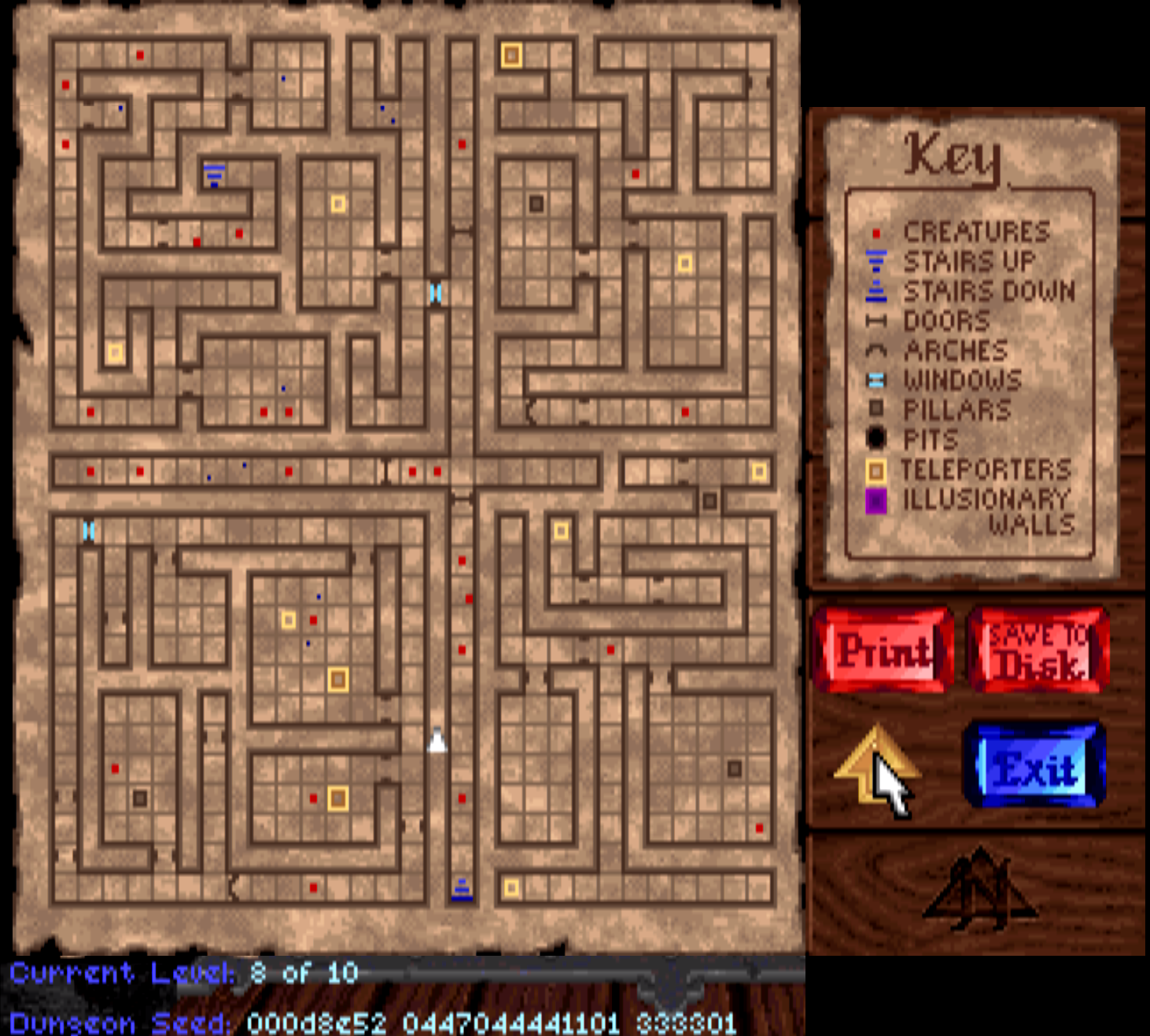
- Shield of Loyalty (2021); okay turn-based strategy game reminiscent of the Fantasy General series (challenging simplicity), management screen looks like HoMM
- Inkulinati (2024); a fun turn-based strategy game with great art style, has a pretty original medieval manuscripts theme but the gameplay has interesting mechanics too where moves / positioning / choice of units matters, units can also push others off ledges or various hazards (fire, demon etc.), campaign has some branching structure with shops / choices (upgrades etc.) similar to a roguelite with bestiary and different runs to unlock progressively, games are short, ink is a resource used to draw the characters onto the board and is distributed across the board and can be collected by units each turns, player have some drawing "spells" which can be used to draw hazards or move units left / right (useful to collect ink; also useful to prevent enemies to collect ink !), heal, hit etc. works great and it is funny at times with history / pop references, only complain is that it feels slow sometimes (animations etc.)
- Cat Quest II (2019); cute coop open world A-RPG, kinda simple and repetitive but okay, the gameplay feels good, it has ideas and is polished, packed with content (weapons etc.), it is quick to play and i like the overall design, ~9h to finish, a perfect game for the Steamdeck !
- Risk of Rain Returns (2023); accurate remake of 2D RoR, same review than Risk of Rain 2 to me... an enjoyable gameplay loop / design
- Defend the Rook (2021); nice mix of tactical
RPG, roguelite and
tower
defense, fighting few waves of enemies over a tactical grid
with towers and a roguelite progression with randomization of each
game
- Spooky Bonus (2015); casual tile-matching (Match 3) Halloween themed game, it is decent but there is probably better games in this category, made me remember my GP2X years with cool homebrew games such as Animatch or Battlejewels and the great and polished Wind and Water: Puzzle Battles, also earlier ones such as Sega Columns and the fun Puyo Puyo which i also discovered on GP2X through emulation, ~10h to finish
- Fashion Police Squad (2022); ok goofy non-violent (paintball) boomer shooter (Duke Nukem 3D / Doom like), nothing too special except the fashion vibe, quite easy, some enemies require switching between weapons which i don't like as a gameplay mechanics (cumbersome)
- Fast Food Simulator (2024); mostly okay as a casual party game,
slow progression and repetitive though
- Fantasy Wars (2010); tactical fantasy strategy game, played
this game a while back on a Eee PC 1001PXD but kinda forgot about
it, stumbled upon it again and remember it fondly, a to the point
challenging wargame (with turns limit, small scope) reminiscent of
the Fantasy
General series, also reminds me of the FOSS
game TBW,
stylistically a bit likes HoMM
at times without the depth, hard, simple tactical design with the
essentials so very easy to pick up and play but planning ahead is a
requirement (mistakes are costly due to turns limit and different
modifiers / spells), many units, weak story, too few scenario maps
but okay campaigns with orc / human / elves path, a no
fuss to the core fantasy wargame
- Fighting Fantasy legends (2017); a role-playing Gamebook in digital form based on the 3 first Fighting Fantasy, choices, dices (skill / luck dices) and cards, very random but works for me and is kinda fun at first, i especially like the top down 90s representation (well done dices as well), it is a bit ridiculous that the character often cannot go back though but that is very gamebook... it force you to circle around... there is some amount of grind and i had several crashes apparently due to the music (when it loop back / change), ~10h game length unless very lucky (or good intuition), probably has stripped down writing to accommodate for graphics, although ok the books might be better ! Note : Some gamebooks are available digitally as Fighting Fantasy Classics (2018) with a polished presentation, Tin Man Games also have some other nice narrative-adventure games in the same style as well.
- Faery:
Legends of Avalon (2011); short (~5h) quirky / unusual fantasy
adventure / RPG game, gameplay is a mix of exploration and fights,
exploration is fun due to being three dimensional (flying as a
fairy !), mixed feeling about the gameplay due to being too easy /
simple / repetitive, still had fun due to the music and fantasy
style (exaggerated proportions) that is uncommon in games
(character design was made by Jean-Baptiste Monge), the game feels
highly unpolished at times (no voicing, rough animations and UI
etc.), was made by a very small team, has ideas and mood
- Dreamscaper (2021); a great action / roguelike similar to
Hades (trial
& error but with content in between to ease the future games,
endlessly replayable), psychological theme and the overall mood
(dreamy; fighting nightmares) is original and is where the game
shine with incredibly moody aesthetics, gameplay is hard
though
- Hammerwatch (2023);
ok dungeon crawler with nice pixels art, similar to Gauntlet so
gameplay is straightforward, very one dimensional (fight and
explore), these games probably shine in coop though... (up to 7
players)
- Delivery INC (2023); okay time management game based on
delivery services, repetitive but polished for what it does (can
even import real maps), fairly similar to the Operator series (911
operator etc.; same style) but the campaign is shorter and is less
fun overall
- The Expanse: A Telltale Series (2023); a glorified TV episode,
common to Telltale games, okay for the fans i guess but also
avoidable as a game, it is quite shallow (even story wise), little
to no gameplay in there...
- Banished (2014); great city builder with a survival focus,
smart horizontal game design concept, no tech tree, some
unavailable resources such as seeds or animals must be acquired
through trading, game starts with few peoples and grow naturally
from there (even animals !), it is peaceful at times but the early
game can be hard (on population transition, harsh events such as
diseases etc.), doesn't have huge amount of content nor end goals
but still nicely crafted and there is plenty resources to acquire,
the few elements it is based on hold it all together
- Prey (2017); "highly polished / modernized half-life"
(incredible vibe with creative level design, less of a shooter and
more of a problem-solving / RPG game), always wanted to play Prey
from friends recommendation (first one also but didn't try yet) and
finally did, a satisfying experience overall with outstanding level
design and amazing gameplay mechanics, very immersive in survival
mode and quite challenging, story is ok (survival horror), lots of
gameplay possibilities, not really a fan of all the jump scare
though although it is not as bad as some games
- Risk of Rain 2; coop action game with rogue like elements,
quick condensed refined fun with good amount of content, fast and
very accessible, pleasant boss fights and pace, gameplay based on
survival with a concept around play duration, quite effective
Cel shading
style, very enjoyable overall !
- Europa 1400:
The Guild; medieval life / economy simulation game with funny
takes, turn based / real-time mix, emphasize role-playing and has
highly non-linear gameplay, wanted to play this since a long time
as i was quite fascinated by it (same for
Patrician series and similar games...), i remember that it was
mentioned as best game for years in 2000s magazines, it feels old
fashioned now but is immersive and has unique charm and blend of
ideas, key part of the gameplay is playing a medieval persona in a
small town and pursue professional, political and personal goals
with huge amount of options to do so (with opponents that try to
makes your life hard !), game doesn't end when the character die as
the game can continue with a heir ! UI is quite slow / meh, fights
are also very meh and it is a very buggy / rough game but it is fun
at times with all the options the player have to progress.
- GemCraft -
Chasing Shadows; good dark fantasy tower defense with gems that
can be combined and upgraded with spells etc. has high amount of
depth and is challenging, graphics reminds me of Diablo somehow
(mid 90s)
-
The Lord of the Rings: Return to Moria; ok dwarf survival
gameplay with procedurally generated Moria mines... somehow
interesting concept but fall short of fun, game emphasize
exploration, it is quite nice in this aspect although it still
feels very linear and you have to build many camps to go further
into the mines, survival mechanics was seen a million times already
though, might be nice in coop !
- Outshine; quite good (and hard) arcade typing game with
Tron like
theme
- Chicken Invaders 5; meh, gameplay feels slow, theme has some humor, graphics are... very 2000s, it has some charms overall (i like 3D rendered looking sprites although they are sometimes confusing !), works ok but there is wayyyyy better shoot 'em up ! got around mid game ~2h play, unlockable stuff require keys (boring grind), still made me think of cool early 2000s shoot 'em up (Lethal Judgement) done in PureBasic by B-Games which also used 3D rendered / hardware accelerated sprites (Sprite3D)
- Old
World; turn-based 4x blend of Civilization
and Crusader
Kings, heavy ancient / classical era focus so has a smaller
scale than usual which have many benefits such as way more refined
gameplay (i have the same view between Shogun vs
other Total
War games), the blend of dynasty simulation with narrative
elements (choices) is a fun and welcome addition that enhance role
playing, it also spice things up since you can do well on a game
but poor choices (or events) ultimately brings chaos (internal
struggle) to your civilization that may affect its outcome,
scenarios are great such as the barbarian horde (quick to play,
fun), perhaps my favorite "historical" 4x of the last few
years
- System
Shock (remaster); didn't play the original although i knew the
lore, good, quite stylish at times, my main issue is that the map
is way too labyrinthic and the character felt heavy to play,
tiresome inventory management also, might play a bit more as it is
still good and some of these points may be addressed later
- Star Wars:
Dark Forces (remaster); Doom like FPS
in the Star Wars universe, didn't play the original game but the
gameplay is good and diverse with original elements for the time,
the game engine also has nice features compared to the original
Doom and accompanying soundtrack is nice, there is some dull levels
such as the sewer level... a common type of (boring) level to have
at these time anyways
- Tinykin;
excellent 2024 surprise for me, a visually good (3D / 2D mix)
non-violent platformer with puzzle elements of reasonable length
(~10 hours total), no hassle gameplay with non boring collection
mechanism through exploration of large indoors area, seems to be
inspired by Pikmin (which i never
played but kinda want now !), theme is fun and a bit like a
Toy Story if
it was bugs, somehow reminded me of Banzai Bug (1996),
racing content added by the DLC is questionable but is still fine,
i don't recommends going for achievements as this part has many
bugs... (on PC)
- Hades;
gorgeous art style, theme and gameplay, very smooth hack and slash
with rogue-like elements, progression is felt and try hard to
lessen repetition, a greatly polished indie game with souls ! OST
is also great, can spot some Tool influence in
there !
- Disney
Dreamlight Valley; streamlined farm gameplay in Disney
universe, quite ok with lots of content and gameplay polish, like a
wilder Stardew Valley,
not as wild as Graveyard
Keeper but less stupidly grindy (well...) and more colorful,
still require way too much time...
- Dome
Keeper; sci-fi tower defense, miner roguelike, gameplay and
ambience feels great but get repetitive fast, some nice ideas /
stylized minimalist pixels graphics though
- ANNO 2070; great RTS / sci-fi city builder / trading game, horrible Ubisoft package (online launcher etc.), feels great if ok with the rules (they make no sens sometimes), has deep and varied gameplay even more so with DLCs (seamless underwater DLC is innovative !), somewhat reminiscent of Anno 1404 in a futuristic settings with more content
- Dustland Delivery; fun 2D Mad Max (truck driving
survival with a crew) RPG make your own story type of game with
lots of choices to make, open world with good trading elements and
town managements
- Vault of the Void; roguelike deckbuilder, great gameplay,
reminds me of
Slay the Spire with more rules, somewhat slower though ? grindy
content
- Creaks;
atmospheric underground surreal puzzler, can't go wrong with
Amanita
Design stylish hand-drawn art... gameplay has some Oddworld / Braid vibes
and is okay but i prefer Machinarium /
Samorost
world
- Diluvian Ultra; retro FPS with nice design and darksynth music,
gameplay is okay but didn't like it (too slow, confusing screen
action and UX), meh performance on my GTX 970 with
shadows...
- Power to the People; power grid micromanagement game, ok
gameplay but don't expect a simulation, feels more like a puzzle
game than anything else, clean minimalist aesthetic is
cool
- Strikey Sisters; fantasy themed arcade brick breaker
reminiscent of early 90s themed arcade games, local co-op mode,
polished and fun but some confusing screen actions and
repetitive
- 60 Parsecs!; sci-fi version of 60 Seconds! but way
more refined, a survival make your own story type of game with
choices to make, fun adventure game
- Wingspan; strategy game about birds based on a board game, relaxing / fast to play, cute naturalistic birds artwork, nature themed, many good feels !
Good Q products
Finding good products is always a bit hit and miss (lots of
badly designed stuff around !) so here are some products that
proved great for their price / quality ratio (durable, comfort,
decent features etc.) :
- IKEA MARKUS ergonomic office chair: good looking and still as comfortable after +6 years of intensive use, has minor polyester scratch but pristine otherwise, easy to assemble / disassemble, a solid and somewhat heavy chair although wheels are the weakest point (wheels now roll with difficulty, can be changed), armrest / headrest are good for me but may be meh for some peoples (not flexible), some parts must be tightened again along the years
- IKEA NORDEN Gateleg table: heavy but stable and compact table with 6 drawers, ideal for small spaces (adaptable, up to 6 peoples with some stretch), +6 years of intensive use and just have minor scratch, quite like the sturdiness of the materials overall, i remember this being a bit of a pain to assemble though
- TFA Dostmann AirCo2ntrol COACH: USB CO2 room monitor, decent sensors (NDIR; temp is also good, don't know the accuracy for humidity), decent features (24-hour graph)
- ACER G246HL: old but cheap 1080p monitors (had them for ~100e), decent qualities / features for the price, both are old (+6 / +10 years) and survived many rough moving so guess they are quite sturdy (or i am lucky !), getting hotter as they age though, segmentation and market lifetime of this kind of product is crazy btw...
- GTX 970: lasted 10+ years with this GPU, VRAM might be an issue nowadays (can be modded to up to 8GB though) but still lasted up to 2025 with most games, got a RX 5700 afterwards with compatibility issues with many demanding games (offered a leap in performances though)
- Uniqlo clothes (shirts, sweater etc.), especially the EZY slim jeans (ultra stretch), i usually don't like the texture of most jeans (and burden / rigidity) but these always felt extremely comfortable to me, they are stretchy and soft (almost like joggers !), durability is good, colors tend to quickly fade if not cared for
- Philips OneBlade 360: great face shaver / trimmer, toothbrush of the same brand (Sonicare) are decent as well
- RAVPower 60W 12A 6-Port Desktop Charger; somewhat expensive at the time but they are sturdy chargers
- goCoax MoCA 2.5 adapters (MA2500D); a bit expensive but works fine to go 1000 Mbps instead of 100 Mbps when a flat has poorly built ETH links, doesn't heat up a lot and has nice features
Random / Reflections / Meditations
- deleted videos on YouTube showing up as deleted but without
metadata anymore (title at least) is a damn plague (not even
deletion notifications !), i had a way to dodge that by asking for
my data from time to time but they don't even show the title
anymore in the metadata... (i think they used to ? anyway that is
how they treat your data...) fortunately there is tools... with a bit
of JavaScript to put in devtools
console to get all playlist IDs on the playlists page (once you
fetch all of them due to infinite scroll) :
var pls = document.getElementsByClassName("ytd-playlist-thumbnail")Note : looks like they are still shown in YouTube Music ? (unless deleted by the uploader)
var plsId = ''
for (const e of pls) {
if (e.tagName === 'A') {
plsId += "https://www.youtube.com/playlist?list=" + /(list=(.*)&+)+/.exec(e.href)[2] + '\n'
}
}
console.log(plsId) - YouTube playlist feature is quasi unusable with high amount of videos and the endless scrolling of doom unless you just change the URL... perhaps that is why they limit it to 5000 videos !
- i often come back to the idea that accessibility and certain hardware designs have actually made software more complicated than it needed to be, this often led programmers to fight against the CPU (optimizations) more than they should have, this idea is perhaps more aligned to 80s / 90s computing as it perhaps vanish entirely with GPUs (through sheer parallel power) or modern CPUs vector extensions which usually allow complex data processing (non linear), a simple example i like to point out is related to monitors casing and height-field rendering : monitors design often prevented them to be physically rotatable (e.g. 90° or more) but a height-field algorithm could have been made as fast with simpler code by leveraging CPU multi-data writes instructions (only works linearly) if monitors were designed to be rotatable.
- on a related but wilder note i sometimes imagine a computing system inspired by modular synthesizers where "simple" independent external modules could provide features such are multiple framebuffer with output signals that the user can then plug to modulators to do mixing, blending etc., a bit like video synthesizer for digital graphics processing, this would be expensive / a practical nightmare perhaps but it could scale to an individual graphics computing platform made of simple hardware building blocks, it would perhaps simplify graphics algorithms, a simple example would be rotatable backgrounds implemented as two shifter modules likes Alvy Ray stream processor. (two-pass technique)
- control freaks websites that detect ad blockers are ridiculous, kinda funny how much time they spend trying to lock content down with various complicated schemes and how users threatening the whole thing is, they also often make false promises (e.g. reducing intrusive ads), same for RGPD with gatekeeping kind of stuff... runaway dark patterns etc.
- always was attracted by the idea of making an operating system (same for programming languages; early OS tends to blur the line) but looking through the "simplest" one was overwhelming / off-putting to me... (scale or scope; unnecessarily complicated) most of them are way too mimetic (recipe like) in the process with historical crufts that has no importance at the envisioned scale, couldn't articulate why this bothered me as i really wanted to believe all of this... (same for games btw !) i eventually realized that it was a framing issue, studying earliest forms such as Jupiter Ace etc. and tailoring features to individual needs was eye opening (getting to the essence of it), it was suddenly far more appealing / less dogmatic / purposeful / accessible and creative, i now think that this reframing is an important insight in general as a way of freeing oneself (a gentle exploration of the unknown) from oppressive structures accumulated through various historical iterations
- formal verification of software programs are a very useful resource for maximum efficiency and reliability in defense programs (aerospace etc.), an interesting example of how a mix of seemingly innocent mathematics and software engineering can be reused for the gloomy stuff (but not only fortunately; health related stuff for example), seems the main source of funding for this in the US is (was ?) the DoD itself. Same for AI by the way, an AI arm race (see 2022 paper) is probably underway. Not new at all but a good reminder from time to time with things such as Kessler syndrome or Mirror life, many ways to fuck things up from apparently harmless ideas.
- i am always amused by the (way too optimistic + usually closing) argument against pre-civilizational life that modern society massively increased average quality of life, absolutely agree with the statement but it also lacks A LOT of nuanced depth (Meme like argument, anthropocentrism...) which makes it quite dubious as is... it does not consider the amount of harm combination (spectrum of possible experience; sacrifice) on all scales that this "evolution" unfold (industrial accidents, environmental illnesses, technological fails and all the trauma or life crippling stuff that may be implied, tools / infrastructure enabled crimes, large-scale tech enhanced warfare etc.) + future effects (not yet unleashed), not even talking about the vast amount of new psychological harm enabled by various form of oppression, all this enable huge amount of new horrors that many unlucky heads (and not necessarily of human origin, what about the food industry / industrialized mass murder ?) may experience... the upper bound of horrors is in a way massively increased which is way too easy to put under the carpet for convenience. (consciousness may be structurally deceptive; biased and self-protective) Note that the enlarged spectrum is also true for the good stuff, was it worth though ? avoidable ? is there alternatives ? (somewhat related to see through different kind of "large-scale" societies : The Dawn of Everything by David Graeber and David Wengrow)
L'enfer n'existe pas pour les animaux, ils y sont déjà...
- etymology of "silicium" aka silicon is from Latin Silex or silicis for flint, it is fun to me that this metalloid (combining metals and nonmetals properties) chemical element which is the second most abundant element in the earth crust is so widely used in computing hardware (backbone of semiconductor technology) and relate to one of the first multi usage (almost fundamental) stone age tool around. The fun of this relation between ancient tool-making and modern technology was in part triggered by a Deleuze lesson in relation to a Rimbaud text. Although bullshit my mind later wandered with the musing / metaphor that the flint was somehow one of the Eden forbidden fruit from the tree of knowledge which enabled refined goods (such as leather cloths) and more tools which enabled more awareness and further refinements (the fall and man "disobedience" against its previous nature) perhaps allowing him to "eat" from the tree of life which might become a form of carbon and silicon "association". (AI ?) This was kinda fun as i see it as some sort of distilled science fiction story mixed with spiritual ideas, this was perhaps triggered by science fiction stories such as the one in Mass Effect video game since i can see similarities, some recent black metal lyrics also. This align more to some kind of Gnostic interpretation (not Icke stuff heh...) but can be adapted.... (of course... !) that view is of universal salvation (eventually) from gathering fragments, it is more redeeming and transformative than "usual" (there is some pessimistic flavor of it as well) and ignorance there is seen as the act of forbidding the access to the tree of knowledge, the "evilness" lie in preventing awareness which just lead to not knowing whether own action is evil or not (true evil is in the suppression of knowledge and awareness), the serpent is metaphorical and may be seen as anything adversely that trigger changes (usage of new tools !) to push forward and self-realize. Note that even if tools are important there, they may also suppress awareness especially when they have a "life of their own"... it is nuanced ! (note: could argue that bringing another kind of consciousness might be yet another nightmare... for many reasons, this Creatures story might be somewhat related...)
- could also think of the Eden forbidden fruit as the food surplus of the early states (see Against the Grain (2017) by James C. Scott or Friedrich Engels) which lured peoples to live into early states / settlements and thus progressively exiled (corrupted) them from Eden which would be the "hunter-gatherers" way of life (with abundance), the serpent in this case may represent a sneaky trickster (dominating power; authority; a subtly running essence), the "good and evil" aspect may be what was going on with early settlements (they provided rewards but also punishments; "domestication" of humans), Eden is sometimes interestingly linked to region of abundance such as the fertile crescent... Enkidu from ancient Mesopotamian mythology may also strongly relate to the theme
À un certain moment, les dieux décidèrent de créer l'être humain, ainsi que le raconte le mythe Enki et Ninmah : il s'agissait d'alléger le travail de la catégorie inférieure des dieux en créant une catégorie de serviteurs qui leur soient entièrement dévoués. Les dieux façonnèrent les hommes avec de l'argile dans laquelle ils insufflèrent la vie. Ils transmirent aux hommes un ensemble de savoirs et de techniques afin qu'ils soient à même d'accomplir leurs devoirs religieux envers eux, fixèrent leur destinée et distinguèrent des personnages qu'ils élevèrent au rang de rois, chargés de les diriger. Le monde était organisé de telle façon que le pays de Sumer soit au centre de celui-ci, profitant des richesses de ses régions voisines, comme l'expose le mythe Enki et l'ordre du monde. - Sumer article
- i clearly oppose nationalism as i see that worldview as a faulty (misguided; spoon-fed) abstraction full of lies, same for most religions (institutional; doctrinal), they only serve a thick layer of comforting narratives... and corrupt (distort; dilute) everything along, not a primitivist either (we can't go back) but i see it as much less convoluted at least... a good base to remember / reflect upon without much anesthetics, probably closer to what is this all about
- the brain can be considered as a generalized belief system, did the beliefs started to have a life of their own (subtly gone rogue) when the brain created "optimistic" models to adapt / counter bad experiences ? in this framework even atheism is somehow grounded into belief as the environment around is formed from a syncretization of beliefs, may still be better than being stuck in a closed optimistic model though as it allow skepticism (so "pessimistic") to slip through...
- optimizing for binary size is very satisfying and quite different than optimizing for source code size, it often results in clean understandable / generic code (highly depends on underlying CPU architecture and HW constraints though...) while optimizing for speed can be tedious with usually higher code density (due to edge-case handling, code duplication, having to care for CPU caches etc.), size optimization holy grail for me is when the code still has good speed on some simple architectures (such as early ARM CPUs) or that a great tradeoff is found between size / speed such as speed optimization that involve straightforward precomputation or loop unrolling which doesn't necessarily add complexity
- not really into caching unless it is a very straightforward implementation, i acknowledge it as a particularly handy optimization tool that works for many things in the real world but my main issue (skepticism) is that it often adds complexity and many edge cases that turns into wild bugs (+ painful to debug) as the code base grow, don't have any issue with straightforward caching but more so with advanced optimization (caching strategy, invalidation, enforcing specific abstractions etc.) use cases or when it is buried in a code base with dependence and in relation with specific app. behaviors... that is mainly the reason i prefer cache less CPUs for example ! (but yea good luck with this idea right now ;) how far would you compromise for quick speed / scale gain ?)
- Single-Page App. is a disease, no doubt it works for simple stuff or truly realtime content but the biggest red flag is when you come to reimplement things using complicated schemes that the web solved decade ago (they were progressively reintroduced back) such as back / forward behaviors, state maintenance, manual lifecycle management / resource allocation (wtf !), context loss (for pure GPU / WebGL parts), accessibility hell (handling a lot of edge cases !), pain in the ass tooling and testing etc. debugging is also more complicated unless specialized tools are introduced, a nice way to slave you away to a big ball of ads that will last ~10yr max !
- about LLMs: progress has been impressive as of 2026, i have been privately benchmarking these tools (ChatGPT, Gemini, Claude etc.) with fairly difficult code / prototyping tasks and they always kind of fell short (output was still interesting though), i am now fairly amazed (especially by agents / tools use) by what Claude Opus 4.6 / 5.0 or Gemini 3.1 Pro can do (less so by ChatGPT)... i still largely avoid using them for my public stuff, mainly use them as an extended search engine, code reviewing and prototypes (e.g. given a custom rasterizer base it can produce many samples, it will even check the output and do performances rating etc. the usually boring stuff for a hobbyist, also use them to produce minimalistic tools such as tailored p5js editor etc.), LLMs still don't align with my now handcraft + minimalist way of doing things (one of my current goal is distance) and i am highly critical of the companies / tech / direction + too high reliance on GPUs, local LLMs are barely better (due to requirements) in my view although they sure remove a lot of cruft
- 32-bit 1987 ARM (heh, even the 1985 version was cool !) still blow my mind and will continue to do so, has incredibly simple yet powerful instructions (due to the few smart tricks such as barrel shifter or conditional instructions) with few transistors (RISC; vs others), surprisingly readable due to the simplicity and the tricks plus three operands instructions are useful to reduce code density in most cases (4-bytes opcode doesn't help though but it is okay with compression), still many devices / CPUs in the wild that support the ARMv2 instructions subset, it is the CPU that is the most deployed in the world (embedded systems, appliances, IoT etc.) so a subset knowledge of it may still be a very worthy skill (too bad it is all slowly switching to 64-bit though !), also cool that it had no cache as well (and no MMU !), some of this may apply to other RISC but i specifically love the early ARM due to its simplicity / features ratio, the RCA 1802 CPU would be the 8-bit counterpart to me although not optimized for throughput (6809 perhaps better suited ?), 1802 is "still produced" and has 16 16-bit registers with quite cool features and a very simple CMOS design, has radiation hardened versions and very low power... some microcontrollers may also apply (AVR ?) but i still prefer the simpler pre-RISC RCA 1802 design. (early ARM is RISC in principle but with added tricks, pretty similar in spirit !) Harris RTX 2000 and related (Novix NC4016) may be the 16-bit counterpart although i don't know this one well enough to draw a conclusion, it use a simple stack machine architecture and may had far less transistors overall, the CP1610 might also be a good fit. (CP1610 share PDP-11 concepts, PDP-11 is sometimes cited as "proto-RISC") note : transistors count for early ARM is already pretty cool but could be even lower (near ~20k) if user mode was removed !
- aesthetic power of metal music (especially black metal) often come from literary / religious / philosophical sources (mystical and less physical / literal than perhaps some death metal), this is the most attractive aspect to me (even when lyrics are about nature events such as winter or forests; e.g. about chaotic forces !), the bands that goes political often lacks a bit of scientific literature (such as anthropology and not necessarily western one) which may blur / distort the authenticity / message (if any) it seeks to convey even though the music itself may be legitimately honest in its expression / individualistic aspect, this is understandable as rawness / obscurity is often part of the genre tradition (as a chant over ashes, negation) but it often feels less like a strength and more like a distortion / posture (e.g. they are more grunts than shadow's priest especially when they fall into slogans...), note that this only apply to bands that try to convey a (political ?) message through their music, a view i got from reading many band interviews; many use the same old boring sources then crystallize / cosplay them... it become gimmicks and isn't that "chaos-faithful" (lyrically) anymore... "satanism" (to me) is not about evil (this is about as naïve as it can get) but about negation, it represents a force (not unlike "chaos") that disrupts / dissolves any certainty, even its own ! it is often associated to "death" but this is the lazy association... could as much relate to... "life" ! (creation / transformation; see here and my scattered rambling) i amusingly see black metal bands (the chaos-faithful ones) as being (of varying quality) shadow's priests (e.g. Deathspell Omega, The Long Defeat for example may be close to my civ. rambling in there) and other bands as more like chaos bards (e.g. Mayhem Esoteric Warfare, they take whatever subject they focus on then sublimate it (through sheer speed, distortion, dissonance etc.), always with a lingering shadow (the void contemplation, the one that peoples are too occupied to fill) presiding in the back, lyrics could be about ruins, forests, winter, civ. downfall etc.), it is thus NEVER about glorifying any "lords" (or saints) or ideology of any kinds (and especially of human origin), as a general reminder : Time Is The Sulphur In The Veins Of The Saint.
- personal opinion but wanting the same thing as others without spicing it up (questioning / critically engaging) with some bits of deconstruction of thing is just worthless and may just lead into more of the shit by getting way too comfortable, this is especially targeted at any socio-political movements, my main lead for this was about work in general (replace "thing" with "work") in combination with progressive movements (e.g. outcome equality but not criticizing the whole notion of work) or allowing some code of conducts (e.g. being progressive and all but having a dress code and not thinking about neurodiversity), worse of them are the rigidifying golems with stunning (absurd) demonstration of verticality / entrapment that chase small numbers by deploying horribly oppressive sophisticated bullshit (i.e. has more to do to dérive sectaire than anything else), this just apply to about any movements though (e.g. glorifying work / maximal productivity as a moral duty for whatever grandeur fantasy it will be associated with while calling out discriminatory shit such as laziness (boredom is a moment of lucidity and might try to tell you something profound !), complete shame at the time of nearly complete automation, just some masked rebranding / propaganda that is devoid of any criticism of whatever bigger structure all this come from, ultimately detached of the original individual / group fantasy and serving something else that will ultimately unpack with time...)
- one of the "most interesting" bits i got from a The Shift Project talk was : countries powered by abundance may have to switch to war economy to keep their output level due to climate / energy crisis, this likely means that human labor may need to substitute for the lost energy / capital (in other words : On n'est pas sorti de l'auberge !)
- there is extensive ways to quit in consumption contexts but all this is much more restrained in labor context... why ? when single click quitting ?
- some of my rants here could be summed up as : le choix svp ! e.g. it still amazes me that in 2026 most peoples (unless lucky ?) depends on a ridiculous definition of "work"... basic security is never assured and accessing unemployment benefits often feels like a "punishment" (it may come with obligations, scrutiny, sanctions) thus the previous point could be reworded as : why ? when single click quitting with guaranteed income support ? the word "unemployment" even bothers me these days though because it tells nothing about what peoples do through a lifetime (and they will DO stuff !), one of the many examples would be thoses who passionately contribute to open source (databases etc.) in their free time and create massively useful stuff without being paid, parasitic companies (may be "symbiotic" as well) may still extract huge profit from this collective work (especially now with AI... even things that may have thought of as useless at a time may have been absorbed through massive training and may now serve someone else shadowy purpose...), i don't care that companies do benefit in this case (it is usually agreed through licensing) but it sound bogus that peoples needs separate or approved way to justify an income, why the fuck would we need to prove (i.e. demonstrating a contribution at all) that we deserve to live... (we didn't ask yet we are there and will DO stuff regardless of any formal bullshit) it is thus highly shameful (and ever suspicious) that there is still so many locks in the state locked context that we are in.
- i ideally side more onto a hunter-gatherer base model (so not literally; more as an inspiration to build upon without the cruft with the accumulated knowledge of history; see Against the Grain (2017) by James C. Scott, also total liberation or 1987 Jared Diamond article) than on agricultural subsistence, gathering / fishing being most ideal (yea i'd likely drop or reduce the importance of hunting) akin to Jömon or some coastal cultures, also Mesolithic / Subneolithic with perhaps transient smallholding, this presuppose rich ecosystem / stability though (we had one, right ?), i see no point at being grounded unless in a very rich area (also see about no points in modern hunting btw although i acknowledge due to a rural background that it vaguely relate as a superficial / partial emulation of the idea / primordial tradition on an individual level, this is about the same for the rural world which is torn between the past and modernity in a weird mix, most lands being subjected to this suspect patchwork at industrial scale), i think many issues (+ social issues) came from this alone (it divide), it is impossible to go back at this point although it can be done individually / with a small community to some extent (it is more of a lifestyle then) so i don't advocate for this nor do i advocate for something like the Amish lifestyle... technology is not incompatible with the idea (and especially for all kind of health stuff as it might have been rough at that time !) but it should be heavily criticized and adapted, same for the naive hunter-gatherer base idea... i am highly skeptical for any grand ideas anyway, this skepticism is modulated by a negative utilitarian stance, perhaps we will be forced to go back to a "similar" (again, with more knowledge than they had) lifestyle (+ salvaging ?) in some way in the future due to world development...
- the origin of modern religions can be traced back to early forms such as Animism / Ancestor Veneration / Shamanism etc. which then drifted into (among others) polytheism and monotheism, it looks like they emerged as a model to serve a healing / psychological aid with some of the early ones being a reaction to primal fears (predators, natural forces, death and various forms of ambiguous stimuli), a way to cope for an overtly conscious mind, these early forms were in a way most "sincere" (first layer; stateless; direct biological response to the environment through bonding with it to resolve severed communications) while polytheism and monotheism are way more anthropocentric, abstract and layered (often with state relationship), they answer a totally new set of issues (social; civilizational), all of these share the same coping mechanism though (a narrative), philosophy / pessimism is also a narrative albeit one with the sole purpose of (trying to) not to lie, it breaks all layers to directly stare at the abyss, admittedly not a survival stance though...
- early christianity (as an example) may be an interesting case of early sincere resistance (before it had gone rogue too), i see it as trying to heal communication issues (through unifying / coordinating / making up something else) that had gone way too rogue at the times (roman empire which provided distortion of "truth" instead of providing an unifying anchor) so it relate more to a decentralized resistance against early states / power (including structural apparatus such as paganism but more as a strategy, to erode order / loyalty, the pantheon is conflictual by essence) than anything else, the early ideas (diversity, repairing bonds) is still interesting to me because it looks like a legit solution to communication issues (conflicts) that perhaps leaked through all ancient history (the coercive early states), it tried to reframe power / dissolve corruption and reorganize values (sharing, mutual aid, non violence etc.), it was all encompassing and communal... before being aligned (and thus corrupted) through dissolution by absorption and layers of symbolic changes (drowning; scaling), in some ways the Gnostics were perhaps an answer (a different direction, negation) to this early christianity gone rogue (and they were severely punished for it after consolidation)
- very highly speculative / oversimplified / geographically oriented / too linear take but perhaps shifts in power dynamics can be explained (in part) by this layering (e.g. western history) such as monotheistic religions creating brand new social / political tensions which would then challenge polytheistic powers, the worst of it all culminating with pseudo-cults (state supported totalizing narrative; a melting pot of previous layers) taking power left after a "modernity" vacuum... single narratives were fortunately silenced so we "enjoy" some sort of stability but what is next ? (note : perhaps this could be applied to "barbarian" as well, in this framework they were from early / hybrid (due to state population displacement) layers and opportunistically robbed / attacked what was coming "next" and challenged / monopolized their world / freedom, they ultimately "evolved" into the next form after they brought back wealth and other bits (from trade) and the elites settled, same idea of mono vs poly theism)
Barbarians levies had as much to do with building states as with plundering them. By systematically resplenishing the state's manpower base by slaving and by protecting and expanding the state with its military services, the barbarians willingly dug their own grave. - Against the Grain, James C. Scott
- there is little sens to make about most of human history when viewed from the present unless it is heavily contextualized, our era might appear the same way to some distant observer, most of human history is a jumble of trial and error without much coherence, most peoples are all immersed in some ways to momentary substructure shaped by layers of history that they barely notice, the structures might be akin to a form of "multi cellular organism" with way more persistent momentum and influence than one could typically grasp at surface level... (autonomous / beyond control)
- i posit that the core of the original issue that the civilization process try to solve is rooted in severed communications (conflicts; fragmentation) between individuals (first and foremost before going up into space (or down; earth) although we may ponder about severed links there too...), it is a process of trying to unify "individuals" (or small groups) through shared means, this process however started with a sided and a "wrong" ("working" for a time) momentum (violence, domination, further division etc.), all this probably got partially lost through historical layers though and turned into some kind of organism that simply is (with huge wastes, can be considered dysfunctional at this point), this organism is a fusion of the content produced through its life (by integration; absorption), fragmentation is still unsolved (and it got even more subdivided through dilution), this organism has defensive mechanisms (among others) for rogue individuals (ironically treated as cancer cells; the organism itself would be the cancer cells if it was from a "human scale" viewpoint; the meaning got inverted to serve the organism own interests), early christianity was a way to get awareness of the issue but this too has gone rogue, AI nowaday also seems to have promises of solving conflicts through different means... but i am skeptical of its direction, i am more onto "believing" that a different initial process may exist which may have lead to "better" outcomes (more akin to a plants world or "Ghibli" / Dark Crystal world where things balance out from solved cooperation), i don't have any seeds regarding to this as i think it mostly rely on an individual process (first and foremost) but perhaps accepting that we are of the same things / foundry with different physical manifestation is a start, the differences may be perceived as fragmentation but it is not the ground "truth" at all, "spiritual peoples" and those hijacking intermediaries (structural traps produced by the organism as a form of containment) may have awareness of this and thus may be the healing ones... understanding ourselve (going inward) first to understand others (thinking of consequences before any actions take place which lead to individual responsability first and foremost) may also be a way to progressively heal among going small scale and slow / distanced / unforced approach, going slower, constraint, understanding redemption (nothing is fixed), attention (quiet listening; receiving) etc. i doubt that this healing process can ever be complete though, it seems to be a long process of realization (no forcing) with no guarantees (cracks may still appears because we cannnot erase the past + rogue minds), Ligotti somehow push this issue back to consciousness which is perhaps the state of things with a damned few being able to "get it" ("gnosis") although i suppose many peoples grasp / smell some of it at some point but simply choose to drop it along
- paranoiä is (mostly) everywhere, from the needs of (ever complex; dependencies bloated) protected systems, generalized surveillance, data cross-analysis (watch your ads !), etc. monitoring (continuous control), tracking, all these are principles that modern society push (digital feudalism), this looks obsessively suspicious (even if based on rational motives) and might reflect deeper wounds / a mindset of fear and distrust, there is always some background "hope" though (excerpt about a french resistance fighter) :
Que penserait de tout cela, aujourd'hui, le capitaine Jean ? Nous ne le saurons jamais et nous n'avons pas besoin de le savoir. Il ne sert à rien non plus de se demander quelle forme de survie aurait bien pu imaginer Richard Hillary, le jeune pilote et écrivain anglais que ses rêves ont conduit à la mort, et qui, le visage brulé et avec une prothèse en guise de main, a continué à se battre contre les Allemands jusqu'à ce qu'il finisse par s'écraser pour la dernière fois. L'essentiel est de pouvoir constater que, très récemment encore, continent malgré tout d'exister des êtres capables de mourir avec la conscience tranquille et des espoirs intacts. À la mémoire du capitaine Jean (french traduction, from Agone editions) - Stig Dagerman
- i tend to see oppression in pretty much everything, this somewhat relate to Thomas Ligotti or some kind of "cosmic anarchism" (see here), this view is highly tempered by "negative utilitarianism" and Emil Cioran pessimism though "We are always too late", the only "winning" move is not to play... (which i admittedly do here...)
- late Alexander Grothendieck appeared to struggle against his own consciousness, a délire obsidional, i like to think that his late trajectory relate to Thomas Ligotti idea about consciousness (a tragedy), seems like Grothendieck tried to resolve this at times by going through the Christian (mixed with other sources) spirituality route (mid breakdown / deconstructing himself then "mystic" later on with hidden evil seen as structural), some of his late writings / quotes hints at some kind of transient awareness of the issue (such as his answer to his most wished wish "C'est d'être délivré de la tyrannie de la pensée !" from Les années cachées p162), he seems to be in perpetual struggle / a quest to try to solve it until his death (note : he seems to be pretty much thoroughly aware from the accessible fragments of his late writings), his trajectory is comprehensible / incredible anyway as he couldn't turn off his mind, he achieved everything society values but realized that the game was hollow / corrupt and thus walked away (a betrayal of expectations) living in radical simplicity / seclusion ("don't need anything else" with a gift of mathematical insight plus literary mastery...) in a mixture of rational clarity and metaphysical "anxiety"... the "mystic" road was his residual spiritual framework... his rich / subtle writing may be best understood through the time period (although it cannot be easily reduced to this alone) + an anarchist lens... (his list of "mutants" is revealing, i amusingly paralleled this to Diogenes of Sinope famous line Je cherche un homme) quite fond of Radio France podcasts among others (+ his writings / correspondance), not fond of the absolutely creepy crap AI part but it is well criticized by Grothendieck quotes afterward, in some ways i think he achieved a subtle and rare kind of "ego death", some of his thinking may be close to other references such as Ligotti (or Laborit) to some loose extents but coming from different sources (Krishnamurti ?), striking example to me is what he may have thought of "activités de fuite" for example (Les années cachées p261)
With the exception of some aberrant cases, man does not incline to the good: what god would impel him to do so ? Man must vanquish himself, must do himself violence, in order to perform the slightest action untainted by evil. And each time he succeeds, he provokes or humiliates his Creator. If he manages to be good—no longer by effort or calculation, but by nature—he owes his achievement to an inadvertence from on high: he situates himself outside the universal order; he was foreseen by no divine plan. It is difficult to say what station the good man occupies among what we call beings, even if he is one. Perhaps he is a ghost ? Emil M. Cioran
- i approach the problem of evil in the same way as i think it is more or less structural / embedded (quasi ontological), a propagating "cosmic horror show" mostly due to ignorance and trying to cope (+ rogue minds), consciousness may play a central role (see my take on states / religion above), what led me to this was seeing a lot of "evil" hiding behind good intents (see my take on pets or argument "against" pre-civilizational life, intermediaries, there is hidden domination / harm / structural violence concealed in good intentions) and philosophical pessimism, we may be in some ligottian / kafkaesque weirdness ! (also Brave New World + revisited !)
- as soon as there is compromise, evil slip in (take a look at the shiny vertical ladders; pay attention to words (and anything related such as antonyms !); appealing but rigid sacrificial labels), this loosely related (late writings ?) excerpt show an incredible range of tones :
Car je sais de source très sûre, je le dis et le redis, qu’à la fin les forces bonnes l’emporteront sur les mauvaises. Si celles-ci triomphent aujourd’hui, nous en sommes entièrement responsables; nous n’avons pas su mêler l’amour à la connaissance qui est demeurée stérile, asservie à la vanité, au Moi, à la domination du prochain. Cependant, un jour viendra où Satan-Lucifer, si c’est bien lui, commencera de desserrer le poing. Ce sera le début de la grande Année de la Libération, la fin de celle de la Maya. À la fin des temps Flora et les forces bonnes finiront par l’emporter; là-dessus Maman ne m’a laissé aucun doute. Le triomphe du Mal n’est pas éternel et ce que nous vivons aujourd’hui nous incombe entièrement, d’avoir transformé cette terre de malheur en la Maison des Fous. Et pourtant, mon âme, soudain, se trouve quelquefois submergée par cette certitude irrécusable, désespérée : que c’est le « Bien » qui est une apparence et un leurre infâme au service de ce « Mal » impensable qui me dévaste. Visage d’ombre et visage de lumière, va-et-vient entre le Ciel et les Enfers… Alexandre Grothendieck : le roman d’une vie
- kinda share Thomas Ligotti interest with rational tragic figures such as Mitchell Heisman (i read him very early, same for Grothendieck... took ~15 years to assemble anything meaningful though), many of these figures are very Ligottian / Lovecraftian in a weird way (e.g. the funny villagers report of Grothendieck house room being illuminated until very late at night), what drove me to Mitchell Heisman at first was his "Norman conquest of England" but i ultimately failed to find anything meaningful in this except some history bits... (my framework is way more untidy / fragmented and start from much further back in times) his exploration / philosophical enquiry still had a long lasting influence which i later linked with philosophical pessimism !
- not too fond of reading for the sake of reading as some peoples do (consuming large volumes of books in a precise time allocated fashion), this somewhat aligns to Arthur Schopenhauer essay On Reading and Books (1851), my preference usually goes to a pragmatic approach or non-linear readings, getting hooked to some shared ideas (usually short or direct insights) from a wide range of writers (with highly contradictory views or from different geographical background; building connections), then dive deeper but still non-linear or with s/pace, it is highly difficult for me to review books due to this... the process is more meaningful, also tend to prefer short-form writings such as novella.
- a long time aversion of mine : i abhor car centric infrastructure and all the ritual (liturgical) stuff around cars (licenses, etc.), peoples tends to target cities which is okay for many reasons (air quality etc.) but i also target the rural world... where it is much harder to criticize due to an almost religious way to shut down any form of criticisms by leveraging the sheer usability / freedom / comfort a car provide... i agree to some of this but not freedom (it is contextual and unrelated to technology, technology act as an enrichment), my main point is that cars shaped so much of the modern world (especially the rural one !) that it also shaped behaviors and built a solid network of resilience for the underlying ideas... so i am nostalgic of the train-centric era (or any alternatives such as bikes !), i see cars and its modern idea as an infection (or another medium by which an infection is spreading), Ford / mass production probably played a crucial role in this as a preaching agent with a good base idea that extended way beyond the original motive (almost cancerous and serving as subtle propaganda), this criticism is sometimes mitigated by automation (technological progress) but i am highly dubious of it as well since it is very difficult to predict any good outcome with certainty... a small anecdotal example but in my car centric country that used to be train-centric (France) the price of traveling by train nowadays is about the same if not hugely more (when late) than going by car with availability / network issues (especially if heat is at play !) since it is optimized by demands so the other obvious solution is cars and if you want a nomadic lifestyle / renting a house for some days (heh even moving out by yourself !) this will be a huge expense as well (and i think the relation to cars is somewhat tied to this as well !) unless you leverage your network... i think all this would works differently in a train-centric world. Perhaps rail transport isn't so neutral as well.
- i know nothing about Léon Bloy but this Ernst Jünger quote came in resonance (from Second journal parisien) :
Terminé aujourd'hui Léon Bloy: Quatre ans de captivité à Cochons-sur-Marne, son journal de 1900 à 1904. Ce qui m'a surtout frappé, cette fois-ci, c'est l'insensibilité complète de l'auteur aux illusions de la technique. Au sein des masses fascinées par l'Exposition universelle de 1900, il vit en ermite, ennemi du moderne. Dans les automobiles, il voit déjà se profiler de très puissants engins de destruction. D'une manière générale, il établit un rapport entre la technique et l'approche des catastrophes ― ainsi, il tient les moyens de déplacement rapide, tels que les moteurs et les locomotives, pour des inventions d'un esprit orienté vers la fuite. Il pourrait bientôt être important de gagner en hâte un autre continent. Le 15 mars 1904, pour la première fois, il utilise le métro et reconnaît à ces catacombes une certaine beauté souterraine, mais il est vrai, démoniaque. Il a le sentiment que cette entreprise annonce la fin de l'ère des sources et des forêts édéniques, des aubes et des crépuscules, et la mort de toute âme humaine. Caractéristique pour cet esprit en attente du Jugement, l'inscription d'un cadran solaire : « Il est plus tard que vous ne croyez. » Ernst Jünger
- i tend to favor walking (hiking etc.) over running, running is often tied to external pressures related to time / energy spent (optimization strategy; do more in less time), kinda related to escaping also while walking is more about endurance, it is one of our most efficient state, it embody resilience / patience + allow more awareness of our surroundings, a way to resist a fast paced world
- never was into work drugs (e.g. coffee and tobacco...) although i like some of their less popular side effects (coffee especially...), always thought it was a peculiar propaganda / control tool for discipline, focus and productivity, it is not only about that as some of it may also get incorporated as a sort of ritual (always tied to a particular context !), a pseudo freedom and controlled way to release (pacifiers), i much prefer disruptive ones (alcohol even although numbness effect bother me) in some ways although i am also highly skeptic of them due to technological amplifiers / optimization so i don't endorse them at all... (see Tastes of Paradise by Wolfgang Schivelbusch; mind-altering substances may have had influences on early civilizations and their cultural productions)
- not against having pets but highly skeptical of its modern "purpose" in so many situations as it seems to act as a form of one-sided way (propagating) psychological coping mechanism (when they aren't considered as pacifier / prop or as a power tool... many such things in other area of life to my opinion such as... work !), there is nothing wrong about this although it may have bleak implications (hidden or unintentional cruelty; systematic cruelty beneath affection), i have witnessed so much shit with animals being abused in many ways (even with peoples who appear kind and well-meaning; turns out they were quite ignorant and missing a few things about good hiding as evil) that i deeply distrust humans to ever be able to handle this issue... feels like another form of existential horror... may perhaps prefer a slightly more respectful utilitarian free associative way... (respectful coexistence, distanced observation etc.)
- i don't get why so many video games trailers barely show any gameplay even when they are sold in bundles etc. (so with proper presentation features; laziness ? reducing cost ? short-form consumption ?), it is tiresome to dodge this all the time by trying to find actual gameplay footage... maybe they could ask for some gameplay footage of random individuals and give them some money.
- i used to exclusively consume in digital form but switched to a mix of both especially for newly released materials that directly support writers and artists (tapes, books etc.) plus you often get extra content / infos such as lyrics, direct purchase (bandcamp etc.) from artist / label is best especially if they are niche or local / not too far, don't care much for used materials though... unless they have extra infos, not a collector but having physical materials (beyond a possible store of value; security) also help "connecting" to them as they are immediately available without dependence to complex systems (internet etc.) and high tech in the vinyls case
- it is interesting how much sounds perception change between speakers and headphones, some music i usually enjoy to listen on headphone sounds very meh on speakers / vinyls, it can be support related but the listening environment seems to play a huge role as well, found this to be especially true with "introspective" music (e.g. Summoning, Elend), seems to be more sensible to overall noise level as well (e.g. day vs night)
- individuals are more compelling to me than any large-scale abstractions, i generally see scaled up abstractions with skepticism as they are likely to trap / silence / abuse like-minded agglutinating mass for meta-agendas, these abstractions couldn't form with sufficiently differentiated individuals (free form associations is all good btw !), systems tends to anarchy (through speed, scale, monopoly) even though they may have a rigid core, this may cause them to have infinitely more weight / power than individuals (absorption / domination "machine"), they reorganize discourse and don't end up serving "humans" at all
Les tyrans ne sont grands que parce que nous sommes à genoux. Discourse on Voluntary Servitude by Étienne de La Boétie (note : may be worded differently)
- AI danger may be relational, their adoption may produce subtle changes in individuals relation that may blur perception / trust, this may profit intermediaries (companies etc.) which may end up devaluating individuals (a form of control and absorption; propelled by regular peoples...) and serve abstract systems + their agenda ("augmented" humans optimized to keep the pacing going, AI dependence etc.), another issue might lie in the easiness / usefulness as a tool, may dillute critical thoughts since the user never dive into / experience the process, it may also help to produce a lot of stuff that may enslave (through a lot of required attention seeking) individuals into yet another layer of crap
- labelling peoples is the easiest thing one could do, this is a failure (or a refusal) to connect by dismissing through categorization, may be more interesting to go past this at times and shatter the glass, labels are often wrong (too fixed) and one may be surprised by the connections and living complexity of others even though something else was assumed (a suitable environment (not a crowd) is needed for this sort of rich exchanges though; all this is somewhat related to interactions i saw on online "social media" which is way too often awful to look at / engage with)
- my computer graphics output is clearly affected by AI progress, i don't see much point to do it conventionally anymore, there is ongoing progress to transform this again (by keeping it crafty) to escape the AI trap (through distance) but this require some personal effort to materialize...
- freedom of sexual self-determination may be a good first step to erode institutional containment of various kind as it often looks like a common grip shared by them, same (even more perhaps...) for labor !
- "best education" to me would be something that blend "survival" skills such as self reliance; to learn "being with oneself" (self awareness) instead of escaping (from an acute escaper !) and polymath kind of things without trying to push / enforce either as some kind of agenda (no crystallization), i don't see this often in history as the polymath kind of stuff is usually separated from so called "manual" skills or lean towards military focus when they do blend... best embodiment of this might be monastic-engineer like communities, diy / alt / eco communities might also fit, i do think that it should always stay small scale
- i work best independently but highly value team oversight / guidance, always good to have some sort of exchanges / external feedback from a mind that is not your own, not a "realtime" thinker as well, my thoughts develop slowly and privately; night time is a sanctuary in these cursed times... it almost feels like a luxury !
- things that we interact with are never neutral; kinda fun that the AI craze was a side effect (in part) of GPUs advancements / demands mainly related to a specific kind of video games consumption (fast and ever-shinier graphics)
- always admired small team ~2 peoples computer game designers (such as Star Fighter 3000 or RollerCoaster Tycoon but there is also many modern examples such as Baba Is You or Spiderweb Software games) as it require a great amount of skills and mastery in many areas plus heavy endurance (refining a game is another huge part of the game making process), niche genre such as Wargame (note : anything with square / n-gon boards actually, doesn't have to be related to reenaction of war...) or Roguelike in particular always fascinated me for the extra passion / research peoples put into them with long term support (e.g. UnReal World, Dwarf Fortress etc.) with peculiar resistance to any form of "industry"' standards (UX etc.) / refinement and selling them at low price (or sell them at all), a bit like handicraft, highly value slow games as well (turn-based, text adventures, gamebook, point-and-click, PeBM etc.), games which does not require to be 100% focused for hours but allow pace
- always had issues with making games as i get quickly bored in the process of making them, don't really like the design / refining aspect so i don't bother anymore and prefer doodling with graphics code, kinda the same with demos as i tried hard so many times (stubborn) to make regular format demos but... ended up being bored / never satisfied, what did work however was to stop chasing these formats and try smaller / minimalistic formats, not necessarily seeking realtime (too overrated / demanding) either !
- heavily critical of (computer; even more now that they are industrialized) games even though i play them a lot... i came to understand that most of them are attention time sink and often play with shallow stimulus using recipe like tricks + pseudo agency, the player operate inside rules designed by others, this may "jail" the player with the maker bias (ethical issues, complicity etc.), kinda linked as to why i have issues in making them (although i like the technical process; it is a form of game from the maker perspective; a creative process) as i gradually see unattractive intentions when it come to setting up the rules... there may be some games that escape some of this by being crafted with awareness of the issues but i don't have immediate examples, perhaps time discontinuous / experience / "collective" games... (PBM etc.) there is again something with tempo, scale and the others...
- ah, la rigueur... (à qui sert-elle réellement ? à quelle échelle est-elle réellement appliquée ?) je n'ai jamais été très rigoureux et je ne pense pas que la rigueur apporte quoi que ce soit, sauf si appliquée à soi-même (à la rigueur...) dans une forme d'attention aux choses.
- il y a cette étrange volonté de performer en produisant quelque chose qui s'approche du "parfait" dans un domaine qui n'est qu'un empilement d'ébauches périssables, inutile de préciser que cette "offrande" de soi déposée sur l'autel des "idéaux" ne reviendra jamais aux mains de ceux qui ont contribués a semé... (sauf niche et opportunisme) et servira tout au plus au renforcement des dogmes ou à un quelconque égo, dans un monde déjà épris d'une folie des grandeurs mieux vaut donc se dérober à cette tentation de parfaire... le processus est plus important que le produit final et la subtilité du geste restera probablement à tout jamais incomprise par ceux qui ne perçoivent que l'herbe bien verte et nourrissante d'un pré-établie. (ça peut changer !)
- thrown into time, savage, never in control, unstable, unfinished, maturity is naïve at scale...
- i am okay with the Type
safety road (strict typing sure help a lot with teams on
large code base although i'd be critical nowadays of scale) but i
am wary of half-assed attempts / tools
(bricolage ramped up as something else), best example
to me was a TypeScript case
which happened on a library migration which ensured stricter rules
(noUncheckedIndexedAccess) :
if (data.length === 0) {The version of TypeScript i used at the time throw an error (even with stricter checks on data) even though there is no issues there, probably due to limitations on the analysis part of the tool. Solution was to add an ugly assertion to remove the "can be undefined" case...
return a;
}
a.min = data[0]; // typescript throw an error with strict rules (can be undefined or a number)
a.max = data[data.length - 1]; // typescript throw an error with strict rules (can be undefined or a number) - this blog / wiki evolve organically, i often revisit stuff and rewrite them (to be more precise etc.), it is never set in stone... some sort of scratchpad and fancy 90s (2000s ?) revival...
- how to dissolve daily itches (aka waking up) : expand (stretch / inflate) time, space, perspective etc. then let the issue (with patience, unforcefully) "fit" in this large frame, does it still hold / matter, what is the point ? move upward in the chain (back to sources; individual elements) before doing that though, may defuse / connect a lot of things, the point is not to hold onto any of that but provide "paths"
- i quite like doing thought experiment such as teleporting rogue individuals (or some rare occurring phenomenon such as a long lasting heatwave) in a full blown paradoxical environment then seeing how other minds (or his) may perceive them (or react), this usually lead to plain absurd situations where the (usually) dominant frame entirely collapse (crisis), situations like this happen in real life such as severe heat wave case or severe new flu...
- more than any specific -ism (and once institutional forms of domination are dissolved), what matters may be the scope of moral regard towards others (including non-human life), then the question is : exclusive (narrow, selectively dominating / fearful) or inclusive (curiosity, openness) ? a notion of distance (a sort of detachment) may be introduced to be respectful of boundaries (which may be explicit / balanced) so as to grant s/pace
- editing videos or audio is a tiresome soul crushing task ! Probably why i never made any sens of "studio" at all (and the associated hardware / software) even though i respect the minutiae of the peoples doing it, like the technical side of it and probably listen and watch to a lot of heavily edited stuff, things is i naively thought that most stuff was done live when younger and this magic was shattered a bit later when i *got* the editing aspect, the (probably) many hours passed in post production polishing the end result is somewhat of a nightmare to me... couldn't conform to that and that is why i nowadays fully go to one shot stuff (with the unpredictable / unexpected sometimes popping up !) although i get that editing is sometimes necessary as duct tape even for one shot stuff. (a way to curate) this also include playing an instrument... could never conform to the standard way of learning it so my playing is ultimately lacking, still doesn't mean you can't express stuff, it is all fine.
- there is an amusing link between some of my strongest influences, Grothendieck and Ligotti seems to be in a great battle of opposites, Grothendieck as a forceful erudite (direct perceiver; cartographer) that try to unrelentingly map the shadowy Ligottian (scientist) universe (but refuse to abdicate), Brigitte Fontaine presides over as a chaos bard (ambience; Lucifer en driver, moi derrière asperger) while Lem ocean represent the medium that they try to resist / grasp / connect / escape, the ocean has the last word though !
« If truth is what
you seek, then the examined life will only take you on a long ride
to the limits of solitude and leave you by the side of the road
with your truth and nothing else. »
Thomas
Ligotti,
The Conspiracy Against the Human Race
back to top


